 Blue hour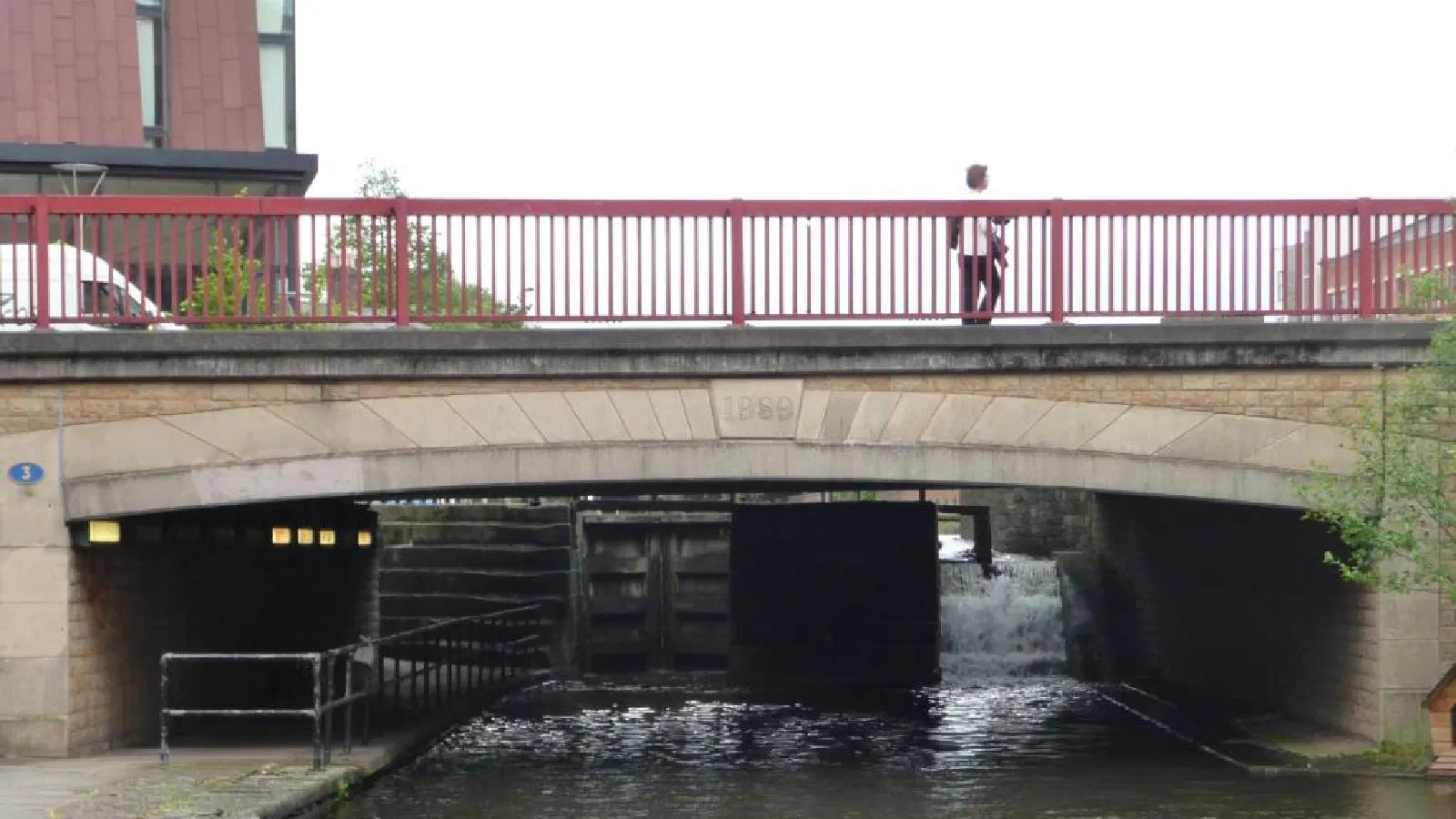
Best at blue hour
Ancoats Bridge (Ashton Canal)
East Manchester · ManchesterSome gear links on this page are affiliate links — if you buy through them we may earn a small commission at no extra cost to you. See our affiliate disclosure.
What is Ancoats Bridge on the Ashton Canal?
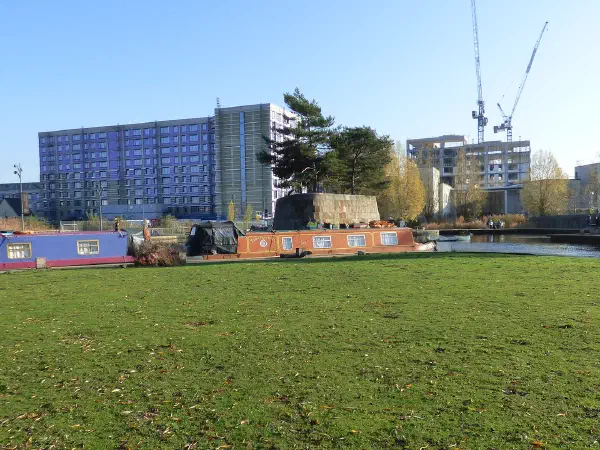
This bridge carries Great Ancoats Street — the busy inner ring road — over the Ashton Canal, marking the boundary between the city centre and East Manchester. The canal itself was built in the 1790s to carry coal into Manchester, and this stretch between Ducie Street Junction and New Islington is now one of the most photogenic short walks in the city: red-brick canal walls and lock gates on one side, the timber-clad and brightly coloured apartment blocks of New Islington on the other.
The bridge works as a hinge point for a wider shoot. Two minutes east along the towpath is New Islington Marina, with its moored narrowboats and floating gardens; five minutes north into Ancoats proper brings you to Cutting Room Square and the great Victorian cotton mills of Royal Mill and Murrays’ Mills. The whole area rewards a slow wander — the Ancoats photography guide maps out a full route — but the canal under Great Ancoats Street is the spot where industrial heritage and the new neighbourhood meet most cleanly in a single frame.
Why Shoot Here?
- Industrial heritage: The red-brick canal walls, stone copings and historic lock gates provide a classic Manchester industrial backdrop that has survived the area’s redevelopment intact.
- Urban reflections: The canal here is sheltered and slow-moving, so calm water is common — perfect mirror reflections of the surrounding mills and new apartment blocks.
- Golden hour glow: The open canal corridor runs roughly east–west, funnelling low evening light along the water towards the city skyline.
- Canal life: Narrowboats heading to and from the marina, joggers, cyclists and dog walkers on the towpath give your urban landscapes a point of human interest.
Getting There
The New Islington tram stop is a 3-minute walk: exit towards Old Mill Street and drop down to the towpath beside the marina, then follow the water west to the Great Ancoats Street bridge. On foot from Manchester Piccadilly station, allow 10–12 minutes — take Ducie Street to Piccadilly Basin, join the Ashton Canal towpath and follow it north-east under the ring road. Drivers should use NCP Ancoats (around £6–10 for the day); the tram is honestly easier, especially for dawn shoots when the roads around Great Ancoats Street are quiet.
Photography FAQ
Do you need permission to photograph on the canal towpath?
No — towpaths are open to the public and personal photography is fine, tripods included, as long as you’re not blocking the path. Organised commercial shoots and filming should be arranged with the Canal & River Trust, which manages the Ashton Canal.
Is the Ashton Canal towpath open at night?
Yes, the towpath has no gates or closing times, and this stretch is reasonably well used into the evening thanks to the surrounding apartments. Lighting is patchy under the bridge itself, so bring a head torch for setting up blue-hour shots and take the usual care with kit after dark.
When is the best time for reflection shots?
Early morning, before about 7:30am, before boat movements and foot traffic disturb the surface. Autumn and winter mornings often add low mist over the water, which softens the apartment reflections beautifully.
Where exactly is the bridge?
It’s where Great Ancoats Street (the A665 ring road) crosses the canal, between Piccadilly Basin and New Islington Marina — roughly 300 metres’ walk from either. The best photography is from the towpath at water level rather than from the road above.
Best Times to Shoot
- Golden hour looking west — The open canal corridor runs roughly east–west here, so late afternoon sun floods the waterway and warms the red-brick canal walls and the underside of the Great Ancoats Street bridge. The converted mills behind you catch the light at the same moment, completing a warm, cohesive scene.
- Early morning (before 7:30am) — The Ashton Canal is at its calmest before any boat traffic or pedestrians disturb the surface. Mist is common in autumn and winter, sitting low above the water and softening the reflections of the New Islington apartment blocks into something more impressionistic.
- Overcast days — Flat light eliminates the harsh shadow that the bridge casts across the towpath in direct sun, making it much easier to expose for both the shaded water under the arch and the brighter canal beyond.
- Blue hour — The apartment blocks along both banks have lit windows by early evening; these and the towpath lamps reflect as warm streaks in the canal, contrasting with the deep-blue sky above the bridge.
Composition Ideas
- Towpath leading line — Stand on the south towpath and aim along the canal toward the bridge, placing the water’s edge as a strong diagonal running to the arch. A 24–35 mm lens captures this comfortably without introducing too much distortion.
- Mill reflections with a polariser — The Victorian mill facades along the Ancoats banks reflect beautifully in still water. A circular polariser like the NiSi True Color CPL is genuinely useful here: rotate it to cut surface glare until the brickwork appears clearly in the canal. This works especially well on slightly overcast days.
- Through the arch to the apartments — Position yourself on the near side of the bridge and shoot through the arch toward the New Islington towers beyond, using the arch as a natural frame around the modern skyline. A 35–50 mm lens keeps the arch in proportion.
- Human scale on the towpath — Wait for a walker, cyclist or narrowboat to enter the frame. The towpath at New Islington is well used; a person or boat gives scale to the canal corridor and stops the composition feeling static. If the light dies, the mills around Murrays’ Mills and Cutting Room Square give you sheltered alternatives minutes away.
How to shoot it
Lens
A 16–35mm wide takes in reflections and foreground; switch to a 70–200mm to compress distant detail across the water.
Settings
Tripod, f/11, ISO 100 and a 1–8s exposure for glassy water and clean reflections; an ND filter extends it in daylight.
Composition
Shoot low to maximise the reflection, use the waterline as a leading line, and wait for still water to double the scene.
Timing
Blue hour — the ~20 minutes after sunset — is the sweet spot: the sky balances with the city's lights. Be set up before it starts; today's window is on this page.
More in East Manchester
See the area →Nearby spots
Shooting the whole area? Read the East Manchester photography guide — every spot, the light that suits it, and a route to link them.