 Any / overcast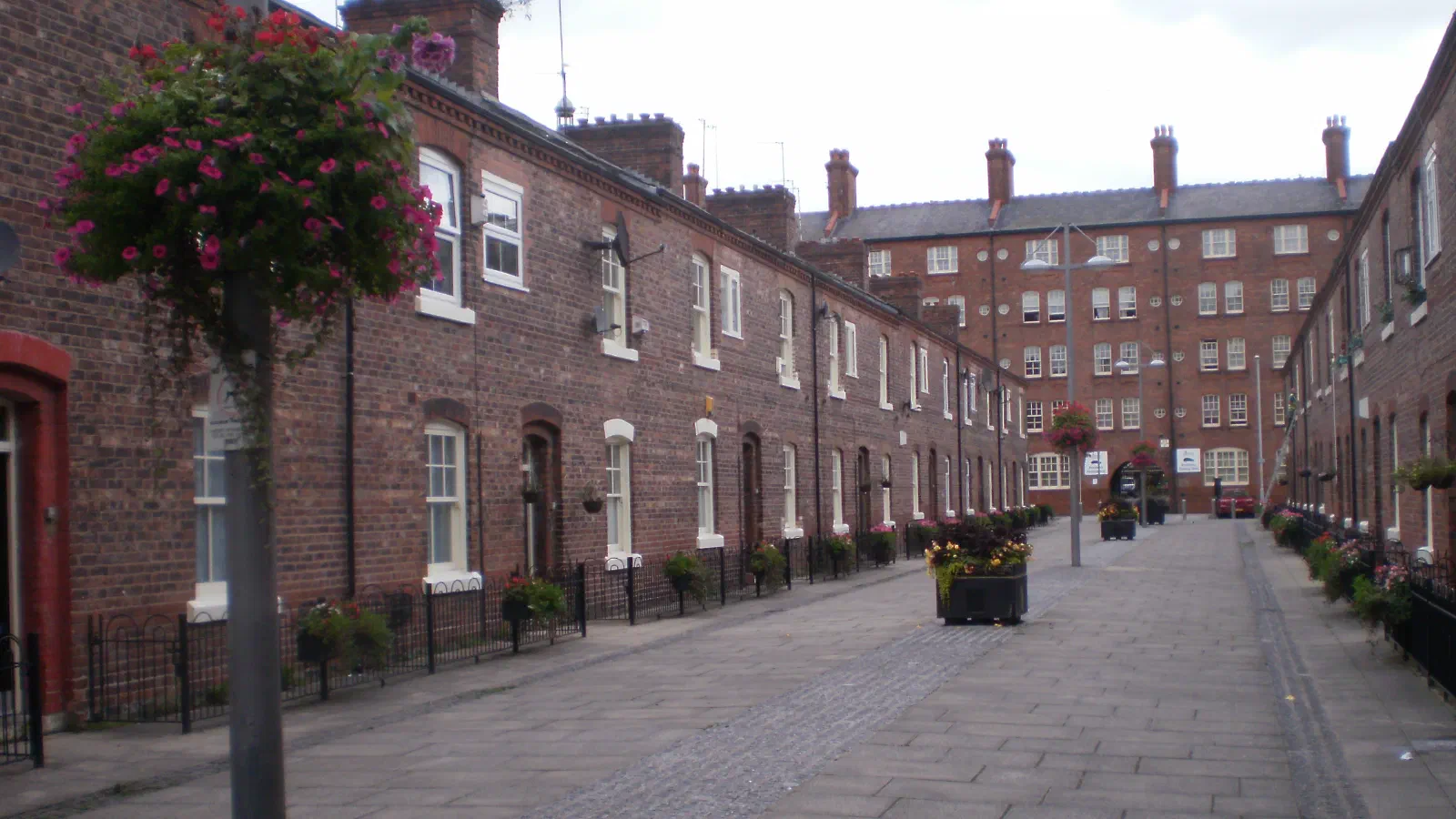
Best at golden hour
Anita Street
Ancoats · ManchesterSome gear links on this page are affiliate links — if you buy through them we may earn a small commission at no extra cost to you. See our affiliate disclosure.
What is Anita Street?
Anita Street is one of the most famous and photogenic streets in Ancoats. Originally named Hygieia Street (after the Greek goddess of health), it was built in the late 19th century as a “model” for healthy workers’ housing. It was the first street in the area to feature through-ventilation and individual toilets for each house. Today, its neat rows of red-brick houses and paved walkway offer a rare glimpse into Victorian social reform.
Why Shoot Here?
- Perfect Perspective: The street is narrow and straight, creating perfect leading lines and symmetry for your shots.
- Victorian Charm: The well-preserved brickwork, uniform windows, and original paving stones make it look like a film set.
- Quiet Atmosphere: Unlike the busier parts of Ancoats, Anita Street often feels like a quiet oasis, perfect for thoughtful, minimalist street photography.
- Details: Look for the street signs and the subtle differences in the brickwork that tell the story of its 19th-century origins.
Getting There
New Islington Metrolink is a five-minute walk and Piccadilly is about twelve. NCP Ancoats is the nearest car park at roughly £6–10 per day. The street runs between Blossom Street and George Leigh Street in Ancoats, is flat and paved throughout, and is short enough that you can work the whole length from a single tripod position and two or three others.
The important thing about Anita Street is that it is somebody’s home. These are occupied houses, not a heritage set, and the front doors open straight onto the pavement you are standing on — keep off the doorsteps, don’t point a lens through a window, and keep the noise down, particularly if you have come for the empty street before 8am. Cutting Room Square is two minutes south and Murrays’ Mills about five, both on the Ancoats mills and marina loop.
Photography FAQ
Can you take photos on Anita Street?
Yes — it is public highway and photographing the terraces from it is perfectly legal. The constraint here is not legal but social. It is a residential street with no shops, no bars and no through traffic, so a photographer is conspicuous in a way they are not on Thomas Street or in Cutting Room Square. Work from the middle of the street rather than up against the houses, stay off the doorsteps, avoid framing residents or their windows, and keep visits brief and quiet.
Can you use a tripod on Anita Street?
There is no rule against it, and the classic centred shot is much easier with one — the street is narrow and straight, and being a few degrees off the centreline is obvious in the final image. Set up quickly, take the frame, and move on. The street is only a few metres wide, so a tripod planted for half an hour genuinely blocks the path for people who live there.
What is the best time to photograph Anita Street?
Weekday mornings before 8am under an overcast sky is the ideal combination. The street is at its quietest, there are no parked delivery vans breaking the sightline, and flat light is essential here: the street is narrow enough that direct sun leaves one terrace in deep shadow and the other blown out, making the symmetry impossible to expose for. The exception is low winter sun between December and February, which can rake the full length of the street from the Blossom Street end and light the brick with warm side-light.
What lens works best for the symmetry shot?
A 35–50mm. Going wider starts to distort the uniform terraces and stretches the near houses out of proportion; going longer compresses the street and loses the sense of it receding to a vanishing point, which is the entire reason the shot works. Save an 85–100mm for the details — the iron boot scrapers beside the doors, the original ceramic house-number tiles, and the variation in brick colour where houses were repaired at different points in the 20th century.
Why does Anita Street look the way it does?
It was built in the late 19th century as model workers’ housing and originally named Hygieia Street, after the Greek goddess of health — the first street in the area with through-ventilation and an individual toilet for each house. The uniformity that makes it so photogenic is a by-product of that: it was designed as a demonstration of Victorian social reform, so every house is the same house, which is what produces the repetition and the clean vanishing point.
Best Times to Shoot
- Overcast days — The narrow width of Anita Street means direct sunlight creates deep asymmetrical shadows on one row of houses and leaves the opposite side almost fully in shade. A thin cloud layer spreads the light evenly across both terraces, letting you capture the Victorian brickwork in full detail.
- Early morning on weekdays — The street is at its most peaceful before 8 am; residents are indoors, there are no parked delivery vans to break the sightline, and the absence of foot traffic lets you take the centred, symmetrical shot without waiting for people to clear the frame.
- Low winter sun (December–February) — When the sun is at a shallow angle, it can rake along the length of the street from the Blossom Street end, illuminating the textured brick face of each house with warm side-light and casting long shadows from doorsteps and window ledges that reveal the relief of the Victorian stonework.
- After light rain — The original paving flags reflect a little sky, adding a subtle sheen that separates the foreground texture from the brick and adds tonal variety to what is otherwise a monochromatic red-and-buff palette.
Composition Ideas
- Dead-centre symmetry — Plant your tripod at the Blossom Street end and align yourself exactly on the centreline of the street; something compact like the Peak Design Travel Tripod is easy to level precisely for this perfectly centred shot. A 35–50 mm lens gives the most natural perspective for this classic shot; go wider and you start to distort the uniform terraces, go longer and you lose the sense of the street receding to its vanishing point.
- Low-angle foreground with paving flags — Drop to knee height and include the original Victorian stone flags in the lower third of the frame. The paving’s texture and slight irregularity provide foreground interest that contextualises this as a workers’ street, not a set-dressed backdrop.
- Detail close-ups of the street’s history — Move in close with a 85–100 mm lens on individual elements: the iron boot scrapers beside doorways, the original ceramic house number tiles, or the variation in brick colour between houses repaired at different points in the 20th century. These details tell the street’s story more specifically than the wide shot.
- End-to-end reverse shot — Walk to the far end and shoot back toward New Islington and the converted mill buildings visible at the junction. This reverses the usual view and frames the older terraces against the regenerated Ancoats skyline, showing the contrast between workers’ housing and modern apartment towers.
How to shoot it
Lens
A 35mm or 50mm prime is ideal — small, fast and unobtrusive for candid frames and shopfront detail.
Settings
Shutter priority at 1/250s or faster to freeze movement, with Auto ISO so you can keep shooting as the light shifts.
Composition
Work the light and shadow, look for layers and gesture, and let strong shopfront colour or signage carry the frame.
Timing
Aim for golden hour — the hour after sunrise or before sunset — when low, warm light rakes across the scene. Today's exact window is in the panel on this page.
More in Ancoats
See the area →Nearby spots
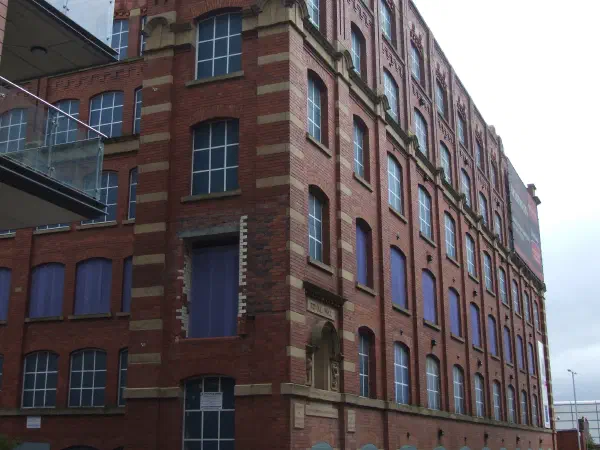
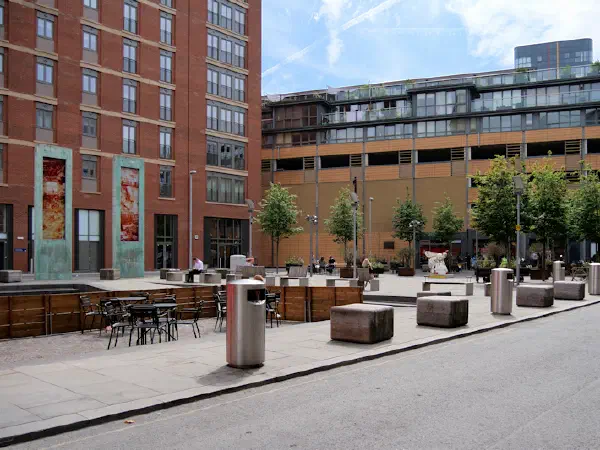
Shooting the whole area? Read the Ancoats photography guide — every spot, the light that suits it, and a route to link them.