 Any / overcast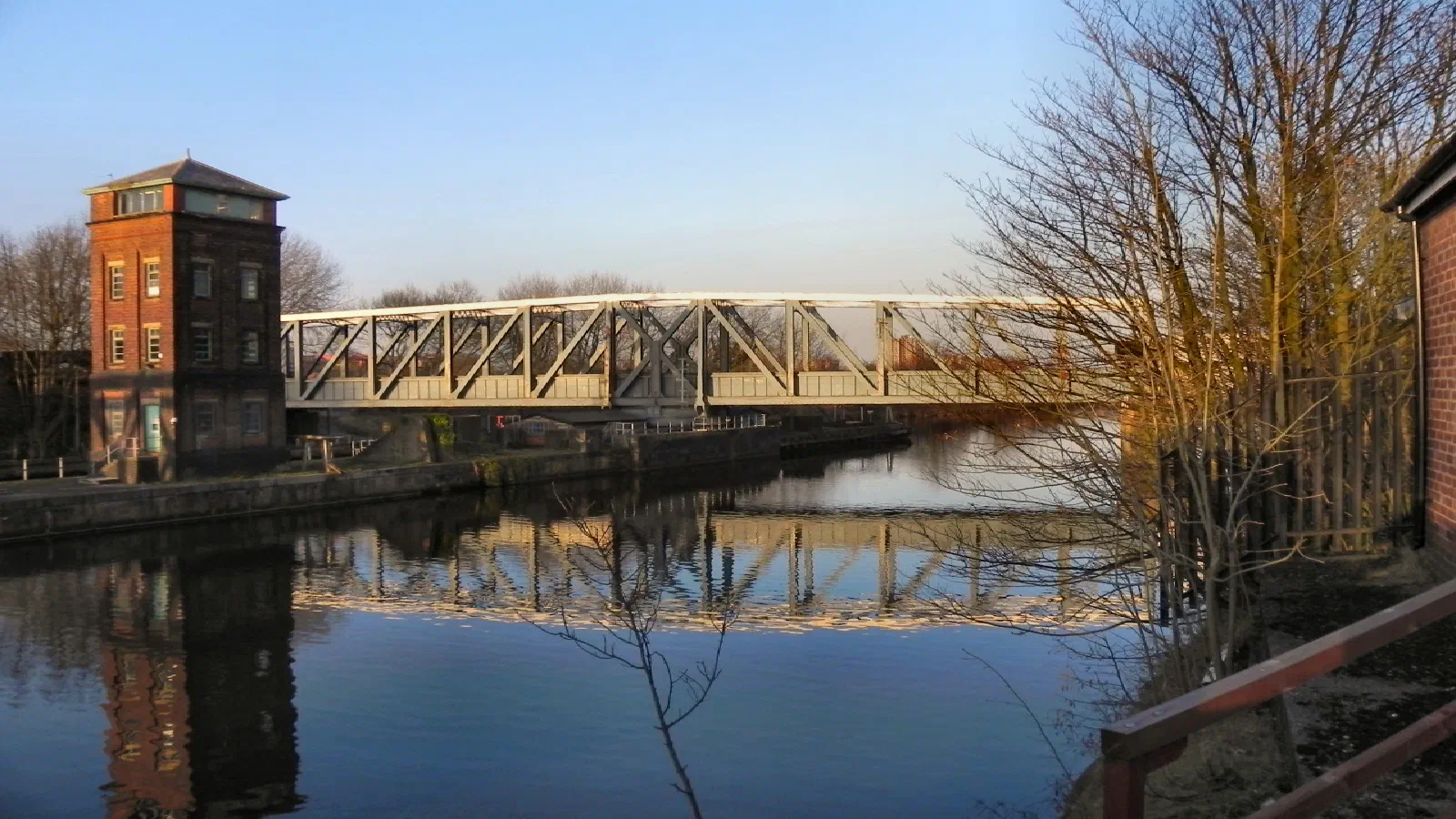
Best at golden hour
Barton Swing Bridge & Aqueduct
Trafford · ManchesterSome gear links on this page are affiliate links — if you buy through them we may earn a small commission at no extra cost to you. See our affiliate disclosure.
What is the Barton Swing Bridge?
The Barton Swing Bridge and the Barton Swing Aqueduct are two unique pieces of Victorian engineering located in Barton-upon-Irwell. The bridge carries road traffic, while the aqueduct carries the Bridgewater Canal over the Manchester Ship Canal. When a large ship needs to pass, both structures swing open—a world-class engineering marvel.
Why Shoot Here?
- Engineering Detail: The massive iron gears and structures of the swing bridge are a dream for detail-oriented photographers.
- Dynamic Action: Capturing the bridge or aqueduct in mid-swing is a rare and exciting photographic opportunity.
- Waterfront Scenery: The intersection of two canals provides varied perspectives, with the large Manchester Ship Canal below and the narrow Bridgewater Canal above.
- Historic Atmosphere: The area feels like a step back in time, with original control buildings and industrial remnants.
Getting There
This is the most awkward spot on the site to reach, and worth knowing that before you set out. Eccles Metrolink is about a twenty-minute walk, the 67 bus from Manchester toward Irlam serves the area, and by car it is off the B5211 near Barton-upon-Irwell with limited roadside parking on Barton Road. There is no café, no facilities and no shelter — bring what you need.
The public paths along the Manchester Ship Canal are the vantage points and they are open at any hour, though unlit. The structures sit where the Bridgewater Canal is carried over the Ship Canal, out west in Trafford, well away from the rest of the site’s locations — treat this as a dedicated trip rather than an add-on to a city-centre session.
Photography FAQ
Can you photograph the Barton Swing Bridge and Aqueduct?
Yes. The public paths along the Manchester Ship Canal are freely accessible and there are no restrictions on photography or tripods from them. This is live, working infrastructure rather than a preserved monument, so stay on the public paths, keep clear of the operational areas and the control building, and do not attempt to get onto the structures themselves. The road bridge carries traffic — mind it if you are setting up near the carriageway.
Can you photograph the bridge actually swinging?
That is the defining shot and it takes planning. Both the swing bridge and the aqueduct open simultaneously when a large vessel needs to pass along the Ship Canal, which is not a scheduled event you can simply turn up for. Canal societies and local enthusiast groups sometimes post ship movement information, and that is the realistic way to time a visit. Without it, treat a swing as a bonus and plan the trip around the static compositions.
What is actually unusual about this place?
A canal is carried over a canal. The Barton Swing Aqueduct takes the Bridgewater Canal across the Manchester Ship Canal in a water-filled iron tank that rotates — with the water still in it — to let ships through. The composition that makes this legible is shot from the Barton Road side, aiming down at the underside of the tank and its supporting girders reflected in the Ship Canal below.
What lens do I need?
Both extremes. A 16–24mm from the towpath takes in both the road bridge and the aqueduct together with the width of the Ship Canal for scale — and on a swing day, both structures mid-rotation at once. A 100–200mm isolates the central pivot housing and the exposed gear teeth, which are still operational and have a blunt functional beauty close up. Include the 1890s control building in the wider frames: its squat brick tower gives human scale against the ironwork and signals that this is working infrastructure.
What light suits the ironwork?
Overcast, for the detail work. The riveted plates, gear teeth and pivot mechanism sit in deep recesses that go impenetrably black in direct sun, and flat cloud light is what lets a telephoto pull detail from every surface at once. Golden hour is the alternative for the wide shots, when low western sun warms the grey iron of the pivot housing and the lattice girders and lifts the reflections in the canal. Still autumn mornings give you the aqueduct mirrored in undisturbed water with towpath colour framing it.
Best Times to Shoot
- During a bridge swing — This is the defining shot. Large vessels using the Manchester Ship Canal require the swing bridge and aqueduct to be opened simultaneously. The Bridgewater Canal Society and local enthusiast groups sometimes post ship movement information; arriving when a swing is underway gives you a genuinely rare action sequence that no static shot can replicate.
- Golden hour (late afternoon) — Low sun from the west catches the ironwork on the swing pivot housing and the lattice girders of the aqueduct, turning the grey iron orange-warm and intensifying any reflections in the Ship Canal below. The control building on the Barton Road side is also well lit at this time.
- Overcast days for detail work — The complex Victorian ironwork — riveted plates, gear teeth, and the pivot mechanism — sits inside deep recesses that cast impenetrable shadows in direct sun. Flat, even light from cloud cover lets a telephoto like the 70–200 mm pull detail from every surface without losing shadow areas.
- Still autumn mornings — The Manchester Ship Canal reflects the aqueduct and its water tank when the surface is undisturbed. Combine this with autumn colour from the towpath trees framing the structure and you have an unusual landscape composition well away from the usual Manchester city-centre spots.
Composition Ideas
- Wide shot with both structures — Stand on the M60-side towpath and frame both the road bridge and the aqueduct in one wide-angle shot (16–24 mm), using the Ship Canal’s width to give a sense of scale. On a swing day, you can capture both structures mid-rotation simultaneously.
- Reflection of the aqueduct in the Ship Canal — From the Barton Road side, aim down into the canal below the aqueduct. The underside of the water tank and its supporting girders reflect in the Manchester Ship Canal when the surface is calm — a composition that emphasises the engineering feat of a canal being carried over a canal.
- Close-up of the pivot and gear mechanism — Use a 100–200 mm telephoto from the towpath to isolate the central pivot housing and the exposed gear teeth of the swing mechanism. These Victorian components are still operational and have a brutal, functional beauty at close range.
- Control building for context — Include the original 1890s control building in your wider shots; its squat brick tower provides a human-scale reference alongside the enormous ironwork, and its design tells you this is working infrastructure rather than a decorative bridge.
How to shoot it
Lens
A 16–35mm wide takes in reflections and foreground; switch to a 70–200mm to compress distant detail across the water.
Settings
Tripod, f/11, ISO 100 and a 1–8s exposure for glassy water and clean reflections; an ND filter extends it in daylight.
Composition
Shoot low to maximise the reflection, use the waterline as a leading line, and wait for still water to double the scene.
Timing
Aim for golden hour — the hour after sunrise or before sunset — when low, warm light rakes across the scene. Today's exact window is in the panel on this page.
More in Trafford
See the area →