 Golden hour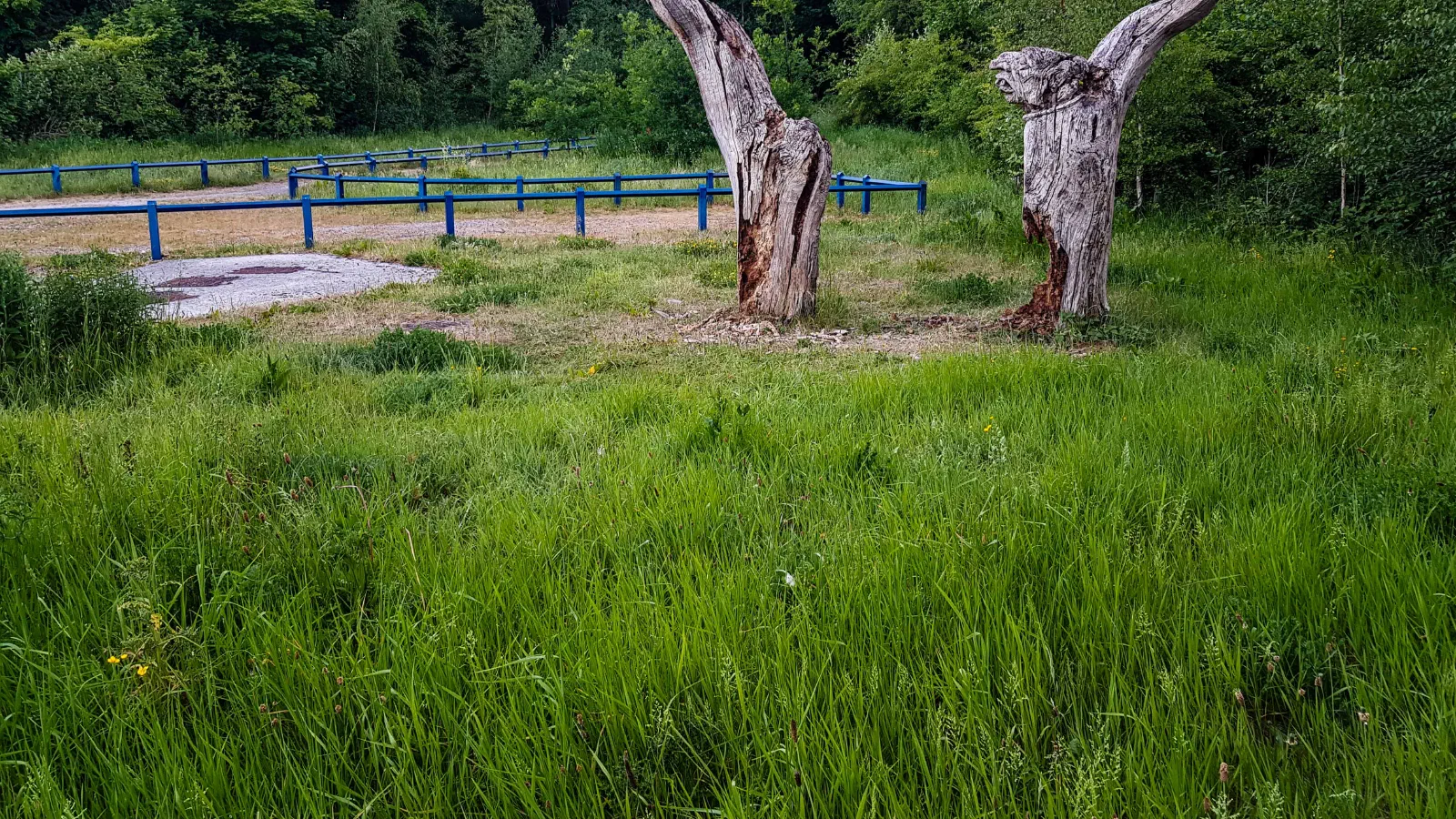
Best at any / overcast
Blackley Forest
North Manchester · ManchesterSome gear links on this page are affiliate links — if you buy through them we may earn a small commission at no extra cost to you. See our affiliate disclosure.
What is Blackley Forest?
Blackley Forest is a community woodland and Local Nature Reserve in North Manchester, tucked into the steep valley of the River Irk about four miles from the city centre. It has a genuine claim to fame: planting began in 1953, carried out by Manchester Corporation alongside local residents, making it Manchester’s first community forest — and the trees were planted in commemoration of those who fell in the Second World War. It was formally designated a Local Nature Reserve in 2005.
The site is a mix of mature woodland, grassland and wetland, with the River Irk running along two of its sides on the river’s journey from the hills above Oldham down to the city centre. Because the forest occupies a valley slope, the trails climb and switch back rather than running flat — which is excellent news for photographers, as you get canopy-level views, riverside paths and everything in between within a compact area. It’s quiet even at weekends, far quieter than Heaton Park a short distance to the west, and it offers the kind of unmanicured, working-woodland character you won’t find in the city’s formal parks.
Why Shoot Here?
- Natural woodland: Seven decades of growth since the 1953 planting means proper mature trees — dense canopy sections, open clearings and steep wooded banks all within a few minutes’ walk of each other.
- River Irk: The river curls around two sides of the reserve, offering moving water, small rocky sections for long exposures, reflections and riverside flora.
- Valley topography: The slope lets you shoot across the canopy as well as up into it — autumn colour photographed from above is a very different image from the usual woodland interior.
- Birdlife and wildlife: The reserve’s mix of woodland, grassland and wetland habitats supports a good range of birds; patient photographers with a long lens will do well in early morning.
- Seasonal transformation: Bluebells and fresh greens in spring, deep shade in summer, outstanding colour in autumn and frost-lined branches in winter — it rewards repeat visits across the year.
Getting There
Take bus 149 or 59 from Manchester city centre towards Blackley — around 25 minutes — and alight on Victoria Avenue. From Victoria Station, the 149 runs up Rochdale Road and Victoria Avenue East. Drivers should head for the small free car park off Victoria Avenue (M9), on the northern edge of the reserve; it fills on sunny weekend mornings, so arrive early for first light. From the car park, trails drop straight down into the wooded valley towards the River Irk. Heaton Park’s main gate is roughly a 25-minute walk west if you’re combining locations.
Photography FAQ
Is Blackley Forest worth visiting for photography?
Yes — particularly in autumn and on misty mornings. It’s Manchester’s first community forest, planted from 1953, and the steep River Irk valley gives it more varied compositions than most flat urban woodlands. Crucially, it’s quiet, so you can work a scene without people in frame.
When is the best time of year to photograph Blackley Forest?
Late October to mid-November is the peak, when the mixed planting turns gold and russet along the Irk. It’s one of the better entries in our round-up of Manchester autumn photography spots. Frosty winter mornings and bluebell season in spring are strong second choices.
Is there parking at Blackley Forest?
There’s a small free car park off Victoria Avenue on the north side of the reserve. It’s limited, so for sunrise shoots arrive early; otherwise the 149 and 59 buses from the city centre stop nearby.
What lenses should I bring to Blackley Forest?
A wide-angle (16–35 mm) for canopy and trail shots, a standard zoom for riverside scenes, and ideally a macro for fungi and frost detail. If wildlife is your aim, bring 300 mm or longer and arrive at dawn. A tripod and ND filter open up long exposures on the Irk.
Is Blackley Forest muddy?
The valley paths can get genuinely boggy after rain, especially the riverside stretches — proper boots are advisable from autumn through spring. The slopes are steep in places, so take care carrying a tripod down to the water.
Best Times to Shoot
- Early morning (around sunrise) produces low shafts of light through the canopy, creating god-rays and dappled forest-floor patterns that are impossible to replicate later in the day — the valley holds morning mist longer than the surrounding streets, too.
- Autumn (October–November) is the standout season — golden and russet leaf litter along the River Irk provides rich, warm colour palettes against dark bark and mossy stones.
- Overcast or misty days add mood and atmosphere, softening contrast and saturating the greens of ferns and moss throughout the woodland; flat light is a feature here, not a problem.
- Winter after frost transforms bare branches and riverside grasses into delicate, crystalline subjects — arrive at first light before the frost melts, as the shaded valley floor holds it well into mid-morning.
- Spring (April–May) brings fresh, almost luminous greens and wildflowers, with the canopy still open enough to let plenty of light onto the forest floor.
Composition Ideas
- River Irk long exposures: Use a tripod and an ND filter to smooth the river’s flow over rocks — 1–4 seconds is usually enough — framing the shot with overhanging branches for a natural vignette.
- Canopy-up shots: Lie on the forest floor and point a wide-angle lens (14–24 mm) directly upward to capture converging tree trunks and a ceiling of leaves or bare branches.
- Path perspectives: Position yourself on one of the woodland trails and use a 35–50 mm lens to show the path disappearing into the trees, creating depth and a sense of exploration — the switchback valley paths here do this better than flat parkland.
- Across-the-valley colour: In autumn, climb to the upper trails and shoot across the canopy with a 70–200 mm to stack layers of colour — an angle you can’t get at flatter sites like Philips Park or Fletcher Moss.
- Macro details: Focus on fungi on fallen logs, lichen patterns, or dewdrops on ferns with a macro lens for mirrorless for abstract nature images — the damp valley floor is productive for fungi from late September.
How to shoot it
Lens
A 16–35mm wide takes in reflections and foreground; switch to a 70–200mm to compress distant detail across the water.
Settings
Tripod, f/11, ISO 100 and a 1–8s exposure for glassy water and clean reflections; an ND filter extends it in daylight.
Composition
Shoot low to maximise the reflection, use the waterline as a leading line, and wait for still water to double the scene.
Timing
Bright overcast suits it best — soft, even light with no harsh shadows — so it works at almost any time of day.
More in North Manchester
See the area →Nearby spots
Golden hour