 Golden hour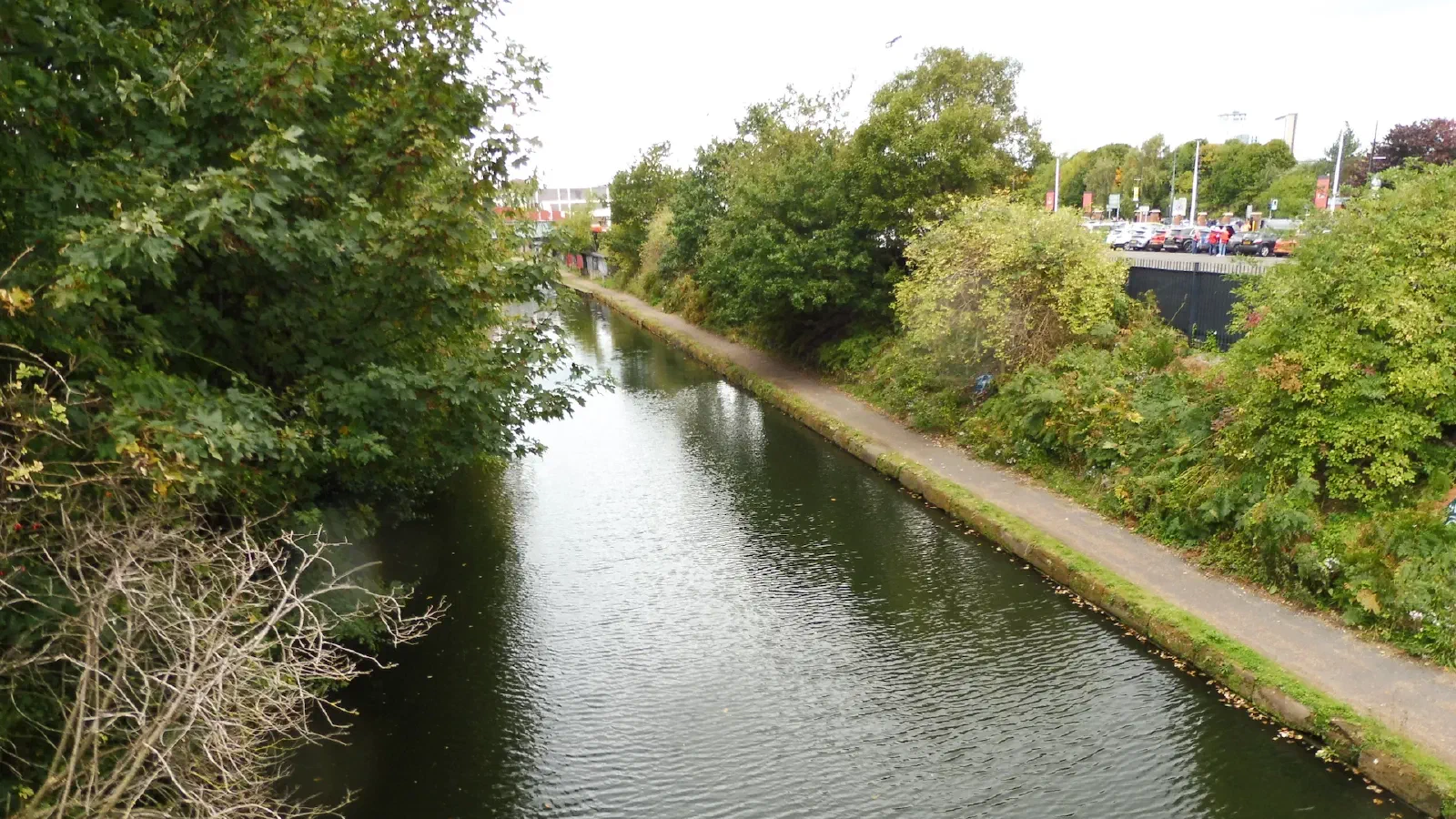
Best at golden hour
Bridgewater Canal
Castlefield · Manchester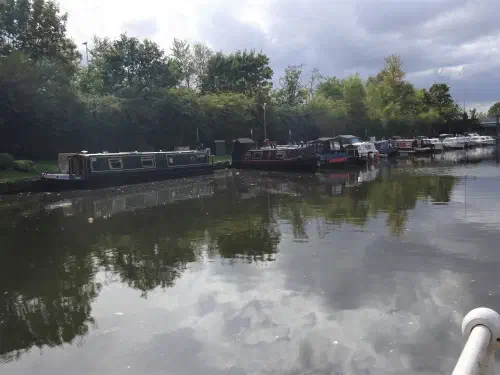
Some gear links on this page are affiliate links — if you buy through them we may earn a small commission at no extra cost to you. See our affiliate disclosure.
What is Bridgewater Canal?
Bridgewater Canal, often called Britain’s first true artificial canal, was commissioned by Francis Egerton, the 3rd Duke of Bridgewater to transport coal from his mines at Worsley into Manchester. It officially opened on 17 July 1761, and extended later to Leigh and Runcorn, transforming industrial logistics across North West England (en.wikipedia.org).
The canal revolutionised inland transport—the stretch from Worsley to Manchester cut coal prices in half and sparked a nationwide “canal mania” in the late 18th century (britannica.com, historic-uk.com). It included the world’s first navigable aqueduct at Barton over the River Irwell, considered one of the engineering marvels of its era. Opened in 1761, it served until the Barton Swing Aqueduct replaced it in 1893 when the Manchester Ship Canal was built (en.wikipedia.org).
Today the Bridgewater Canal is a heritage waterway spanning around 39 miles (65 km) from Runcorn to Leigh through Manchester, passing through the Castlefield Urban Heritage Park, and maintained as a leisure cruising route, scenic towpath walk, and urban amenity for Manchester locals and visitors alike (bridgewatercanal.co.uk).
Why Shoot Here?
For photographers and Instagrammers, the Bridgewater Canal offers a versatile visual backdrop blending historic architecture, tranquil water scenes, and urban regeneration:
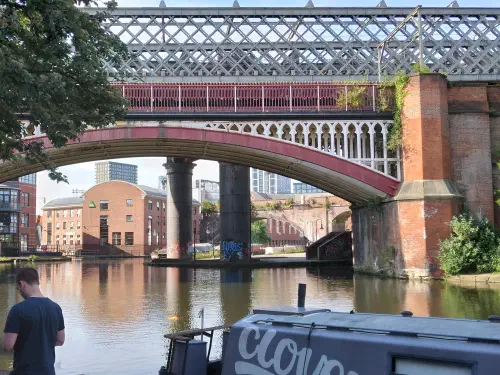
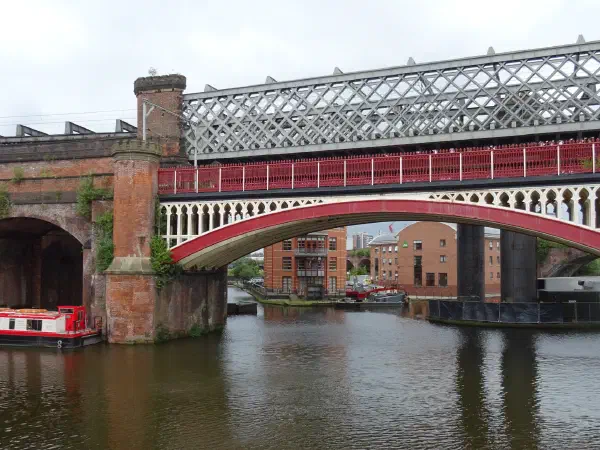
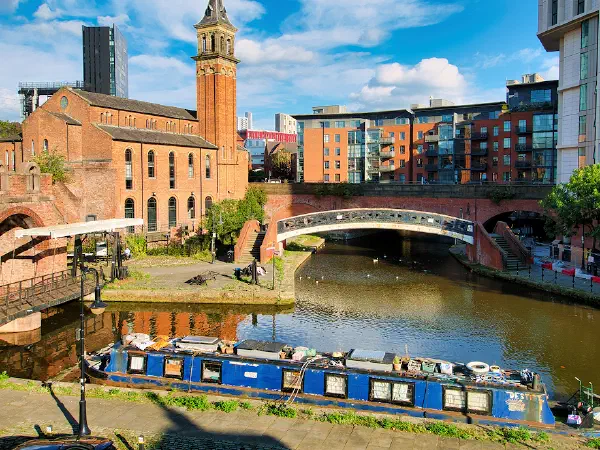
- Architectural reflections: The canal basin in Castlefield, with iron viaducts, warehouses, canal boats, and the elegant Merchant’s Bridge over the water, delivers perfect early‑morning reflection shots.
- Industrial heritage: Historic brick viaducts, stone embankments, and the Barton Swing Aqueduct showcase Victorian civil engineering at its finest—ideal for architectural detail and wide-angle compositions (en.wikipedia.org).
- Vibrant contrast: Cast-iron railway bridges and modern architecture near Castlefield juxtapose old and new, giving dramatic tension for urban storytelling photography.
- Seasonal interest and events: In spring and summer, lush greenery along towpaths softens industrial textures. When canal traffic is passing (e.g., swing aqueduct open), shoot in motion sequences or detail shots of engineering elements.
Getting There
Deansgate-Castlefield Metrolink is a five-minute walk from the Castlefield stretch, and Deansgate rail station is beside it. NCP Deansgate is the nearest car park at roughly £8–12 per day. The towpath is public and accessible on foot or by bike, free and open, though it is not lit along its whole length — for a pre-dawn or after-dark session, work the Castlefield end where the basin has canal-side lighting.
The canal runs 39 miles from Runcorn to Leigh, so “Bridgewater Canal” covers a lot of ground; the Castlefield basin is the stretch worth planning a shoot around. It passes directly through Castlefield Urban Heritage Park, with Castlefield Canals and Castlefield Viaduct alongside, all in Castlefield and all on the Castlefield canals and Deansgate walk. The Barton Swing Bridge, where the canal crosses the Manchester Ship Canal, is a separate trip out west.
Photography FAQ
Can you take photos along the Bridgewater Canal?
Yes. The towpath is a public right of way, free and open, and there are no restrictions on photography or on tripods. The practical courtesy is towpath width: it is shared with cyclists, runners and dog walkers, and in the narrower sections a tripod blocks it completely. Set up where the path widens, and be prepared to lift and step aside. Moored narrowboats are people’s homes as much as they are subjects — photograph them as part of the scene rather than pointing a lens through a window.
When is the water still enough for reflections?
Before 08:00, more or less reliably. The basin is sheltered, the boat traffic has not started and the wind has usually not picked up, which is the combination that produces a mirror surface. If you arrive to find the water rippled, a tripod at f/11 and ISO 100 with a 2–8 second exposure will smooth it out; an ND filter buys you the same stillness in daylight. Be careful with a polariser here — rotated wrongly it will erase the reflection you came for.
What is the best light on the canal?
Golden hour at sunset warms the red brick of the viaducts and the warehouse walls and throws long shadows along the towpath. Overcast is the underrated option: it kills the harsh specular glare off the water surface and brings out the tonal range in the stonework, the ironwork and the painted canal-boat livery, which direct sun blows out. Spring and summer evenings add towpath greenery that softens the industrial edges.
What lens should I bring to the Bridgewater Canal?
A 16–35mm wide takes in the full sweep of arches and water, and is what you need for the low symmetrical reflection shot with the waterline through the middle of the frame. A 70–200mm does the opposite job — compressing the viaduct against the towers behind it, and isolating riveted ironwork and mechanical detail. A 35–70mm is the right length for catching a narrowboat as it passes beneath an arch.
What makes the Bridgewater Canal historically significant?
It opened on 17 July 1761, built for the 3rd Duke of Bridgewater to bring coal from his Worsley mines into Manchester, and it is generally counted as Britain’s first true artificial canal. The Worsley-to-Manchester run halved the price of coal in the city and set off the national canal mania that followed. For a photographer, the useful consequence is that the engineering along it was built to be looked at as well as used — the aqueducts, embankments and basins are deliberate structures, not just cuttings in the ground.
Further Information
- Wikipedia – Bridgewater Canal – detailed background on history, route and engineering impacts (en.wikipedia.org, en.wikipedia.org, en.wikipedia.org)
- Historic‑UK – The Bridgewater Canal – context around its status as a pioneering waterway (historic-uk.com)
- Pennine Waterways – Archive photographs – historic images showing canal operations, swing aqueduct and Victorian barges (penninewaterways.co.uk)
- Wikipedia – Barton Swing Aqueduct – engineering details and significance of the aqueduct over the Manchester Ship Canal (en.wikipedia.org)
Best Times to Shoot
- Early morning before 08:00 gives mirror-still water and zero towpath foot traffic — the best conditions for clean reflection shots of viaducts and Merchant’s Bridge.
- Golden hour (sunset) warms the red brick of the railway viaducts and warehouse walls, with long shadows stretching across the towpath adding depth.
- Overcast days reduce harsh reflections on the water surface and bring out the rich tones of stonework, ironwork and canal-boat paintwork.
- Spring and summer evenings add lush towpath greenery that softens the industrial edges and provides natural framing for canal compositions.
Composition Ideas
- Narrowboat under arch: Wait for a canal boat to pass beneath a viaduct arch and capture the moment with a 35–70 mm lens — the arch frames the boat and its colourful livery.
- Symmetrical reflections: Find a still stretch of water, crouch low and place the waterline at the centre of the frame so brickwork and sky mirror perfectly above and below.
- Merchant’s Bridge curves: Shoot from the towpath side with a 24–35 mm lens to emphasise the bridge’s elegant white arch against the darker industrial backdrop.
- Barton Swing Aqueduct detail: Use a telephoto like the 70–200 mm to isolate the mechanical pivot section and riveted ironwork, creating an engineering-focused abstract.
How to shoot it
Lens
A 16–35mm wide takes in the full sweep of arches and water; switch to 70–200mm to compress the viaduct against the towers behind.
Settings
Tripod, f/11, ISO 100 and a 2–8s exposure for glassy water; an ND filter buys the same stillness in daylight.
Composition
Use the canal as a leading line, place the largest arch on a third, and shoot low at the towpath edge to maximise the reflection.
Timing
Golden hour saturates the brick and settles the water; overcast days tame the contrast for detail work along the towpath.
More in Castlefield
See the area →Nearby spots
Shooting the whole area? Read the Castlefield photography guide — every spot, the light that suits it, and a route to link them.