 Golden hour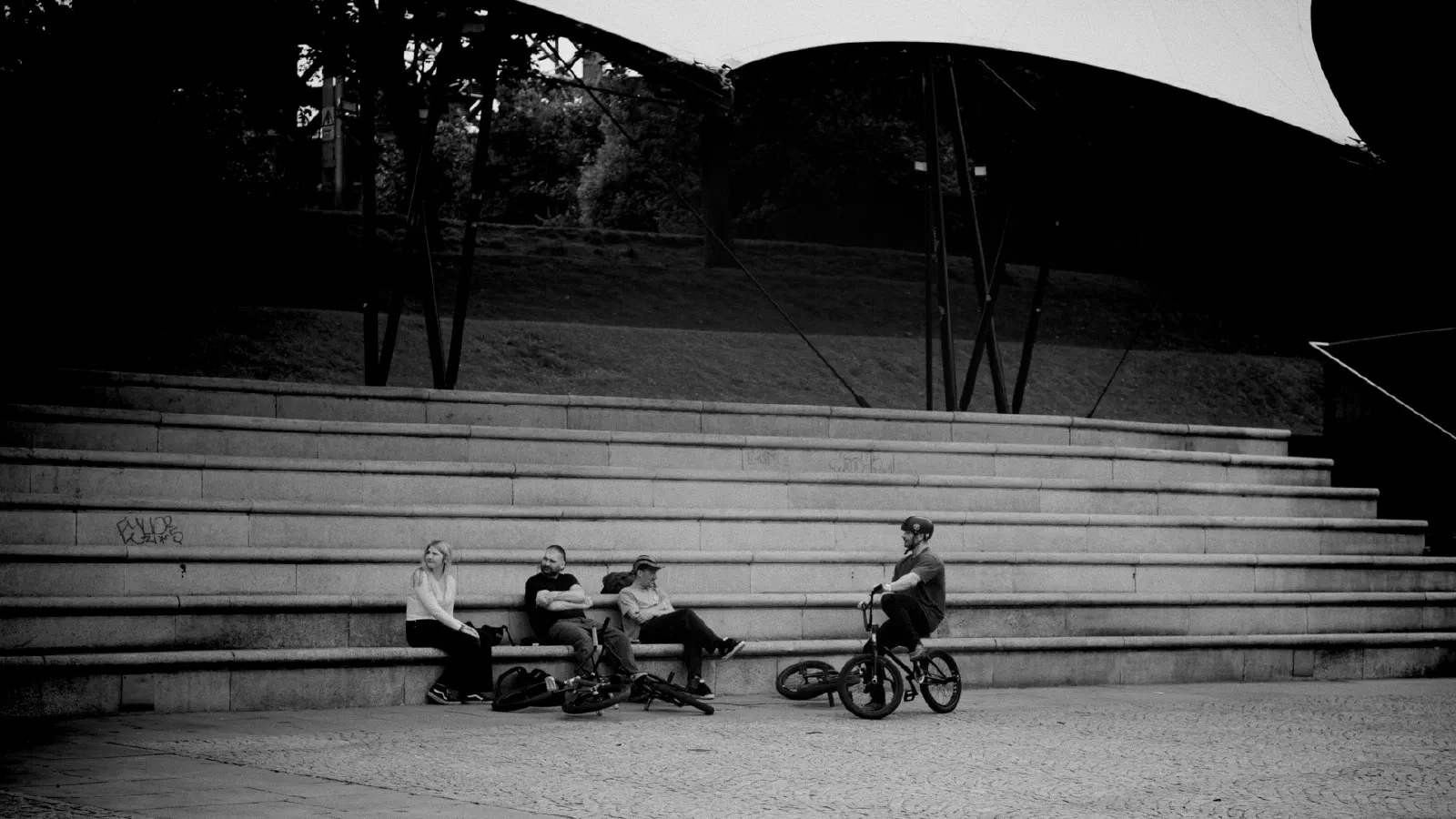
Best at golden hour
Castlefield Bowl
Castlefield · Manchester
Some gear links on this page are affiliate links — if you buy through them we may earn a small commission at no extra cost to you. See our affiliate disclosure.
Castlefield Bowl holds around 8,000 people. It is an open-air amphitheatre in Castlefield, fenced and ticketed during events; the surrounding heritage park stays free and public year-round.
What is Castlefield Bowl?
Castlefield Bowl is an outdoor events venue in the historic Castlefield area of Manchester. Originally known as the Castlefield Events Arena, it opened in 1993 as part of the redevelopment of Castlefield into the UK’s first Urban Heritage Park. The venue holds around 8,000 people and hosts open-air concerts, festivals and cultural events throughout the year.
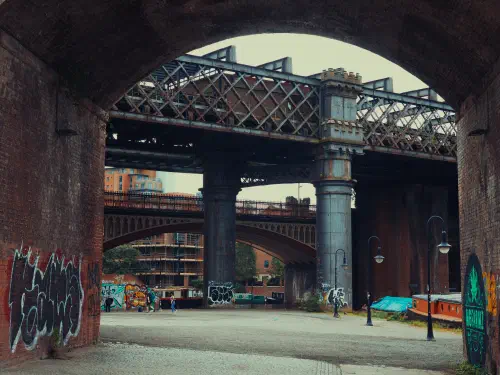
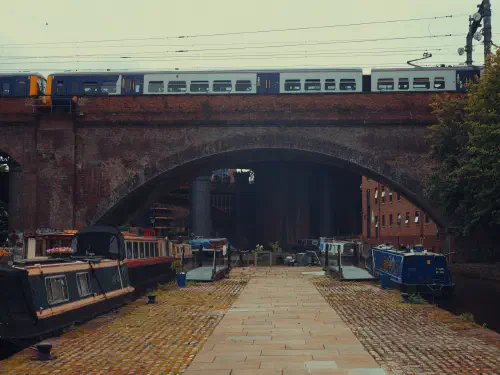
The amphitheatre-style layout is hemmed in by Manchester’s industrial heritage — red-brick railway viaducts, canals and cobbled streets — giving every show a backdrop no purpose-built arena can match. Trains still rumble across the arches behind the stage mid-set, and the Castlefield Viaduct curves directly overhead. The venue is best known for the annual Sounds of the City concert series, which has featured New Order, Noel Gallagher and The Courteeners, and which fills the bowl on summer evenings in June and July.
For photographers, the bowl works on two distinct levels: a high-energy live-music venue on event nights, and a strangely sculptural piece of empty urban architecture the rest of the year. Both are worth shooting, and they demand completely different approaches — covered in detail in our wider Castlefield photography guide.
Why Shoot Here?
Castlefield Bowl offers an exciting mix of live event energy and historic surroundings:
- Live performance atmosphere: Stage wash, haze, pyrotechnics and an 8,000-strong crowd packed into a natural amphitheatre — the energy translates into frames in a way few outdoor venues manage.
- Historic-industrial backdrop: The brick viaduct arches behind and above the stage anchor every wide shot in unmistakable Manchester. No other UK venue puts Victorian railway engineering this close to a modern lighting rig.
- Urban contrasts: Modern trusses and LED screens against weathered brickwork; phone-lit crowds beneath 19th-century arches. The juxtaposition does half the compositional work for you.
- Skyline context: From the terracing you can pull Beetham Tower and the Deansgate Square cluster into the background of crowd shots, stacking three eras of the city into one frame.
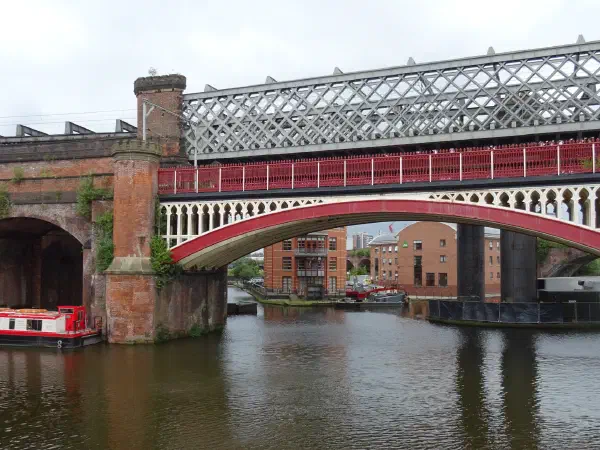
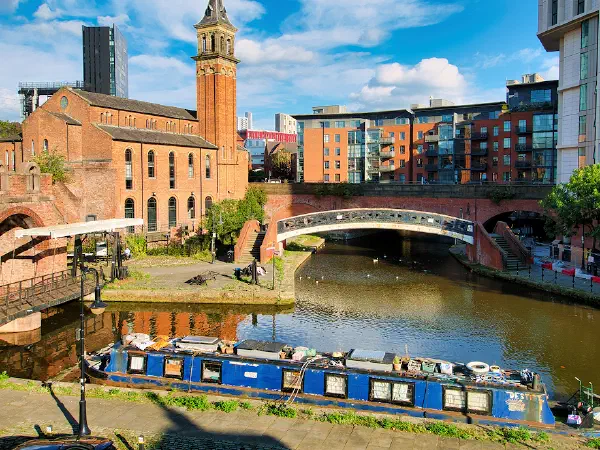
- Year-round value: On non-event days the empty terracing, cobbles and arches make strong architectural and minimalist studies — and the surrounding Castlefield canals add reflections within a two-minute walk.
Getting There
The nearest tram stop is Deansgate-Castlefield, five minutes’ walk away: take the exit ramp towards Castlefield, drop down to the canal basin and follow the path beneath the viaducts — the bowl appears on your right. By car, NCP Deansgate costs around £8–12 per day and is a similar walk. On foot from the Science and Industry Museum on Liverpool Road, cut south down Duke Street towards the basin and you arrive at the bowl in about three minutes. On gig nights, allow extra time — the surrounding cobbled streets fill quickly from early evening.
Photography FAQ
What is the capacity of Castlefield Bowl?
Castlefield Bowl holds around 8,000 people for ticketed concerts. That mid-size capacity is part of its photographic appeal — you can move between the front barrier area and the rear terracing within a few minutes, which is impossible at arena scale.
Can you take a camera to a Castlefield Bowl concert?
Policy is set per event by the promoter, but as at most large ticketed gigs, cameras with detachable lenses are typically not allowed without a photo pass — check the event’s terms before travelling. Phones and small compacts are generally fine — a pocketable RX100-class premium compact is about the most capable camera that will usually get through the gate — and modern phone sensors handle stage lighting well from the terraces.
Is Castlefield Bowl free to enter?
The exterior and the surrounding Castlefield Urban Heritage Park are public and free year-round; the bowl itself is fenced and ticketed during events. On non-event days you can usually photograph the empty amphitheatre from the perimeter paths without restriction.
What is Sounds of the City?
Sounds of the City is the annual open-air concert series held at Castlefield Bowl each summer, typically across late June and early July. It is the venue’s flagship programme and the best time to capture the bowl at full capacity, with stage production at its biggest.
Where is the best place to stand for photos at a gig?
The rear terracing gives the classic elevated crowd-stage-viaduct composition, while the raised ground at the sides lets you shoot across the crowd into the stage wash. Arrive at doors to claim a rail spot on the upper level — once the bowl fills, repositioning is slow.
Further Information
- Wikipedia – Castlefield Bowl — history, capacity, and events hosted
- Visit Manchester – Castlefield Bowl — visitor information and upcoming events
- Sounds of the City – Official Site — concert series schedule and ticketing
- Creative Tourist – Things to Do in Castlefield — broader area guide for combining photography spots nearby
Best Times to Shoot
- During live events at sunset the stage lighting begins to overpower the fading daylight, creating dramatic colour contrasts against the brick viaducts — the best window for balancing ambient and artificial light.
- Blue hour on non-event days reveals the amphitheatre’s raw architecture: empty terracing, cobbled paths and viaduct arches lit only by surrounding street lamps. Exposures run several seconds by then, so a travel tripod like the Peak Design Travel Tripod earns the walk — our blue hour tripod guide covers working the perimeter setts.
- Early morning gives quiet, atmospheric access to the venue perimeter and surrounding canal paths, with soft light picking out the texture of the old railway brickwork — pair it with the Castlefield canals and Deansgate walk for a full morning route.
- Sounds of the City evenings (June–July) offer the peak combination of crowd energy, stage production and a warm summer sky — arrive early for soundcheck atmosphere and golden-hour exterior shots.
Composition Ideas
- Elevated crowd-and-stage wide shots: From the upper terraces, use a 24–35 mm lens to capture the full amphitheatre with the crowd, stage and viaduct arches in a single frame. Our Manchester architecture gear guide explains the wide-angle and weather-resistant kit that works around the bowl.
- Viaduct arch framing: Position yourself so a railway arch frames the stage or the crowd — the dark brickwork creates a natural vignette directing attention to the lit centre.
- Detail and backstage moments: Shoot instrument cases, cable runs, crew hands and rigging with a 50–85 mm lens for intimate behind-the-scenes storytelling — our street lens guide covers the fast primes that handle this kind of mixed light.
- Long-exposure light trails: During performances, use a 1–4 second exposure braced on a rail to blur moving stage lights and crowd phones into streaks of colour against the static architecture.
- Train-over-stage timing: Watch for trains crossing the viaduct behind the stage and time your shutter to catch carriage lights streaking above the performance — the bowl’s signature one-frame story.
How to shoot it
Lens
A 16–35mm wide exaggerates scale and verticals; a 24–70mm keeps proportions natural. A tilt-shift tames converging lines.
Settings
f/8–f/11 for front-to-back sharpness, ISO 100, and meter for the highlights so detail in the stonework holds.
Composition
Hunt for symmetry and repetition, keep verticals straight, and use doorways or arches to frame the subject.
Timing
Aim for golden hour — the hour after sunrise or before sunset — when low, warm light rakes across the scene. Today's exact window is in the panel on this page.
More in Castlefield
See the area →Nearby spots
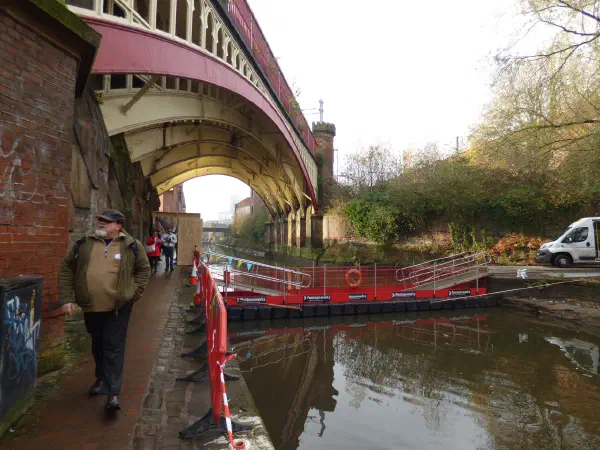
Shooting the whole area? Read the Castlefield photography guide — every spot, the light that suits it, and a route to link them.