 Golden hour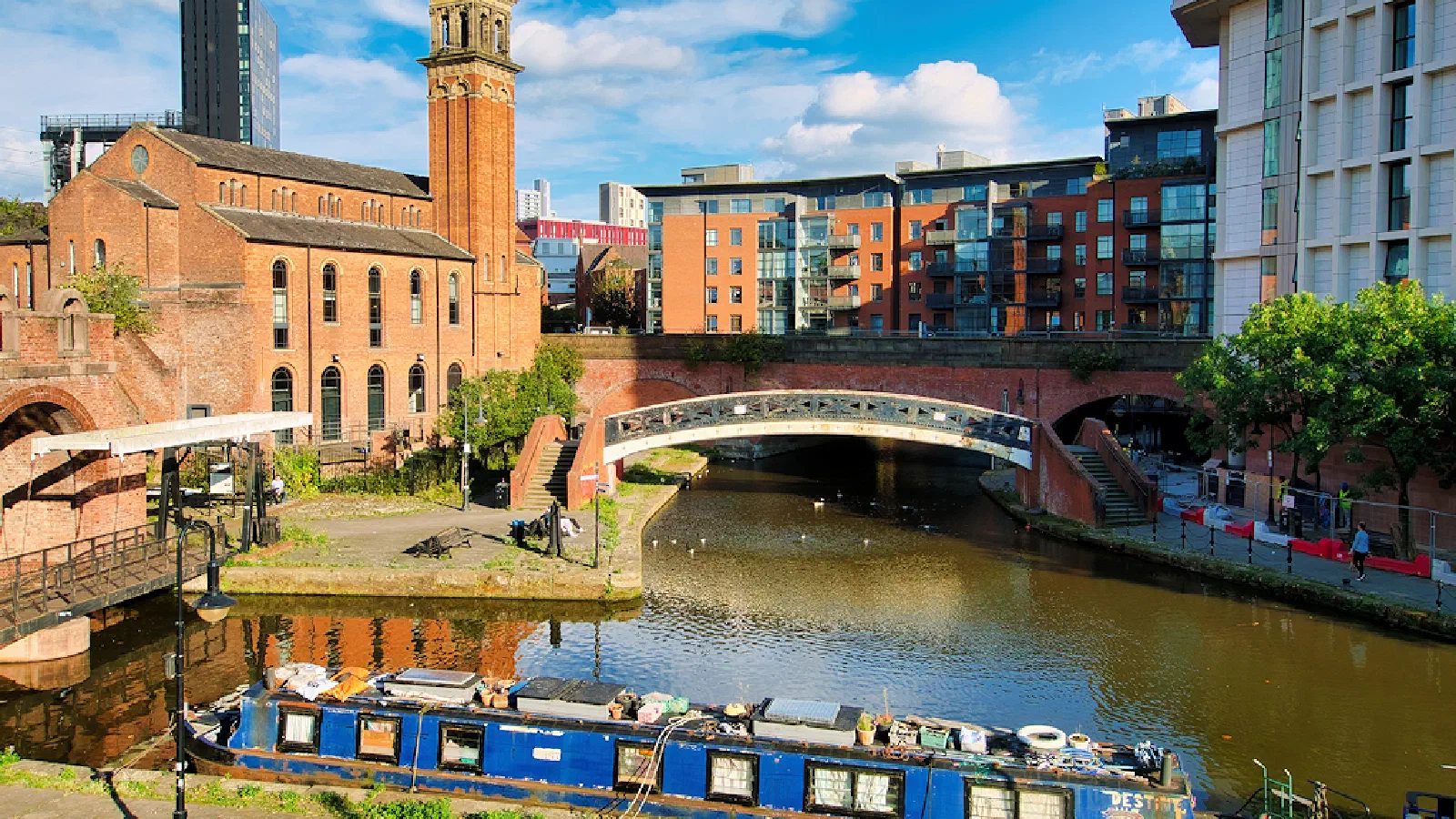
Best at golden hour
Castlefield Canals
Castlefield · ManchesterSome gear links on this page are affiliate links — if you buy through them we may earn a small commission at no extra cost to you. See our affiliate disclosure.
What is Castlefield Canals?
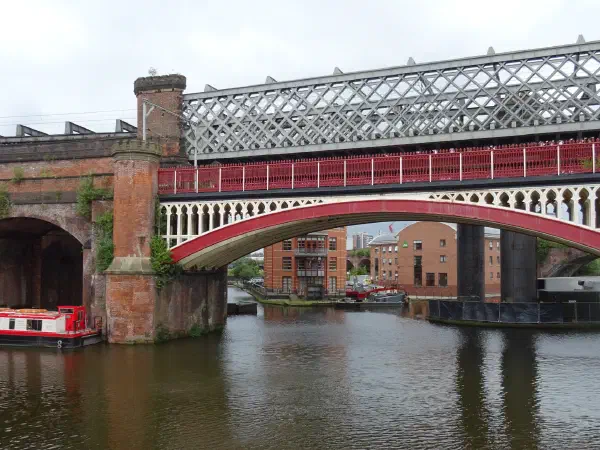
The Castlefield Canals form the heart of Manchester’s Castlefield Urban Heritage Park, a designated conservation area where the Bridgewater Canal, the Rochdale Canal, and the Manchester and Salford Junction Canal once converged. This historic network of waterways sits on the site of the Roman fort Mamucium and played a crucial role during the Industrial Revolution as part of Manchester’s inland port system (en.wikipedia.org).
The Bridgewater Canal, opened in 1761, is often credited as the first true canal in Britain, built to transport coal from Worsley into Manchester. The arrival of these canals transformed Castlefield into a bustling hub of warehouses, viaducts, and factories. In the 19th century, railway viaducts were added, creating the multi-layered industrial landscape still visible today.
By the late 20th century, canal use had declined, and the area fell into neglect. Regeneration projects from the 1980s onwards restored towpaths, reopened water routes for leisure boats, and converted warehouses into apartments, bars, and offices. Today, Castlefield is a blend of historic infrastructure and modern lifestyle spaces, attracting visitors for its history, leisure, and scenery.
Why Shoot Here?
Castlefield Canals are a dream location for photographers and Instagrammers due to their mix of waterfront reflections, industrial heritage, and city skyline views:
- Historic structures: Cast-iron railway viaducts, red-brick warehouses, and stone canal walls create textured, characterful backdrops.
- Reflections: Calm waters provide stunning mirrored views of bridges, boats, and surrounding architecture.
- Urban-meets-nature: The canals are framed by greenery in summer, and the changing light offers year-round variation.
- Event potential: Occasional boat gatherings or waterside markets add people and vibrancy to shots.
Getting There
Deansgate–Castlefield Metrolink sits directly above the basin, three minutes’ walk from the water, and Deansgate rail station shares the same site — so there is rarely a reason to drive. If you do, NCP Deansgate is the nearest at roughly £8–12 per day.
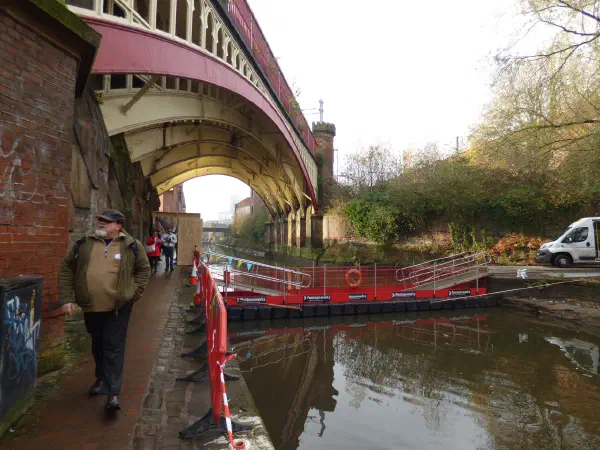
The towpaths are public and open at all hours. They are also cobbled, uneven and wet more often than not, which matters more than it sounds: the best reflection angles are at water level on the towpath edge, and that is exactly where the surface is slickest. Sensible footwear, and a tripod with proper spiked or rubber-shod feet rather than smooth plastic pads.
Everything else in Castlefield is within five minutes on foot, and the Castlefield and Deansgate canals walk links them in shooting order.
Photography FAQ
Can you take photos at Castlefield Canals?
Yes. The towpaths, bridges and basin edges are public space, open at all hours, and photography including tripod work is unrestricted. The one thing to be aware of is that people live on the moored narrowboats — a boat is somebody’s home, not a prop, so shoot them as part of the wider scene rather than pointing a lens through a window, and ask if you want anything closer.
When is the water calmest for reflections?
Before about 07:30. The basin is sheltered, so it starts the day close to flat and stays that way until the wind picks up and boat movement starts. By mid-morning on a breezy day the mirror is gone entirely. If you have travelled for the reflection, check the wind forecast rather than the cloud forecast — wind is what decides whether this location works.
What lens do I need at Castlefield Canals?
A 24–70mm zoom covers almost everything. The signature shot — Beetham Tower framed centrally through a cast-iron railway arch — sits naturally at 35–50mm, and Merchant’s Bridge wants 16–24mm from water level to use its sweep as a leading line. A long lens is the least useful thing in your bag here.
Is a polariser worth carrying?
It is the single most useful filter at this location, but not for the obvious reason. A polariser removes reflections, which is usually the opposite of what you want on the canal — the value is in being able to dial it partially, cutting glare off wet cobbles and brick while keeping the water mirrored. Our filters guide covers where the line sits.
Is Castlefield safe to shoot at night?
Blue hour and early evening are busy and well lit — the bars at Deansgate Locks are a couple of minutes away and the towpaths carry a steady flow of people. Later at night the far stretches of towpath get dark and empty, and the edge is unfenced in places. If you are working alone with a tripod after the bars fill up, stay on the lit sections near the basin.
Further Information
- Wikipedia – Castlefield — history of the area, Roman origins, and industrial role
- Bridgewater Canal History — background on Britain’s first industrial canal
- Visit Manchester – Castlefield — attractions, walking routes, and photo tips
- National Trust – Castlefield Viaduct — nearby elevated garden project offering unique overhead views of the canals
Best Times to Shoot
- Golden hour (sunset) saturates the red-brick viaducts and warehouse walls with warm light while the still canal water holds a perfect mirror reflection.
- Blue hour is exceptional here — Beetham Tower and surrounding apartment blocks illuminate, and their lights reflect in the canal, giving a striking urban-waterfront image.
- Early morning (before 07:30) offers the calmest water, fewest pedestrians and softest light — the ideal conditions for long-exposure reflection work, where something compact like the Peak Design Travel Tripod earns its place in the bag for the still-water reflections alone, plus a dry cloth for the towpath drizzle you won’t notice until it’s on the front element. Our canal filters guide covers when to cut these reflections and when to keep them; the architecture gear guide has the fuller kit list.
- Autumn layers fallen leaves along the towpath and on the water surface, adding seasonal colour that contrasts beautifully with the dark ironwork of the viaducts.
Composition Ideas
- Beetham Tower through the viaduct: Stand beneath a cast-iron railway arch and frame Beetham Tower centrally through the opening — use a 35–50 mm lens for natural perspective.
- Merchant’s Bridge elegance: Capture the white curved bridge from water level with a wide-angle (16–24 mm), using its sweep as a leading line across the frame.
- Foreground mooring posts or canal boats: Place colourful narrowboats or iron bollards in the lower third of the frame to anchor the composition, with viaducts and skyline behind.
- Overhead from Castlefield Viaduct garden: If access is available, shoot downward from the elevated National Trust garden to capture the canal network, boats and towpaths from a rare bird’s-eye perspective.
How to shoot it
Lens
A 16–35mm wide takes in reflections and foreground; switch to a 70–200mm to compress distant detail across the water.
Settings
Tripod, f/11, ISO 100 and a 1–8s exposure for glassy water and clean reflections; an ND filter extends it in daylight.
Composition
Shoot low to maximise the reflection, use the waterline as a leading line, and wait for still water to double the scene.
Timing
Aim for golden hour — the hour after sunrise or before sunset — when low, warm light rakes across the scene. Today's exact window is in the panel on this page.
More in Castlefield
See the area →Nearby spots
Shooting the whole area? Read the Castlefield photography guide — every spot, the light that suits it, and a route to link them.