 Any / overcast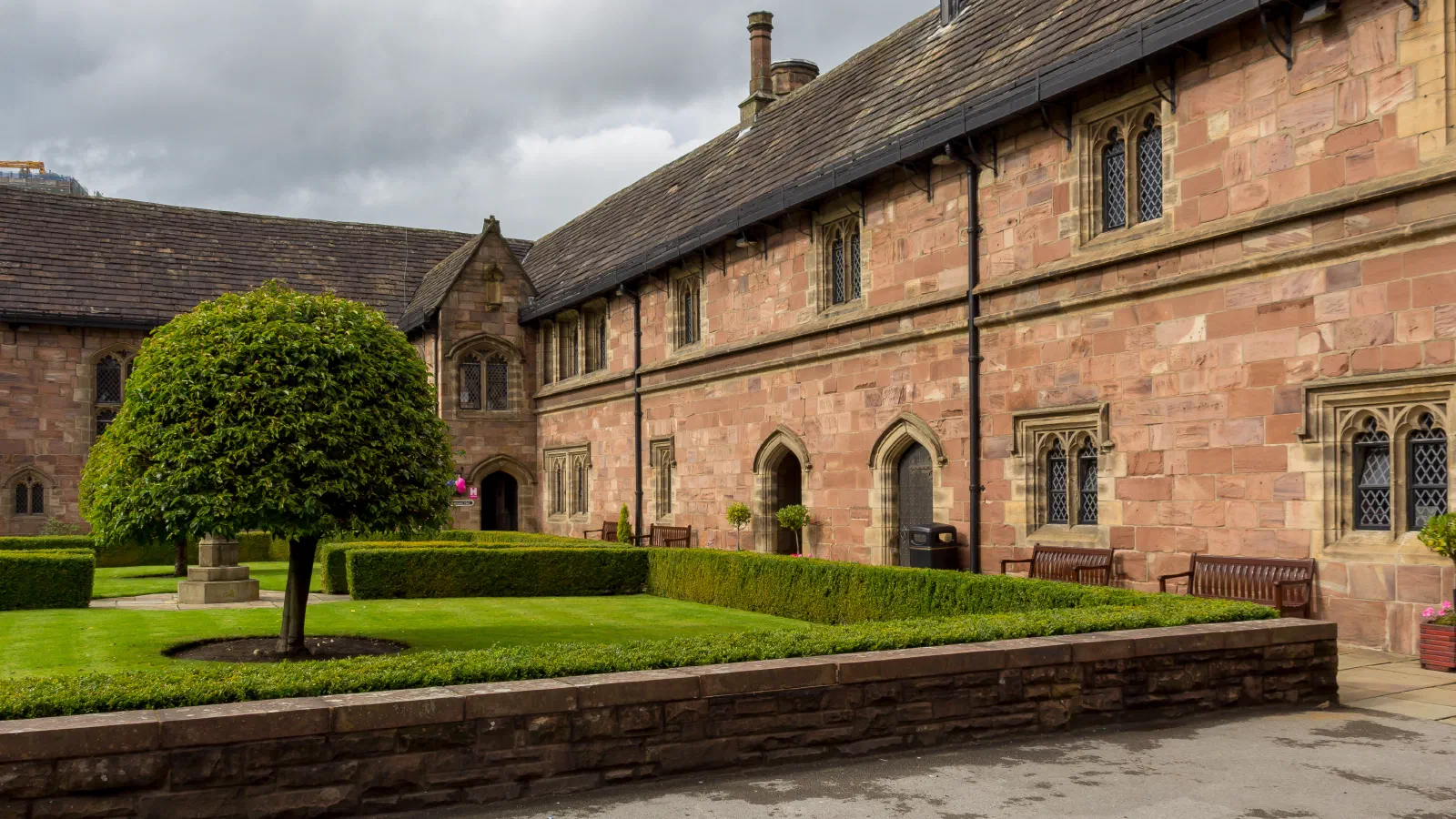
Best at any / overcast
Chetham’s Library
Medieval Quarter · ManchesterSome gear links on this page are affiliate links — if you buy through them we may earn a small commission at no extra cost to you. See our affiliate disclosure.
What is Chetham’s Library?
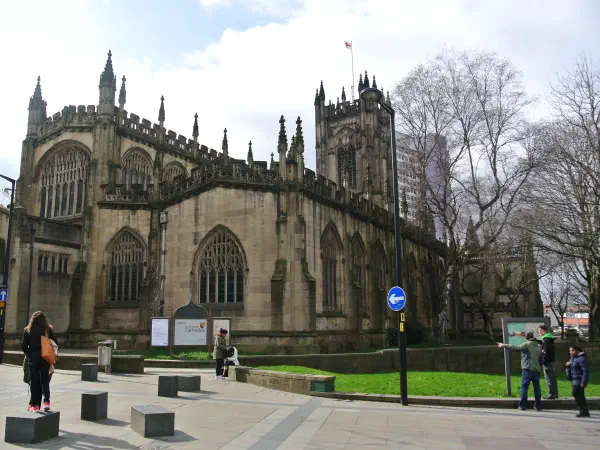
Chetham’s Library, founded in 1653, is the oldest free public reference library in the English-speaking world. Located in Manchester city centre next to Manchester Cathedral, it occupies a sandstone building dating back to 1421, originally constructed as the manor house for the collegiate church (now the cathedral) (Wikipedia – Chetham’s Library).
The library was established under the will of Humphrey Chetham, a wealthy Manchester textile merchant and philanthropist, who left provisions for a school (now Chetham’s School of Music) and a library “for the use of scholars and others well affected.” It houses over 100,000 volumes, including many printed before 1851, along with manuscripts, archives, and rare books.
Chetham’s interiors remain largely unchanged since the 17th century, featuring medieval stonework, oak bookcases with gated shelves, mullioned windows, and the famous Reading Room, where Karl Marx and Friedrich Engels studied together in 1845.
Why Shoot Here?
Chetham’s Library offers atmospheric and historically rich photography opportunities:
- Architectural character: Dark oak shelving, leather-bound volumes, stone mullions, and leaded glass windows.
- Historic ambience: The preserved 17th-century interiors are filled with texture, from worn wooden floors to intricate carvings.
- Famous connections: Photograph the exact desk where Marx and Engels worked.
- Light and shadow: Soft natural light through medieval windows creates moody, painterly effects.
Getting There
Victoria Metrolink and rail station is a two-minute walk and Manchester Arndale is five. NCP Manchester Arndale is the nearest car park at roughly £8–12 per day. The library is tucked behind Manchester Cathedral in the medieval quarter, inside the grounds of Chetham’s School of Music — the entrance is not obvious from the street, and the sandstone gatehouse is the way in.
Access is the thing to plan for. Chetham’s is open to visitors on guided tours only, and the schedule needs checking and booking in advance — you cannot turn up and wander with a camera, and the shared site with a working music school is part of the reason. That constrains your shoot to the tour’s route and pace, so know the frames you want before you arrive. Manchester Cathedral and Hanging Bridge are next door, and the medieval quarter to Spinningfields walk starts here.
Photography FAQ
Can you take photos in Chetham’s Library?
Access is by guided tour, so photography happens within that — check the current arrangements and any conditions when you book, since this is a working library holding rare material rather than a museum. In practice that means handheld, no flash, and keeping up with the group. A tripod is not realistic on a tour and would need to be arranged separately with the library in advance. Do not photograph readers or staff at work.
How dark is it inside?
Dark enough to be the main technical problem. The interior is 17th-century oak, stone and leaded glass, lit almost entirely by daylight through mullioned windows, and it is one of the most demanding handheld interiors in the city. Bring a fast prime — a 35mm at f/1.8 — keep stabilisation on, and accept a higher ISO than you would like. Brace against a door frame or a bookcase end rather than trying to hold the camera free.
What is the best time to photograph the library?
Morning tours. Angled sunlight comes through the mullioned windows at its strongest earlier in the day and lays warm pools of light across the oak desks and the leather bindings. Winter is better than summer for the same reason: the sun stays shallow all day and throws shafts deep into the reading room, catching dust in the air. Overcast days are the safe option, reducing the contrast between blown windows and near-black woodwork.
What should I photograph inside?
Three things. The gated oak bookcases — stand at one end of a shelf row and shoot at 35mm for hard converging lines down the length. The reading room desk where Marx and Engels worked in 1845, which is the frame most visitors come for and works best shallow and simple. And the textures: worn book clasps, hand-carved woodwork, inscriptions in stone, the patina on surfaces that are 600 years old. A short telephoto or macro earns its place on the last of those.
Why is the building itself significant?
The library was founded in 1653 under the will of Humphrey Chetham, a Manchester textile merchant, and is the oldest free public reference library in the English-speaking world. It occupies a sandstone building of 1421, built as the manor house for the collegiate church that is now the cathedral. The interiors have gone largely unchanged since the 17th century, which is why it photographs the way it does — this is not restoration, it is the original room.
Further Information
- Wikipedia – Chetham’s Library — history, collections, and architectural details
- Official Website – Chetham’s Library — visiting information, guided tours, and exhibitions
- Historic England – Chetham’s Library — listing entry with architectural description
Best Times to Shoot
- Morning guided tours — Angled sunlight streams through the mullioned windows at its strongest in the morning, casting warm pools of light across the oak desks and leather-bound volumes.
- Winter months — Low sun stays at a shallow angle throughout the day, sending dramatic shafts of light deep into the reading room and illuminating dust motes in the air.
- Overcast days — Soft, even light reduces harsh contrast between the bright window openings and the dark interior woodwork, making it easier to retain detail across the full tonal range.
Composition Ideas
- Long bookcase perspective — Stand at one end of a shelf row and use a 35 mm lens to create strong converging lines along the gated oak bookcases, drawing the eye deep into the library.
- Arched doorway framing — Position yourself in an adjacent room and frame the reading room or a fellow visitor through a medieval stone archway for natural vignetting and depth.
- Marx and Engels desk — Photograph the famous desk with a shallow depth of field using a fast 35mm prime — the Sony FE 35mm f/1.8 , Canon RF 35mm f/1.8 Macro IS STM , NIKKOR Z 35mm f/1.8 S , or the Fujifilm XF 23mm f/2 R WR on Fujifilm X — to isolate it from the background while gathering light in the dim interior, letting the historical significance of the spot speak through simplicity. This is one of the darkest interiors in the city, so keep stabilisation switched on and lean on the aperture — the rainy day gear guide covers handheld technique for spaces like this.
- Close-up textures — Use a macro or short telephoto lens to capture the details that make this place unique: worn book clasps, hand-carved woodwork, inscriptions on stone, and the patina of 600-year-old surfaces.
How to shoot it
Lens
A 16–35mm wide exaggerates scale and verticals; a 24–70mm keeps proportions natural. A tilt-shift tames converging lines.
Settings
f/8–f/11 for front-to-back sharpness, ISO 100, and meter for the highlights so detail in the stonework holds.
Composition
Hunt for symmetry and repetition, keep verticals straight, and use doorways or arches to frame the subject.
Timing
Bright overcast suits it best — soft, even light with no harsh shadows — so it works at almost any time of day.
More in Medieval Quarter
See the area →Nearby spots
Any / overcast Any / overcast