 Any / overcast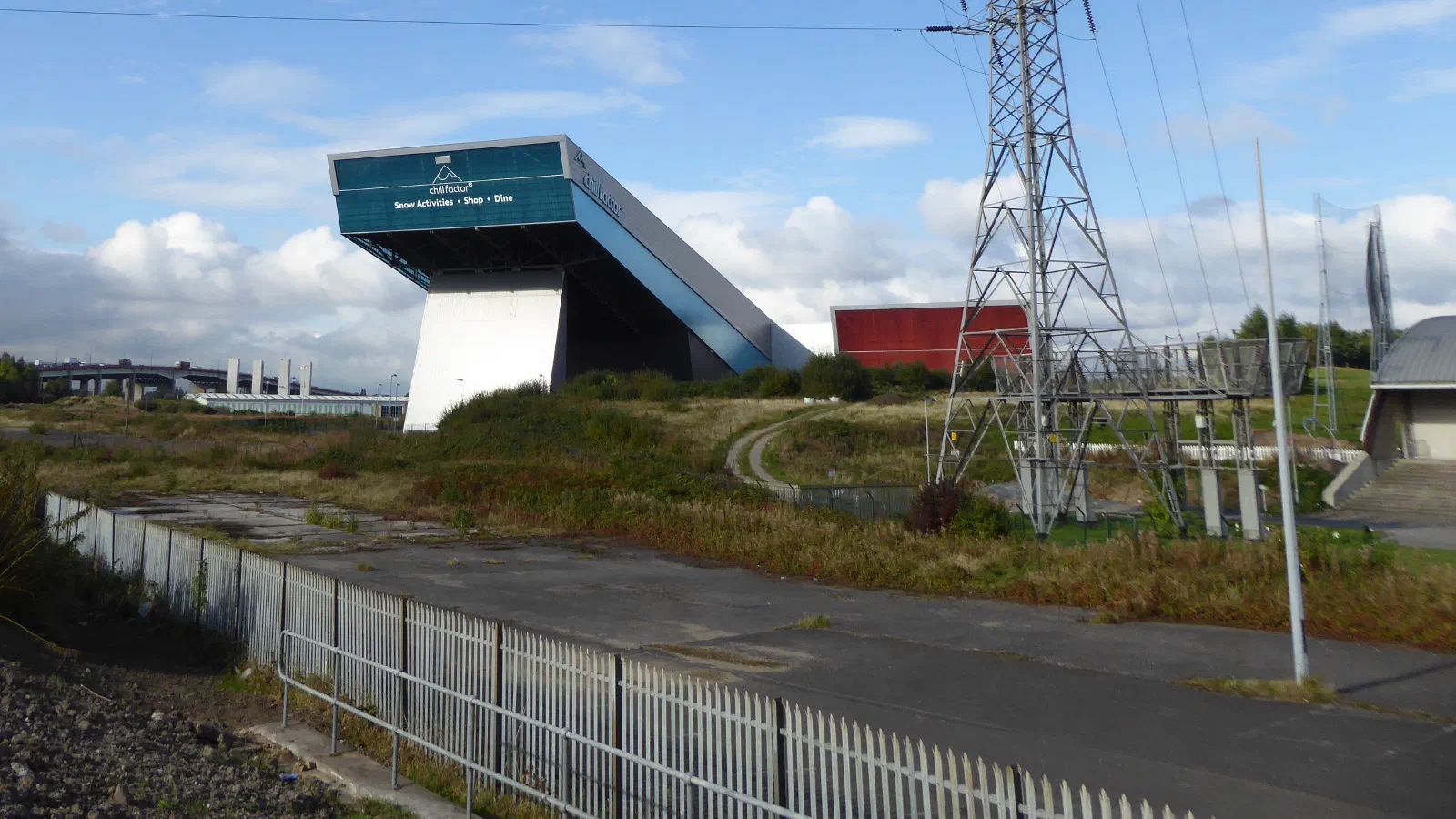
Best at any / overcast
Chill Factore
Trafford · ManchesterSome gear links on this page are affiliate links — if you buy through them we may earn a small commission at no extra cost to you. See our affiliate disclosure.
What is Chill Factore?
Chill Factore is home to the UK’s longest indoor real snow slope — a 180-metre run of genuine machine-made snow housed inside an enormous angled shed at TraffordCity, a few minutes from the Trafford Centre. Designed by FaulknerBrowns Architects and opened in November 2007, the building is a serious piece of large-scale modern architecture in its own right: a single, continuous roofline climbs from the low entrance end up to the full height of the main slope, giving the whole structure the profile of a mountainside rendered in steel and cladding.
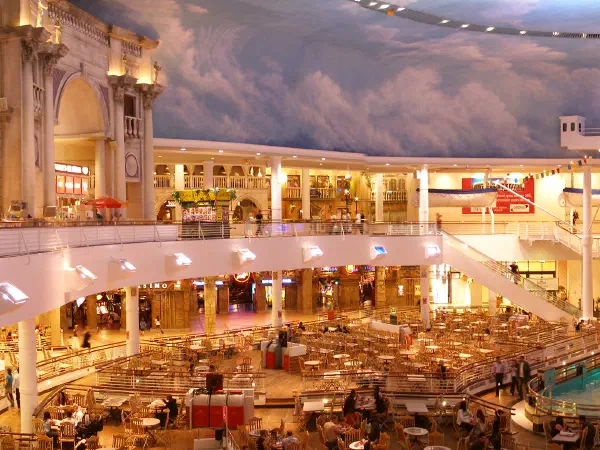
While the skiing and snowboarding are the main draw, photographers get two distinct subjects for one visit. Outside, the sheer scale and geometry of the building make it one of Trafford’s most distinctive structures, clearly visible from the M60 motorway. Inside, Alpine Street — the themed indoor village at the foot of the slope — offers wooden chalet frontages, fairy lights and après-ski clutter that feel genuinely transplanted from the Alps, all under controlled artificial lighting that never changes with the weather. On a wet Manchester day it earns a place alongside the city’s other rainy-day photography spots.
Why Shoot Here?
- Sleek exterior: The long, sloping roofline is a prominent landmark and a gift for minimalist architectural photography — clean diagonals, repeating cladding panels and a profile that reads clearly even in silhouette.
- Alpine Village theme: Alpine Street’s wooden chalets, signage and warm tungsten-toned lighting provide a cosy, slightly surreal environment you won’t find anywhere else in Greater Manchester.
- Action shots: If you book slope access, it’s a controlled environment for practising sports photography — consistent light, predictable rider lines and a clean white backdrop that makes colourful clothing pop.
- Night lighting: The building is strikingly lit after dark, making it a beacon beside the motorway and a strong subject for long exposures from the surrounding car parks.
Getting There
The nearest Metrolink stop is Village on the Trafford Park line, about a 10-minute walk away — leave the platform towards Barton Dock Road and the sloping roofline is visible almost immediately. Driving is easy: there’s a free on-site car park at Chill Factore itself, signed from the M60 (TraffordCity exits). On foot from the Trafford Centre, head out past Barton Square and follow Barton Dock Road north-west; allow 10–15 minutes. The free parking makes this one of the cheapest evening shoots in Greater Manchester.
Photography FAQ
How long is the ski slope at Chill Factore?
The main slope is 180 metres long, which makes it the longest indoor real snow slope in the UK. It uses real snow, topped up and groomed regularly, rather than a dry or artificial surface.
Can you take photos inside Chill Factore?
Casual photography around the Alpine Street village area is generally fine — it’s a public-facing space of shops and restaurants. To photograph on the snow itself you’ll need to book a slope session, and any organised or commercial shoot should be arranged with the venue in advance.
Do you need to ski to visit Chill Factore?
No. The Alpine Street village, with its shops, cafés and restaurants, is open to non-skiers, so you can photograph the themed interior without booking a lesson or lift pass. Check the official website for current opening hours before travelling.
Is parking free at Chill Factore?
Yes — there’s a free car park on site, which doubles as a convenient tripod position for shooting the illuminated facade after dark.
When is Chill Factore least busy?
Weekday daytimes during school term are quietest, both in the village and on the slope. Weekends and school holidays bring family crowds, which can work in your favour if you want bustle and human interest in your frames.
Best Times to Shoot
- Blue hour and early evening — The exterior lighting switches on as daylight fades, creating a vivid glow against the twilight sky. Arrive about 30 minutes before sunset to catch the transition; the 15–20 minutes after the sky turns deep blue is when the balance between ambient light and the building’s illumination is best for long exposures.
- Weekday daytimes — Fewer visitors inside the Alpine Village mean cleaner compositions among the themed chalets, and the indoor snow slope is less crowded for action photography.
- After fresh grooming — The slope is regularly resurfaced; freshly groomed snow looks pristine and reflects the overhead lighting more evenly, giving action shots a crisp, clean backdrop. Earlier sessions tend to have the cleanest snow.
- Overcast evenings — Cloud cover acts as a giant softbox, preventing glare on the metal roof and producing a more even colour wash across the facade for exterior work.
Composition Ideas
- Geometric roofline — Shoot the long, angled roofline from the car park with a wide-angle lens (16–24 mm) to emphasise the dramatic slope and leading lines of the building’s profile against the sky. Step back far enough to include the full rise from entrance to summit in one frame.
- Alpine Village lifestyle — Use a 35–50 mm lens inside the themed village to capture the wooden chalets, warm lighting and visitors with hot chocolate, treating the scene as a cosy lifestyle shoot. White balance is worth fixing manually here: the mixed tungsten and LED sources confuse auto settings.
- Action and motion blur on the slope — With slope access, use a fast shutter (1/1000s+) to freeze skiers mid-turn, or drop to 1/30s and pan with a moving subject for dynamic motion blur against the white snow. Expose for the snow at around +1 stop to stop it rendering grey.
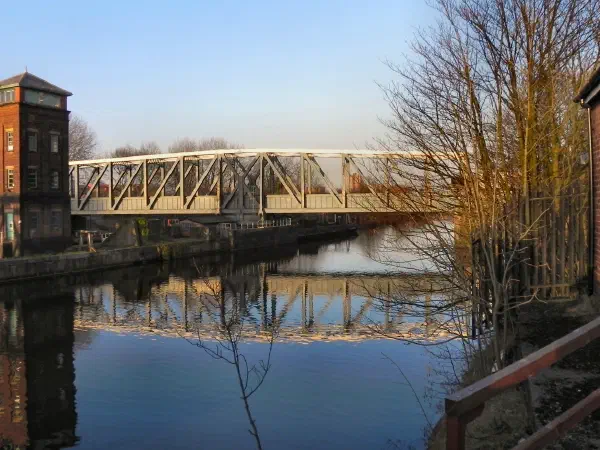
- Night exterior with light trails — Set up a tripod like the Peak Design Travel Tripod facing the illuminated building from across the car park and include passing traffic on Barton Dock Road for light trails that complement the colourful facade. If you’re making an evening of it, the Barton Swing Bridge over the Ship Canal is a short drive away and pairs well as a second industrial-scale subject.
How to shoot it
Lens
A 16–35mm wide exaggerates scale and verticals; a 24–70mm keeps proportions natural. A tilt-shift tames converging lines.
Settings
f/8–f/11 for front-to-back sharpness, ISO 100, and meter for the highlights so detail in the stonework holds.
Composition
Hunt for symmetry and repetition, keep verticals straight, and use doorways or arches to frame the subject.
Timing
Bright overcast suits it best — soft, even light with no harsh shadows — so it works at almost any time of day.
More in Trafford
See the area →