 Golden hour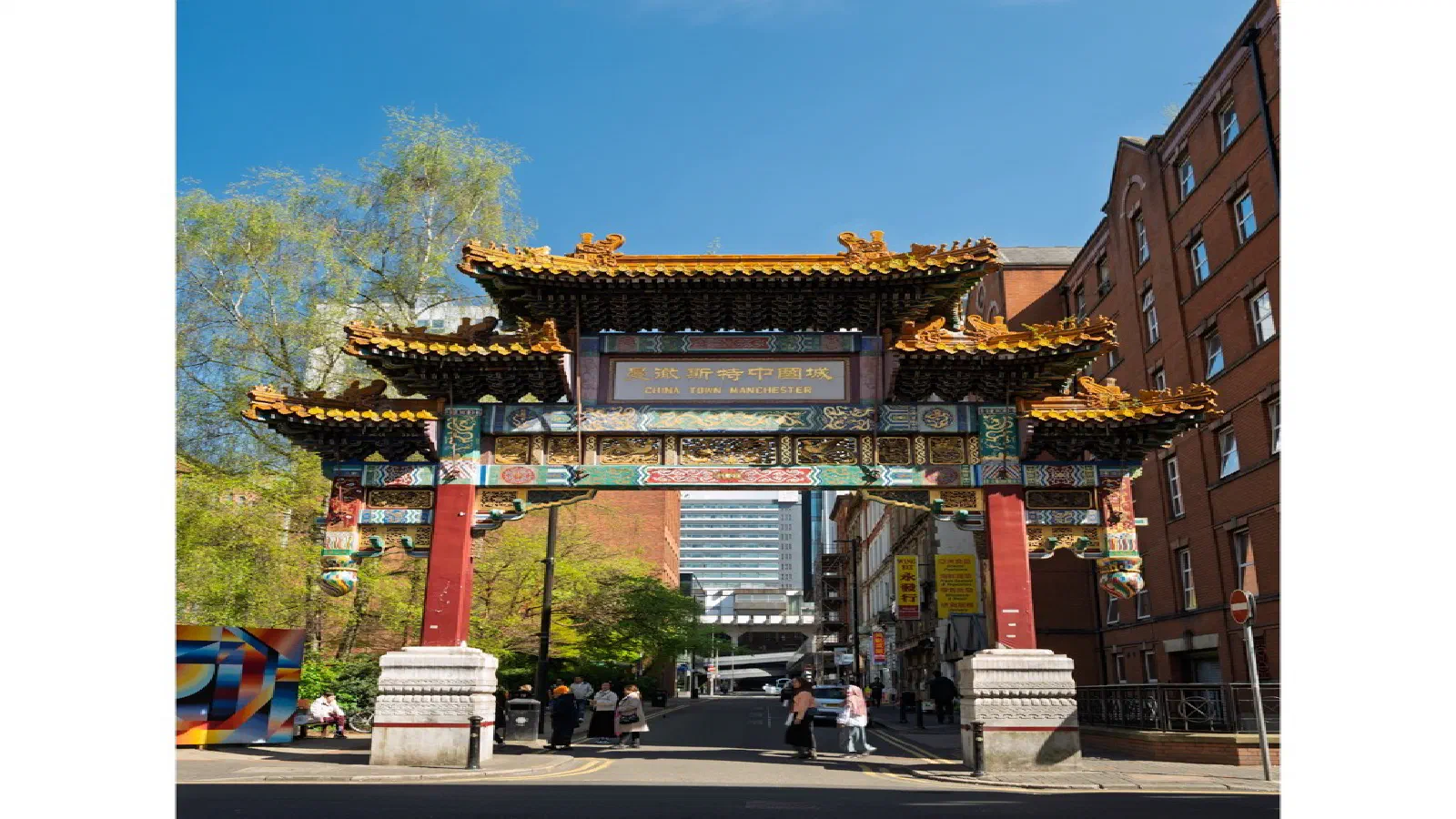
Best at night
Chinatown
City Centre · ManchesterSome gear links on this page are affiliate links — if you buy through them we may earn a small commission at no extra cost to you. See our affiliate disclosure.
What is Chinatown, Manchester?
Manchester’s Chinatown is the second largest in the United Kingdom and the third largest in Europe, located in the heart of the city between Portland Street, Mosley Street, Princess Street, and Charlotte Street (en.wikipedia.org). It emerged in the mid-20th century as Chinese immigrants, many from Hong Kong, settled in Manchester and opened restaurants, supermarkets, and businesses serving both the local Chinese community and the wider public.
The district’s most famous landmark is the ornate Chinese Arch on Faulkner Street, a traditional paifang gifted by Manchester’s twin city of Wuhan in 1987. The arch was built in China, shipped to the UK in sections, and assembled by specialist craftsmen. Decorated with dragons, phoenixes, and intricate gold details, it stands as a symbol of cultural pride and connection.
Beyond the arch, Chinatown is a vibrant cultural and commercial hub with pan-Asian restaurants, bubble tea cafés, bakeries, and specialist grocery stores. The area comes alive during annual celebrations such as the Chinese New Year Festival, which features dragon and lion dances, parades, music, and fireworks (visitmanchester.com).
Why Shoot Here?
Chinatown offers photographers and Instagrammers a colourful and atmospheric location:
- Iconic Chinese Arch: A richly decorated focal point, perfect for symmetry shots, detail photography, or framing with surrounding architecture.
- Cultural celebrations: Chinese New Year provides dynamic action shots—dancers, musicians, lanterns, and fireworks.
- Street details: Hanging lanterns, bilingual shop signs, and intricate window displays make excellent close-up or lifestyle imagery.
- Night photography: Neon lights and illuminated shopfronts reflect on wet pavements for moody, cinematic compositions.
Getting There
St Peter’s Square and Piccadilly Gardens Metrolink stops are both about five minutes away, and Manchester Piccadilly is around ten. NCP China Town is the nearest car park at roughly £8–12 per day. The district sits between Portland Street, Mosley Street, Princess Street and Charlotte Street, and the Chinese Arch is on Faulkner Street in the middle of it — everything worth shooting is within a couple of hundred metres.
These are public streets with no entry fee and no restrictions on when you can be here. Canal Street is five minutes east, St Peter’s Square five minutes west and Piccadilly Gardens about the same, all in the city centre — the city centre squares and neon walk takes in Chinatown along with all three.
Photography FAQ
Can you take photos in Manchester’s Chinatown?
Yes — the streets are public and the arch, the lanterns and the shopfronts need no permission. The restaurants, bakeries and supermarkets are private businesses, so ask before photographing inside one or shooting a window display close up; most are happy about it if you ask. Chinatown is a working community as well as a visitor destination, and residents and staff going about their day deserve the same courtesy you would give anyone — not to be treated as set dressing.
Where is the Chinese Arch and how do I photograph it?
On Faulkner Street. It is a paifang gifted by Wuhan in 1987, built in China and assembled here, and it is the shot everyone comes for. Crouch low and shoot it dead centre at 24mm, using the cobbles as foreground texture and letting the ornate roofline fill the top of the frame. Come before 9am if you want it without pedestrians and delivery vehicles — by mid-morning that clean symmetrical frame is gone.
What is the best time to photograph Chinatown?
Blue hour, just after sunset. The neon signs and red lanterns come on while the sky still holds deep blue, which is what makes the colour sing — an hour later the background is black and the images flatten. If it has rained, stay: the wet pavement doubles every light source. Weekend lunchtimes are the alternative if you want people rather than architecture, with restaurants spilling onto the pavement and queues at the bakeries.
What lens should I bring to Chinatown?
A 24mm for the arch and the narrow streets. A 70–200mm for the strings of lanterns — compressing them stacks the lanterns densely down the street in a way a wide lens cannot, and it is the most distinctive image available here. A 50–85mm at a wide aperture handles the details: gold dragon carvings on the arch, hand-painted signage, food in a restaurant window.
Is Chinese New Year worth photographing here?
It is the busiest and most rewarding time of year, usually January or February, with dragon and lion dances, drummers, lantern displays and fireworks. Expect crowds and fast-moving subjects — a faster shutter and a higher ISO than you would normally choose. It is also a cultural and religious occasion rather than a staged spectacle, so ask before making portraits, and stay out of the way of the performers and the processions.
Further Information
- Wikipedia – Chinatown, Manchester — history, demographics, and notable features
- Visit Manchester – Chinatown — visitor guide, food listings, and event details
- Manchester Evening News – Chinatown photo galleries — event photography and community stories
Best Times to Shoot
- Blue hour (just after sunset) — Neon shop signs and red lanterns ignite against the deep blue sky, and wet pavements after rain create vivid reflections that double the colour impact.
- Chinese New Year (January/February) — The streets fill with dragon dancers, drummers, lantern displays, and fireworks, offering fast-paced action and spectacular colour for documentary and event photography.
- Early morning (before 9 am) — The arch and surrounding streets are almost deserted, letting you capture clean architectural shots of the paifang without pedestrians or delivery vehicles.
- Weekend lunchtimes — Restaurants spill activity onto the pavements, diners queue at bakeries, and the street buzzes with energy, perfect for candid street photography with an authentic community feel.
Composition Ideas
- Low-angle arch symmetry — Crouch on Faulkner Street and shoot the Chinese Arch dead centre with a 24 mm lens, using the cobblestones as foreground texture and letting the ornate roofline fill the top of the frame.
- Lantern leading lines — Strings of red lanterns strung across the narrow streets create natural leading lines; use a longer focal length like a 70-200mm telephoto to compress perspective and stack the lanterns densely in the frame.
- Neon reflections on wet ground — After rain, get low and focus on puddle reflections of shop signs and lanterns for abstract, cinematic compositions that feel distinctly urban.
- Detail and food close-ups — Isolate gold dragon carvings on the arch, hand-painted shop signage, or steaming dumplings in a restaurant window with a 50-85 mm lens at a wide aperture for editorial-style imagery.
How to shoot it
Lens
A 16–35mm wide exaggerates scale and verticals; a 24–70mm keeps proportions natural. A tilt-shift tames converging lines.
Settings
f/8–f/11 for front-to-back sharpness, ISO 100, and meter for the highlights so detail in the stonework holds.
Composition
Hunt for symmetry and repetition, keep verticals straight, and use doorways or arches to frame the subject.
Timing
This one comes alive after dark, once signage and lighting take over. Wait for the sky to go fully dark for the cleanest, richest colour.
More in City Centre
See the area →Nearby spots
Shooting the whole area? Read the City Centre photography guide — every spot, the light that suits it, and a route to link them.