 Golden hour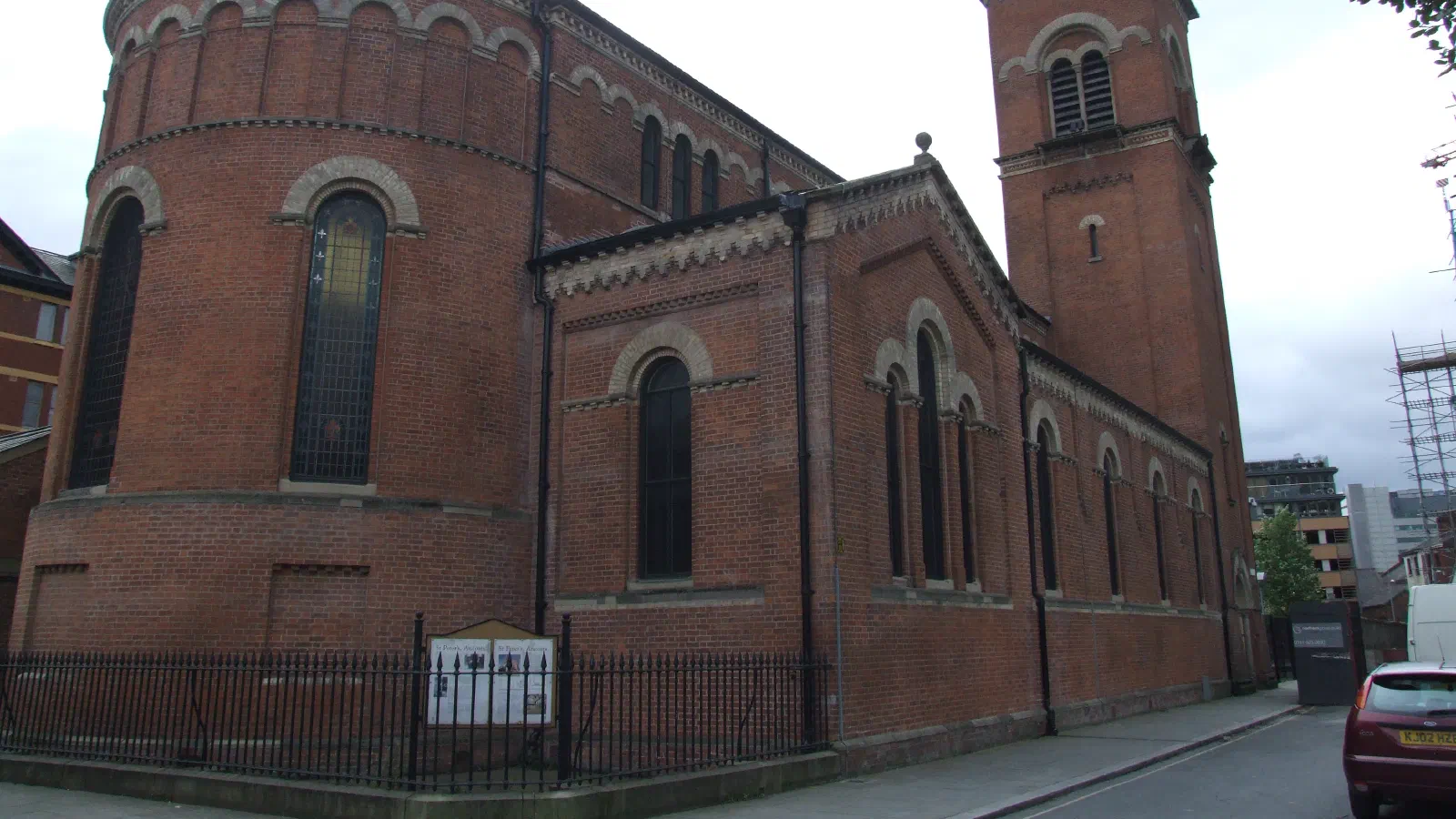
Best at any / overcast
Hallé St Peter's
Ancoats · ManchesterWhat is Hallé St Peter’s?
Hallé St Peter’s is a stunning Grade II listed former church located on Blossom Street in Ancoats. Built in 1859, it was the first Anglican church in the area. After falling into disrepair, it was beautifully restored and is now a rehearsal and recording space for the world-famous Hallé orchestra. The modern “Oglesby Centre” extension is a masterpiece of contemporary architecture that complements the original brickwork.
Why Shoot Here?
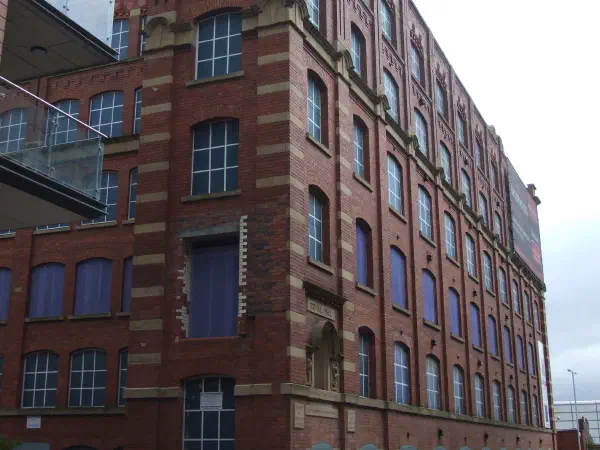
- Gothic vs Modern: The contrast between the Victorian brickwork of the church and the sharp, geometric lines of the modern steel-and-glass extension is a fantastic subject for architectural photographers.
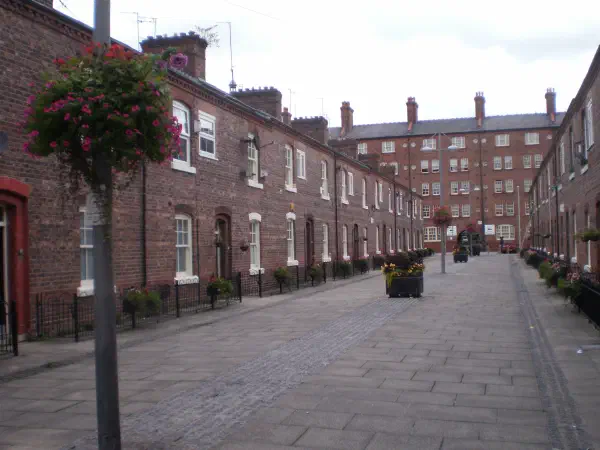
- Urban Framing: The narrow streets of Ancoats provide several interesting angles to frame the church’s tower, especially when looking down Blossom Street or Henry Street.
- Golden Hour: The red bricks of the church glow beautifully in the late afternoon sun, creating a warm and historic atmosphere.
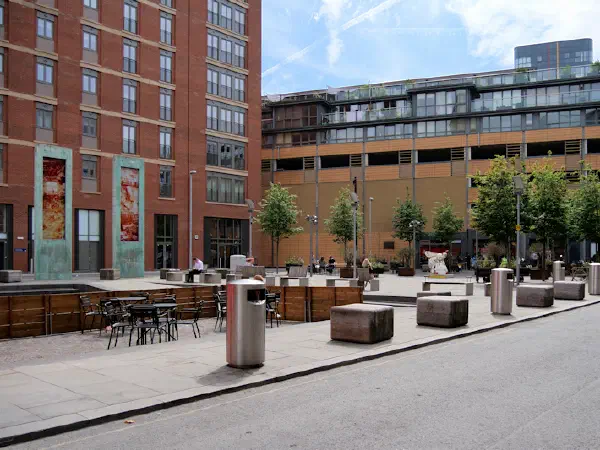
- Minimalist Extension: The Oglesby Centre extension features unique textures and reflections that are perfect for minimalist architectural shots.
Best Times to Shoot
- Late afternoon in summer (golden hour) — The western and south-western faces of the original 1859 brickwork catch warm directional light from around 17:00 onwards. This is the time when the red brick goes a deep terracotta and the contrast between the warm Victorian masonry and the cool slate-grey of the Oglesby Centre extension is at its most photogenic.
- Overcast days — The glass panels of the Oglesby extension become mirrors in direct sun, washing out the reflection of surrounding mills. Cloud cover reduces this surface glare and lets you see both the glass itself and its reflective content simultaneously — the converted cotton mills of Ancoats appearing in the new steel-and-glass surface beside the old sandstone.
- Early morning on weekdays (before 8 am) — Blossom Street and Henry Street are residential and quiet; there are almost no vehicles or pedestrians to disrupt the architectural sightlines down these narrow streets toward the church tower. This is the window for clean, unobstructed shots of the full building.
- Winter afternoons — The Gothic tower of St Peter’s is visible from further away when the surrounding trees are bare, and the low winter sun hits the tower’s clock face and stone detail at an angle that reveals relief texture in the carved work.
Composition Ideas
- Blossom Street framing — Stand at the northern end of Blossom Street and shoot south toward the church tower. The narrow Ancoats street acts as a natural canyon, with converted mill buildings on both sides converging on the Gothic tower as a vanishing-point subject. A 35–50 mm lens captures this without compressing perspective too aggressively.
- Victorian–modern junction — Position yourself at the corner where the original church meets the Oglesby Centre extension and shoot parallel to the facade at 24–35 mm. The seam between 1859 brick and 21st-century steel runs vertically through the frame; both materials are lit from the same angle, making the contrast in age and texture the explicit subject of the image.
- Reflection of surrounding mills in the glass extension — Stand at about 45 degrees to the Oglesby Centre’s glazed panels and use a 50–85 mm lens to frame the reflection of the red-brick Ancoats mills in the glass. The resulting image layers three different architectural moments — Victorian church, post-industrial regeneration, and contemporary practice — within a single shot.
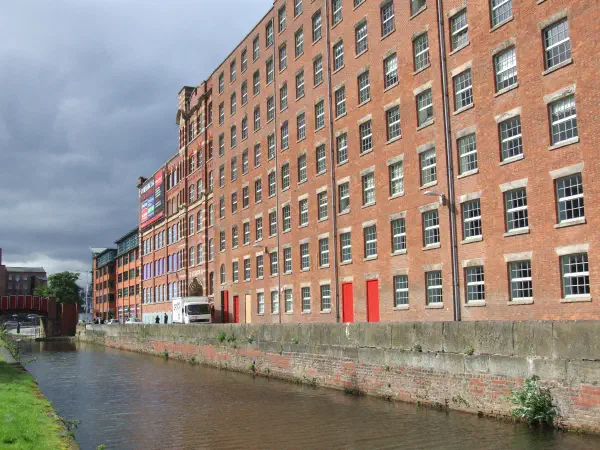
- Wide context shot including nearby mills — Step back to the junction of Henry Street and Great Ancoats Street and shoot with a 16–24 mm lens to include Murrays’ Mills or the former cotton mill towers in the background. This contextualises Hallé St Peter’s within the broader Ancoats conservation story rather than isolating it as a standalone object.
How to shoot it
Lens
A 16–35mm wide exaggerates scale and verticals; a 24–70mm keeps proportions natural. A tilt-shift tames converging lines.
Settings
f/8–f/11 for front-to-back sharpness, ISO 100, and meter for the highlights so detail in the stonework holds.
Composition
Hunt for symmetry and repetition, keep verticals straight, and use doorways or arches to frame the subject.
Timing
Bright overcast suits it best — soft, even light with no harsh shadows — so it works at almost any time of day.
More in Ancoats
See the area →Nearby spots
Shooting the whole area? Read the Ancoats photography guide — every spot, the light that suits it, and a route to link them.