 Night
Night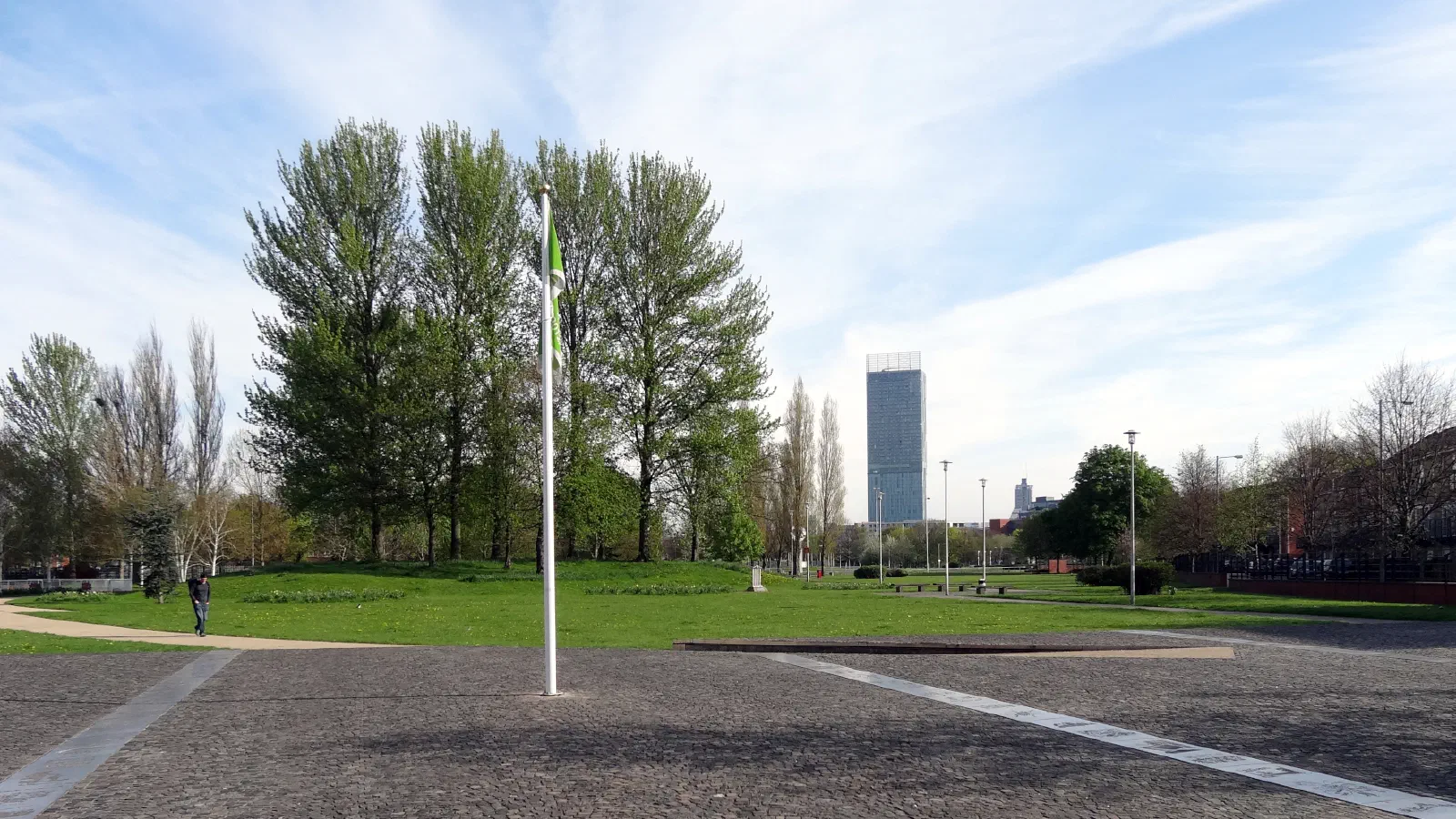
Best at golden hour
Hulme Park
Hulme · ManchesterSome gear links on this page are affiliate links — if you buy through them we may earn a small commission at no extra cost to you. See our affiliate disclosure.
What is Hulme Park?
Hulme Park was the first large-scale new park to be built in Manchester for over 50 years when it opened in 1999. It’s a award-winning green space that serves as the lungs of the Hulme community, featuring a mix of open lawns, woodland areas, and modern design elements.
Why Shoot Here?
- Modern Landscaping: The park features interesting geometric pathways and modern architectural elements that make for great urban landscape shots.
- Skyline Views: From certain points in the park, you can get clear views of the Manchester city centre skyline, including Beetham Tower, framed by greenery.
- Community Life: It’s a vibrant spot for lifestyle and street photography, capturing the diverse community of Hulme in a relaxed setting.
- Seasonal Change: The variety of trees and planting means the park offers different photographic opportunities throughout the year, from spring blossoms to autumn colors.
Getting There
Cornbrook Metrolink is about an eight-minute walk and Deansgate-Castlefield roughly fifteen. There is free street parking nearby, which is unusual this close to the city centre and makes the park an easy early-morning stop by car. It is a public park with open access and no entry fee, so dawn and dusk sessions are both available.
Hulme Park sits in Hulme, a few minutes south-west of the centre, and its position is the point: it is close enough that the city skyline is part of the view. Kimpton Clocktower is ten minutes east and Hulme Arch Bridge is the neighbouring landmark, five minutes away — the two pair naturally into one short session.
Photography FAQ
Can you take photos in Hulme Park?
Yes. It is a public park with open access and no permission needed for personal photography or tripods. It is also a genuinely well-used community park rather than a tourist site — dog walkers in the morning, families at school pickup, joggers in the evening. If you are photographing people, work openly and ask before making a portrait of anyone identifiable; near the play areas, be obvious about what you are doing.
Can you see the Manchester skyline from Hulme Park?
Yes, and it is the reason to come here rather than to a bigger park. From the higher ground on the western boundary, Beetham Tower and the Deansgate Square cluster are visible on the skyline. On a clear evening the glass towers go amber-orange and then silhouette against the fading sky. Frame them through overhanging branches at 35–70mm — wide enough to include canopy, long enough that the towers still carry weight in the frame.
What is the best time to shoot here?
Late afternoon golden hour. The geometric concrete pathways run east–west and pick up long raking shadows in the last hour of daylight, which is what makes the angular 1999 landscaping legible — in flat midday light the design simply disappears. Early autumn mornings around 7:00–7:30 are the other option, when ground mist collects on the open lawns and the park is empty. Late October brings amber and russet across the canopy against the cool concrete and paving.
What lens should I bring to Hulme Park?
A 16–24mm for the paths, shot from 30–40cm off the ground so the edges converge hard and you get both the hard landscaping and the skyline above the treeline in one frame. A 35–70mm for the Beetham Tower view. A 50–85mm for candid community work from a bench, where the geometric paths and planting beds give you clean backgrounds. A macro or a 50mm at f/2.8–f/4 for the ornamental grasses and perennial beds, which hold structure through all four seasons.
What makes Hulme Park notable?
It opened in 1999 as the first large-scale new park built in Manchester in over fifty years, and it was designed as the green centre of the rebuilt Hulme rather than inherited from an older landscape. That shows in the deliberately modern, angular design language — geometric paths, hard landscaping, architectural elements — which is what distinguishes it photographically from the city’s Victorian parks. Shoot the geometry, not just the greenery.
Best Times to Shoot
- Late afternoon golden hour — The geometric concrete pathways running east-west across Hulme Park catch long, raking shadows in the final hour of daylight, making the angular design language of the 1999 landscaping far more legible than in flat midday light. The western-facing open lawn area catches warm orange light that contrasts with the dark green of any retained evergreen planting.
- Clear evenings from the western edge — From the higher ground on the park’s western boundary, Beetham Tower and the Deansgate Square cluster are visible on the skyline. As the sun drops, the glass towers turn amber-orange and eventually silhouette against the fading sky — a view that is only possible from a green space this close to the city centre.
- Early morning in autumn — Hulme Park’s open lawns collect ground-level mist in cool autumn mornings. Arriving at 7–7:30 am gives you thin mist across the grass, dewdrops on the planted beds, and soft diffused light before any wind develops. The park is almost entirely empty at this hour.
- October for autumn colour — The park’s mix of deciduous species — including ornamental cherries, rowans, and larger oaks — produces a spread of amber, gold, and russet across the upper canopy from late October. The modern concrete and paving of the park sits in strong tonal contrast to these warm tones.
Composition Ideas
- Geometric pathway leading lines at low angle — Choose one of the straight concrete paths and drop to 30–40 cm height with a 16–24 mm lens. The path edges converge aggressively toward the vanishing point, and the low angle includes both the hard-landscaped surface and the sky or skyline above the treeline. The angular design is the subject, not just a route through it.
- Beetham Tower framed by branches — Find a position on the western edge of the park where overhanging tree branches can frame Beetham Tower in the gap. A 35–70 mm lens is ideal — wide enough to include some canopy but long enough to give the tower enough presence in the frame. In autumn, copper-coloured leaves add seasonal interest against the glass and steel.
- Community candid shots with 50–85 mm — The park is well-used by Hulme residents throughout the day: dog walkers in the morning, parents with children at school pickup, joggers in the evening. Use a 50–85 mm lens from a bench or planted zone to photograph people naturally engaged with the space. The geometric paths and modern planting beds provide clean backgrounds.
- Planted bed macro at ground level — The ornamental grasses and perennial planting beds in Hulme Park have strong seasonal structure: fresh growth in spring, full flower heads in summer, seed heads and frost in winter. A macro lens or 50 mm at f/2.8–f/4 from ground level isolates individual plants against a softly blurred background of paths and lawn.
How to shoot it
Lens
A 24–70mm covers most scenes; a 70–200mm isolates detail and a macro lens finds the small stuff.
Settings
f/5.6–f/8 for natural depth, low ISO, and a polariser to cut glare and deepen foliage and sky.
Composition
Use paths and tree lines as leading lines, add foreground interest, and shoot into low side-light for depth and texture.
Timing
Aim for golden hour — the hour after sunrise or before sunset — when low, warm light rakes across the scene. Today's exact window is in the panel on this page.
More in Hulme
See the area →