 Night
Night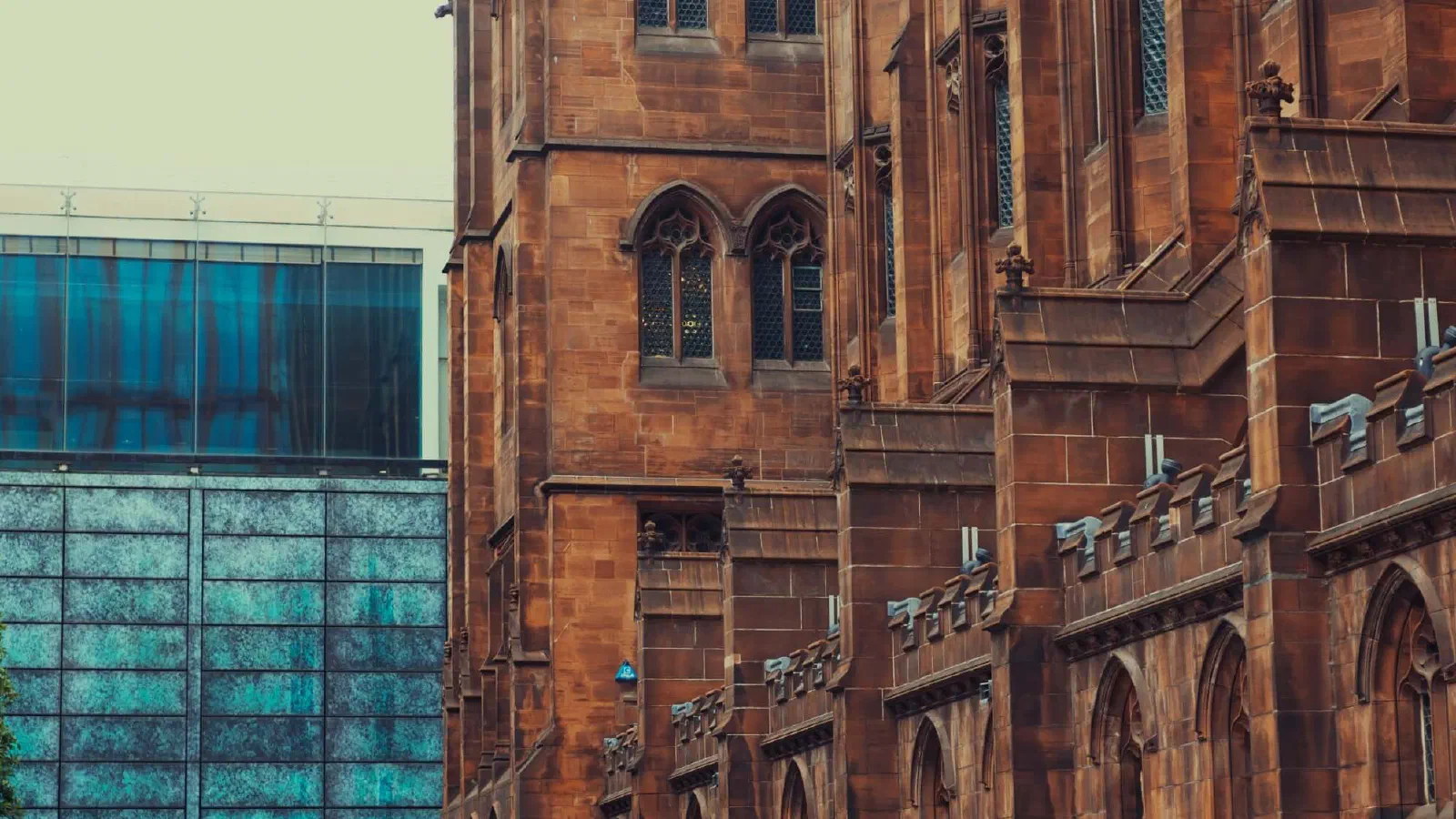
Best at any / overcast
John Rylands Library
Spinningfields · Manchester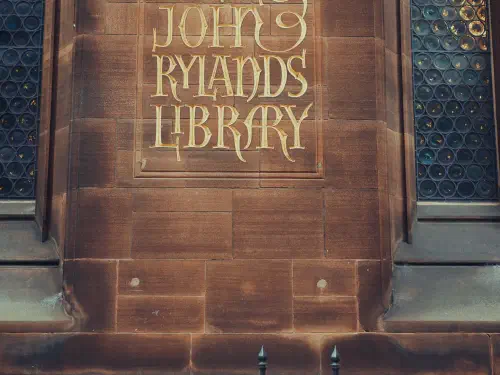
Some gear links on this page are affiliate links — if you buy through them we may earn a small commission at no extra cost to you. See our affiliate disclosure.
What is the John Rylands Library?
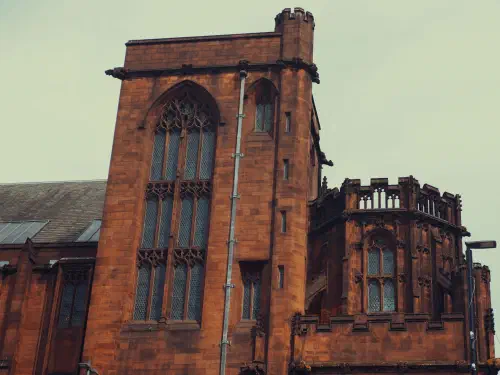
The John Rylands Library, located on Deansgate in Manchester, is a masterpiece of neo-Gothic architecture and one of the city’s most treasured cultural landmarks. Opened to the public in 1900, it was commissioned by Enriqueta Rylands in memory of her husband, wealthy industrialist John Rylands (Wikipedia – John Rylands Library).
Designed by architect Basil Champneys, the building took ten years to construct and was fitted with advanced Victorian engineering for the time, including an air filtration system and electric lighting. Today, the library is part of the University of Manchester and houses one of the most important special collections in the UK, including medieval manuscripts, early printed books such as a Gutenberg Bible, and archives of significant historical figures.
The interior is often compared to something from a fantasy film, with its elaborate stone vaulting, stained glass, and reading room that resembles a cathedral more than a library.
Why Shoot Here?
This is arguably the single best interior in Manchester to photograph, and the reasons go beyond the obvious grandeur:
- Architectural drama at every scale: Neo-Gothic stonework, fan vaulting, ornate arches and intricate wood and metal detail mean the building gives you a strong frame at 24 mm and at 85 mm — rare in an interior, and it makes a one-lens visit genuinely viable.
- Light you cannot get outdoors: Tall stained-glass windows throw coloured light across pale stone, so the colour in your frame is being made by the building rather than by the weather or the hour. On a grey day outside, the reading room is still doing something interesting.
- Built-in symmetry: The Historic Reading Room’s central aisle is one of the most reliably composed shots in the city — the architecture has done the work, and your job is mostly to get level, centred and empty of people.
- Weatherproof and free: Covered, warm, no entry fee, and dramatic regardless of what the sky is doing. That combination makes it the default fallback when a planned outdoor shoot is rained off.
- Historic detail as subject matter: Carved inscriptions, decorative ironwork and the rare books themselves — medieval manuscripts, a Gutenberg Bible — give you close-up material once the wide shots are done.
Getting There
The nearest tram stop is St Peter’s Square, five minutes’ walk: head west past Central Library and up onto Deansgate, and the library’s dark Gothic frontage stands out sharply against the newer buildings around it. NCP Spinningfields is the closest car park at roughly £8–12 per day, two minutes away. Entry is free but hours vary, and the library closes some weekdays — check the official site before travelling, because this is not a building you can photograph from the outside as a consolation prize. It pairs well with Spinningfields two minutes north or Central Library ten minutes back east.
Photography FAQ
Is the John Rylands Library free to enter?
Yes — entry is free, with no ticket or booking needed for general visits. Opening hours vary and the library is closed on certain days, so check ahead rather than assuming. Guided tours and exhibitions run periodically and may have their own arrangements.
What lens should you bring to John Rylands?
A fast wide-to-normal prime is the right single choice. The interior is dimmer than it looks — your eyes adapt, your sensor does not — and with tripods generally restricted you will be working handheld at wide apertures. Something around 24–35 mm at f/1.8 covers the reading room symmetry shot and copes with the low window light. Add a 50–85 mm if you want the carved detail and stained-glass panels.
How long do you need at the John Rylands Library?
Around an hour is enough for the Historic Reading Room and the main architectural set pieces. Give it closer to two if you want the detail work — the inscriptions, ironwork and glass reward slowing down, and the light through the windows shifts noticeably as the sun moves.
Why is the John Rylands Library famous?
It was commissioned by Enriqueta Rylands in memory of her husband, the industrialist John Rylands, opened in 1900 after ten years of construction to Basil Champneys’ design, and is Grade I listed. It holds one of the UK’s most significant special collections, including medieval manuscripts and a Gutenberg Bible. Its reputation with photographers rests on the interior, which reads far more like a cathedral than a library.
When is the library quietest for photography?
First thing on a weekday morning, at opening. That is the only reliable window for a clean, people-free shot down the reading room aisle. By late morning the space is busy enough that symmetrical compositions become a waiting game.
Further Information
- Wikipedia – John Rylands Library — history, architecture, and collections
- Official Website – John Rylands Research Institute and Library — visiting information, tours, and exhibitions
- Historic England – John Rylands Library — Grade I listing and architectural description
Best Times to Shoot
- Late morning to early afternoon: The sun is high enough to push coloured light through the tall stained-glass windows, casting vivid pools of colour across the stone floors and reading desks.
- Weekday mornings (opening time): Fewer visitors means clear sightlines down the Historic Reading Room aisle — essential for symmetrical compositions without people in frame.
- Overcast days: Soft exterior light reduces the contrast between bright windows and dim interiors, making it easier to expose correctly without blown-out highlights.
- Winter months: Lower sun angles send light deeper into the building through the south-facing windows, creating longer and more dramatic colour casts across the stonework.
Composition Ideas
- Symmetrical shot down the Historic Reading Room: Stand centred at one end of the main aisle, use a 24–35mm lens, and align the vaulted ceiling, arches and desks for a perfectly symmetrical frame. The interior is dim, so a fast 35mm prime — the Sony FE 35mm f/1.8 , Canon RF 35mm f/1.8 Macro IS STM , NIKKOR Z 35mm f/1.8 S , or the Fujifilm XF 23mm f/2 R WR on Fujifilm X — earns its place for handheld work in the low window light.
- Frame details through ornate archways: Step into alcoves and use the carved stone arches as natural frames around reading desks, bookshelves or fellow visitors.
- Look up at the vaulted ceiling: Tilt your camera directly upward to capture the fan vaulting, bosses and ribbed stonework — use a wide-angle lens for maximum impact.
- Close-ups of carved stone and stained glass: Use a 50–85mm lens to isolate intricate inscriptions, decorative carvings, or individual stained-glass panels for rich texture and colour studies.
Can You Take Photos Inside John Rylands Library?
Yes — personal, hand-held photography is generally welcome in the public areas of the library, and it’s one of the most rewarding interiors in the city to shoot. A few things to know before you go (policies can change, so check the official site if in doubt):
- Flash and tripods are usually restricted to protect the collections and other visitors — which is exactly why a fast lens earns its place here (see our street photography lens guide for fast primes that handle the low window light hand-held). A beanbag on a balcony rail is often acceptable where a tripod isn’t, and worth asking about — our rainy day gear guide covers the tripod-free supports and how to stop a cold lens fogging as you come in off the street.
- Commercial, wedding and large/organised shoots need prior permission — email the library ahead. The Historic Reading Room is popular for engagement and graduation photos, but you can’t simply turn up with a crew.
- Entry is free, and the building is at its quietest — and most photographable — first thing on a weekday morning.
Because it’s covered, free and dramatic, John Rylands is also one of the best places to shoot when the weather turns — see our guide to the best Manchester photography spots for a rainy day.
Nearby Spots & Related Guides
The library sits on Deansgate, a short walk from several other strong locations — easy to string into one outing:
- Spinningfields and the steel canopy of The Avenue — modern glass-and-steel contrast, two minutes away.
- Central Library — another grand domed interior, ten minutes east in St Peter’s Square.
- Manchester Cathedral and the Great Northern Warehouse — both within easy walking distance.
- Browse more spots in Spinningfields, or plan a route on the map.
For gear and planning, see the Manchester architecture gear guide and our roundup of the best photoshoot locations in Manchester.
How to shoot it
Lens
A 16–35mm wide captures the full space; bring a fast prime (f/1.8) for the dim corners without a tripod.
Settings
Tripod where allowed, f/8 and low ISO; otherwise a fast prime wide open. Bracket exposures to hold both windows and shadows.
Composition
Centre on symmetry, get low for soaring ceilings, and let leading lines pull the eye down the room.
Timing
Bright overcast suits it best — soft, even light with no harsh shadows — so it works at almost any time of day.
More in Spinningfields
See the area →