 Blue hour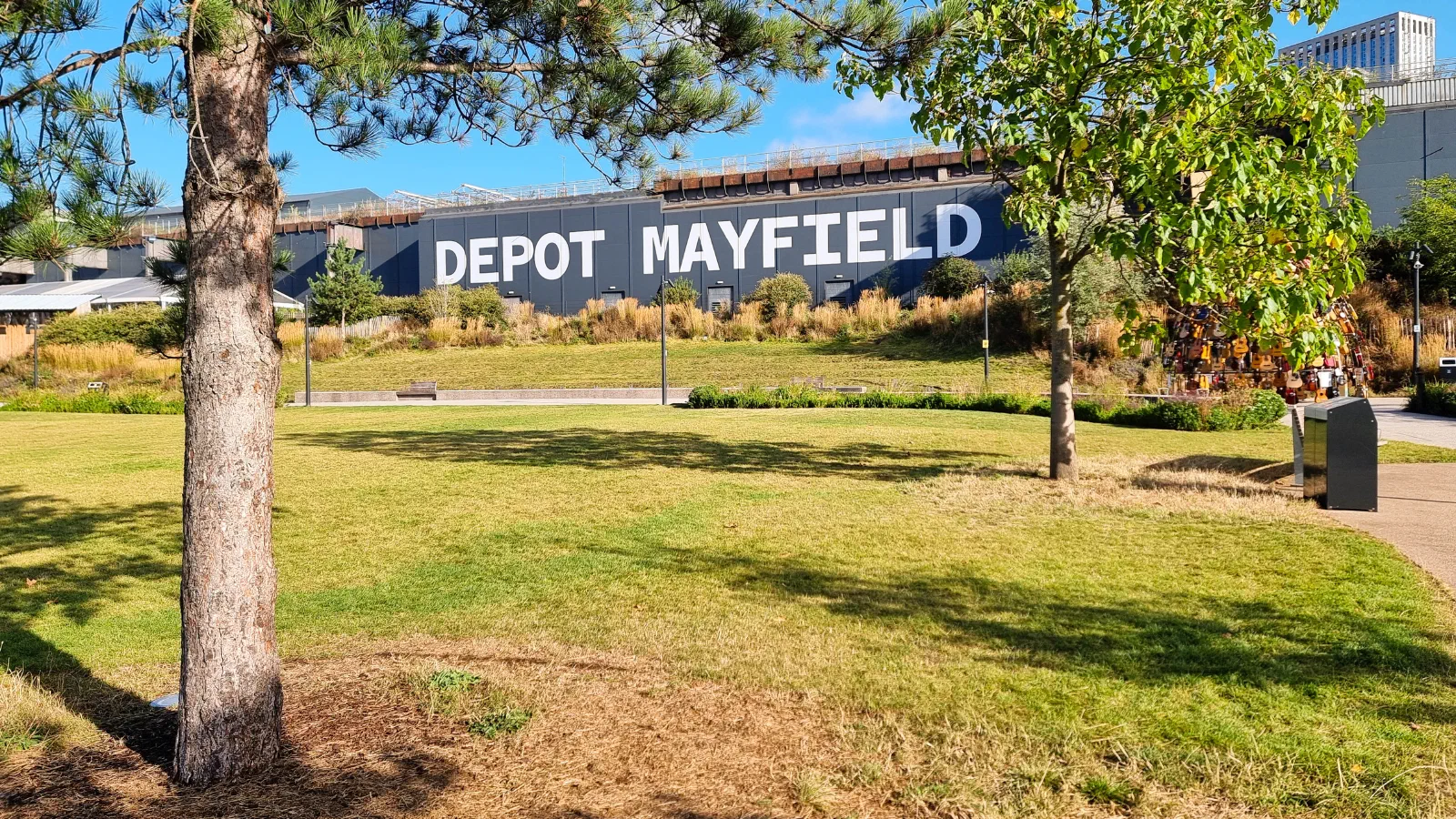
Best at any / overcast
Mayfield Depot
Oxford Road Corridor · ManchesterSome gear links on this page are affiliate links — if you buy through them we may earn a small commission at no extra cost to you. See our affiliate disclosure.
What is Mayfield Depot?
Mayfield Depot is a former railway parcel depot adjacent to Piccadilly Station, originally built in the 1910s and expanded in the 1920s. The station closed to passengers in 1960 and to parcels in 1986, after which it sat empty for decades — becoming one of Manchester’s most atmospheric derelict spaces.
The depot gained a second life as a venue for large-scale events, including the Warehouse Project and Parklife after-parties, which made creative use of its vast, raw interior. Today, the area is being redeveloped as part of the wider Mayfield regeneration, which includes the adjacent Mayfield Park (Manchester’s first new city-centre park in over a century). The depot’s exterior and surrounding streets remain rich with street art, industrial textures, and urban grit.
Why Shoot Here?
- Raw Industrial Scale: The depot’s vast brick walls, iron-framed windows, and exposed steelwork have an almost cinematic quality — think textured decay at enormous scale.
- Street Art: The surrounding walls and hoardings have been painted by well-known street artists. These change regularly, so there’s often something new to capture.
- Urban Textures: Peeling paint, rusted metal, crumbling brickwork — the depot and its surroundings are rich in the kind of detail that works well for abstract and texture photography.
- Contrast with Mayfield Park: The modern park directly adjacent provides a striking before-and-after contrast — manicured green space against industrial ruins.
- Event Atmosphere: When events are running, the area takes on a completely different energy — crowds, lighting rigs, and the atmosphere of Manchester’s nightlife scene.
Getting There
Manchester Piccadilly is a five-minute walk and Piccadilly Metrolink about the same. NCP Piccadilly Place is the nearest car park at roughly £8–12 per day. The depot sits immediately south of Piccadilly Station off Baring Street, in the Oxford Road corridor — you will see the bulk of it from the station approach before you find the street.
The exterior is visible from the street; the interior opens only for public events. The other thing to know is that this is a live redevelopment site: the wider Mayfield scheme is being built out around it, so hoardings move, street art comes and goes, and sightlines that worked last year may be fenced off now. Treat what you find as a snapshot rather than a fixed location. Mayfield Park is directly adjacent and is the counterpart shot.
Photography FAQ
Can you photograph Mayfield Depot?
The exterior, from the public streets around it — Baring Street and the surrounding area — freely and at any hour. The interior is not accessible except during events, and event promoters set their own camera policies, which for a Warehouse Project-style night usually means no interchangeable-lens cameras at all. Do not climb hoardings or enter the construction site: it is active, fenced for a reason, and trespass here is both dangerous and pointless when the best frames are from the street anyway.
What is the best time to shoot it?
Overcast days, for the texture work that is the real subject here. Weathered red brick, rusting iron window frames, scored concrete and painted steel all read at maximum detail in diffused light, whereas direct sun drops the recessed windows and corrugated sections into black. Blue hour is the other option, when the depot’s mass becomes a silhouette against the sky with the lit windows of the station hotel behind it. Weekday mornings before 9am give you the streets empty.
What should I photograph here?
The full facade from Baring Street at 24–35mm — and put a person near the base, because the scale of the building is illegible without a human reference. The iron window frames, used as a compositional device rather than a subject: get close and let the frame fill the edges of the composition, shooting through toward sky or interior darkness. And the street art on the surrounding hoardings, framed at 50–85mm with depot brick above or behind, so the mural has the industrial scale reference a standalone mural shot lacks.
Is the street art always there?
No, and that is part of the point. The hoardings around the Mayfield development carry a shifting collection of large-scale murals that are repainted and removed as the site develops — what is there when you visit will not be there indefinitely. If you see something you like, shoot it that day. As the regeneration completes, the hoardings themselves will go.
What is the best single frame here?
Walk through to Mayfield Park and turn around. From the park’s south edge at 35–70mm, the depot facade rises above the new planting and the daylighted river works — manicured new green space in the foreground, raw industrial ruin behind. That one image contains the whole Mayfield story in a way that either subject alone does not, and it is the reason to visit both in the same trip.
Best Times to Shoot
- Overcast days for texture photography — The depot’s surface materials — weathered red brick, rusting iron window frames, scored concrete, and painted steel — all read with maximum detail in diffused light. Direct sun creates deep shadows in the recessed windows and along the corrugated sections that block detail; cloud cover opens all of these up simultaneously for a 70–200 mm lens to work across the full facade.
- Blue hour — The depot’s mass becomes a dramatic silhouette against the twilight sky, and the lit windows of Piccadilly Station’s hotel and the illuminated arch visible above the depot roof provide a warm, glowing backdrop. Shoot from Baring Street with the full facade in frame and keep a tripod like the Peak Design Travel Tripod on the pavement for the 2–8 second exposures needed.
- During Warehouse Project or event setup — If you can access the area during load-in for a large event, the interior spaces adjacent to the depot — vast and raw — are filled with temporary lighting rigs, scaffolding, and production equipment that is as visually compelling as any permanent installation. Check event schedules; load-in typically begins days before a public opening.
- Weekday mornings before 9 am — The streets around the depot — Baring Street and the surrounding area — are at their quietest before the Piccadilly Station and commuter traffic picks up. Unobstructed views of the exterior allow clean wide-angle shots without vehicles or people in the foreground.
Composition Ideas
- Full facade from Baring Street with scale figure — Stand on Baring Street and use a 24–35 mm lens to capture the depot facade at full width. Ask a companion to stand near the base of the building; the scale contrast between person and building makes the industrial proportions immediately legible in a way that the building alone does not communicate.
- Iron window frames as compositional device — Move close to one of the large iron-framed window openings and position yourself so the frame fills the edges of your composition. Shoot through the frame toward the sky, or toward the interior darkness if light is behind you. A 35–50 mm lens keeps the window frame in natural proportion.
- Street art and industrial architecture layered — The hoardings around the Mayfield development carry a shifting collection of large-scale murals. Stand back with a 50–85 mm lens to frame a complete mural panel with the depot brick visible above or behind it — the industrial building provides the scale reference that a standalone mural shot lacks.
- Looking back from Mayfield Park — Walk through to Mayfield Park and turn around. The depot facade is visible above and behind the park’s planting and river works. A 35–70 mm lens from the park’s south edge frames the regeneration project — new green space in the foreground, raw industrial architecture behind — in a single image that tells the story of what is happening at Mayfield.
How to shoot it
Lens
A 35mm or 50mm prime is ideal — small, fast and unobtrusive for candid frames and shopfront detail.
Settings
Shutter priority at 1/250s or faster to freeze movement, with Auto ISO so you can keep shooting as the light shifts.
Composition
Work the light and shadow, look for layers and gesture, and let strong shopfront colour or signage carry the frame.
Timing
Bright overcast suits it best — soft, even light with no harsh shadows — so it works at almost any time of day.
More in Oxford Road Corridor
See the area →