 Golden hour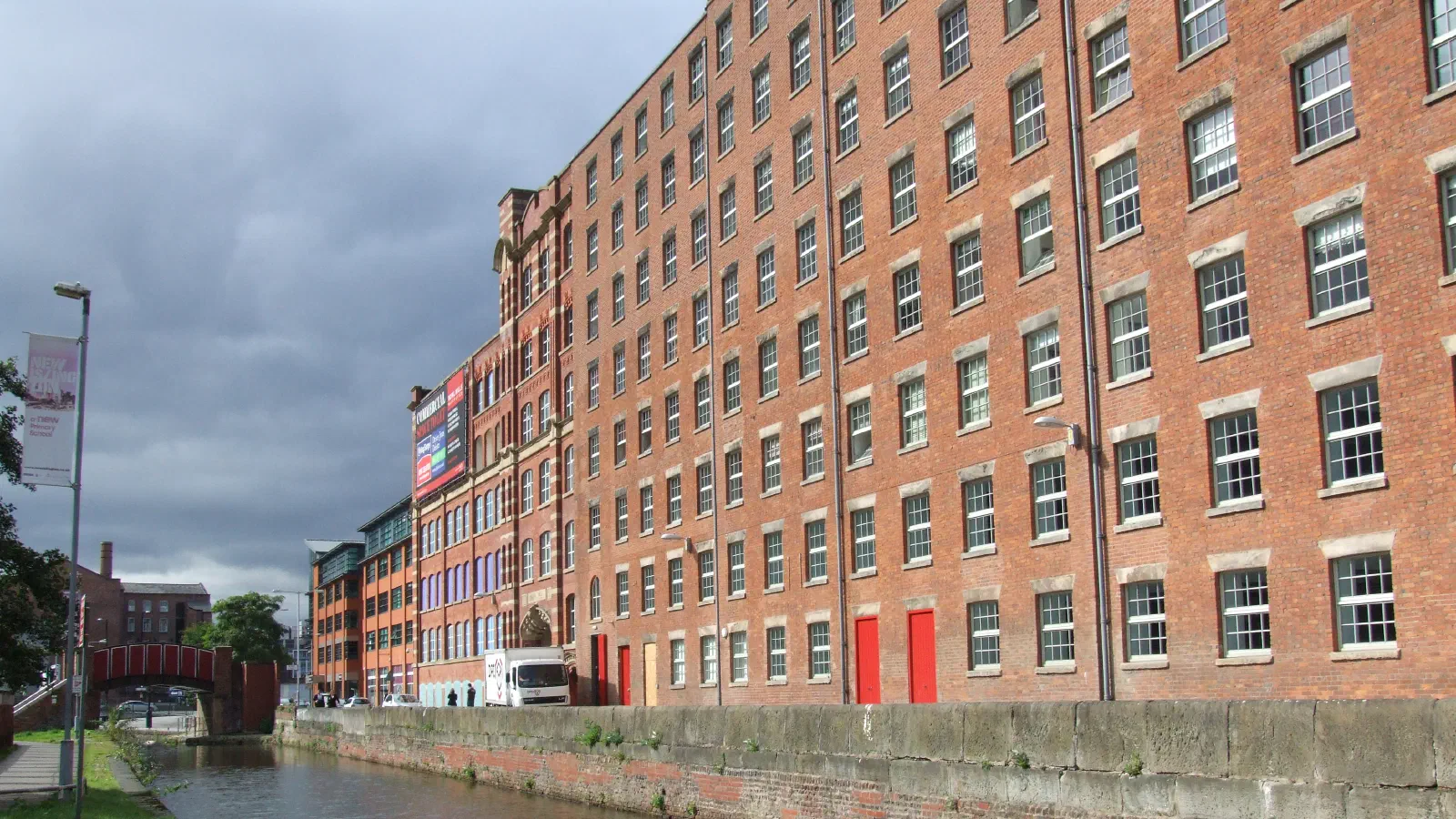
Best at blue hour
Murrays' Mills
Ancoats · ManchesterSome gear links on this page are affiliate links — if you buy through them we may earn a small commission at no extra cost to you. See our affiliate disclosure.
What is Murrays’ Mills?
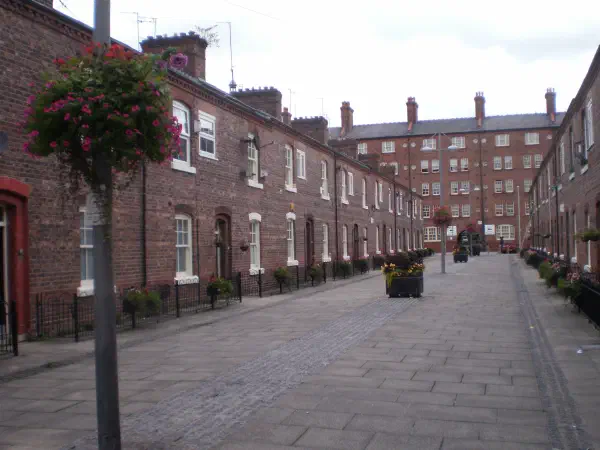
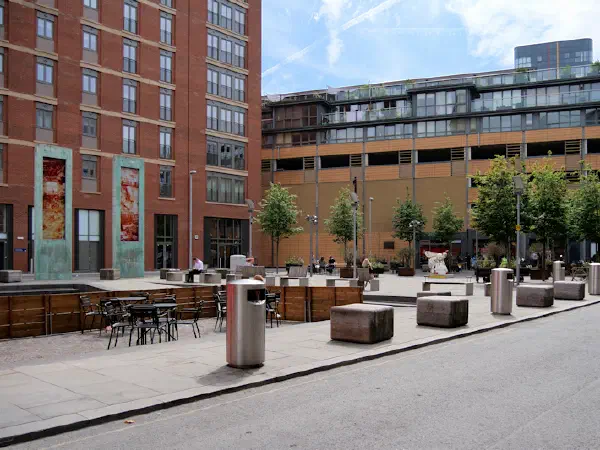
Murrays’ Mills is one of the oldest and most significant cotton mill complexes in the world. Located in Ancoats, the heart of the Industrial Revolution, it has been meticulously restored into a residential development. The complex features a stunning inner courtyard and is situated right next to the Rochdale Canal.
Why Shoot Here?
- Industrial Heritage: The red brick walls, iron-framed windows, and massive scale of the mills are perfect for capturing Manchester’s industrial soul.
- Reflections: The canal basin provides a mirror-like surface for capturing the mills’ facades, especially during the blue hour.
- Night Photography: The courtyard is beautifully lit at night, offering a peaceful and atmospheric setting for long-exposure shots.
- Hidden Gems: Explore the narrow lanes and bridges around the complex for unique perspectives and interesting textures.
Getting There
New Islington Metrolink is a five-minute walk, and NCP Ancoats is the nearest car park at roughly £6–10 per day. The approach from Redhill Street is the one to take — it gives you the scale of the mill wall before you reach the courtyard.
The courtyard and the canal basin area are publicly accessible. The mills themselves are converted apartments, so the buildings are private residences behind the facades you are photographing, which matters for where you point the lens and how long you stand there. Cutting Room Square is five minutes west and Royal Mill is directly adjacent — the Ancoats mills and marina loop covers all three.
Photography FAQ
Can you take photos at Murrays’ Mills?
Yes, from the courtyard, the canal basin and the surrounding streets, all of which are accessible. The mills are private residential buildings, so photograph the architecture rather than through windows, and stay out of stairwells and private yards. Tripod work in the courtyard is fine and rarely draws attention.
What makes Murrays’ Mills significant?
It is the oldest steam-powered cotton mill complex in the world, begun in 1798 — which is to say the building in front of you is where the factory system that shaped modern Manchester started. That history is why the scale reads the way it does, and it is worth knowing when deciding what to include: the frame is stronger when the mill fills it.
When is the best time to shoot?
Blue hour, for the canal basin. The water there is sheltered and goes still in the evening, giving a mirror of the brick facade with lit apartment windows doubling in it — the strongest picture at this location, and the reason it is tagged best-at-blue-hour. For the facades themselves, overcast light suits the brick better than hard sun, which leaves half the courtyard black.
What lens do I need?
A wide, 16–24mm, is close to essential — the mills are enormous and the courtyard is tight, so anything longer cannot take them in. A 50mm is useful for the ironwork windows, the mortar texture and the detail of the loading bays. There is little here that needs a telephoto.
How does it compare with Royal Mill next door?
They are the same material seen two ways. Royal Mill is best read from Redhill Street as a single vast facade along the Rochdale Canal; Murrays’ is best read from inside its own courtyard and basin, where the buildings enclose you. Shoot both — they are two minutes apart and give genuinely different frames.
Best Times to Shoot
- Blue hour (20–40 minutes after sunset) — The converted apartment windows in Murrays’ Mills illuminate from within as residents return home in the evening. On the Rochdale Canal side, these warm lights and the courtyard lighting reflect in the canal, creating the signature Ancoats blue hour composition. The still water at this time of day is particularly important; any wind will break the mirror image.
- Still mornings at dawn — The Rochdale Canal basin at the back of Murrays’ Mills is at its calmest before boat traffic and pedestrians arrive. In autumn and winter, mist can sit above the water, softening the reflection of the mill facade into an impressionistic impression that contrasts with the crisp brickwork above the waterline.
- Late afternoon in winter (low sun) — Between October and February, the low winter sun strikes the west-facing canal-side facade of Murrays’ Mills directly from about 14:00 onwards. This raking light reveals the relief of the iron-framed windows, the brick bond patterns, and any surface variation in a way that higher summer sun does not.
- Overcast days for the courtyard interior — The courtyard of Murrays’ Mills is relatively enclosed, meaning direct sun creates deeply shadowed areas alongside bright spots. An overcast sky fills the courtyard evenly, letting you photograph the full scale of the historic mill interior — its windows, the original stone sets, and the residential conversion elements — in balanced light.
Composition Ideas
- Canal towpath reflection shot — Walk to the Rochdale Canal towpath on the east side of the mill and position yourself so the canal is in the lower half of your frame. Use a 35–50 mm lens to capture the full mill facade above and its reflection below. A tripod like the Peak Design Travel Tripod at water level with a long exposure of 2–8 seconds smooths any surface ripple while keeping the brick facade sharp.
- Narrow lanes and bridge textures — The lanes between Murrays’ Mills and the surrounding Ancoats streets are narrow and retain a working-mill character in their proportions and surface materials. Use a 24–35 mm lens in these passages to capture the compressed perspective of old brick walls, original iron drain pipes, and the scale of windows designed for working floors, not domestic living.
- Courtyard entrance as frame — Stand outside the courtyard entrance arch and shoot inward toward the courtyard interior. The arch frames the mill walls and converted windows beyond, with the contrast between the public passage and the private residential space inside the frame. A 35 mm lens at f/5.6–f/8 keeps both arch and courtyard in acceptable focus.
- Long-exposure canal night shot — Set a tripod on the canal bank and use a 15–30 second exposure after full dark. The lit windows appear as warm horizontal bands in the brick, and their reflections in the Rochdale Canal create vertical orange-gold streaks in the water below, framed by the dark canal walls.
How to shoot it
Lens
A 16–35mm wide exaggerates scale and verticals; a 24–70mm keeps proportions natural. A tilt-shift tames converging lines.
Settings
f/8–f/11 for front-to-back sharpness, ISO 100, and meter for the highlights so detail in the stonework holds.
Composition
Hunt for symmetry and repetition, keep verticals straight, and use doorways or arches to frame the subject.
Timing
Blue hour — the ~20 minutes after sunset — is the sweet spot: the sky balances with the city's lights. Be set up before it starts; today's window is on this page.
More in Ancoats
See the area →Nearby spots
Shooting the whole area? Read the Ancoats photography guide — every spot, the light that suits it, and a route to link them.