 Any / overcast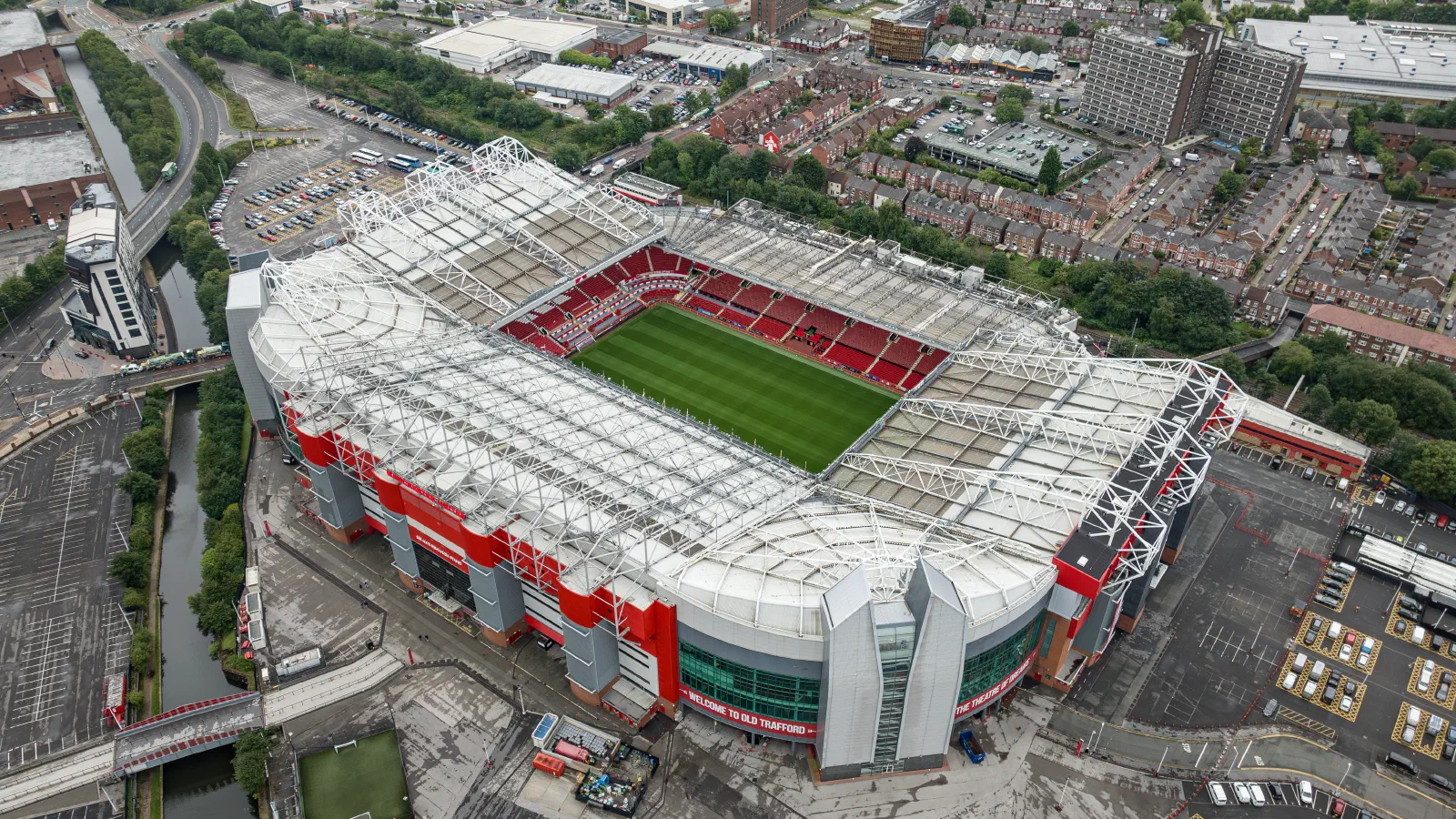
Best at golden hour
Old Trafford Stadium
Trafford · ManchesterSome gear links on this page are affiliate links — if you buy through them we may earn a small commission at no extra cost to you. See our affiliate disclosure.
What is Old Trafford Stadium?
Old Trafford Stadium, nicknamed “The Theatre of Dreams”, is a world-famous football stadium in Old Trafford, Greater Manchester. It is the home of Manchester United Football Club, open since February 19, 1910, and is the largest club home ground in the UK, with a seating capacity of approximately 74,197.
Designed by architect Archibald Leitch, the stadium has undergone numerous expansions and renovations, especially in the 1990s and 2000s, adding tiers to its North, East, and West Stands. It has hosted iconic football matches, including FA Cup finals, World Cup and UEFA European Championship games, and the 2003 UEFA Champions League Final.
Currently, Manchester United are developing plans for a new 100,000-seat stadium, called “New Trafford Stadium”, designed by Foster + Partners and aimed for completion around 2030–31. This project, part of a wider regeneration plan, could see the current Old Trafford repurposed or preserved in some form.
Why Shoot Here?
Old Trafford offers photographers and Instagrammers a variety of compelling visual opportunities:
- Iconic architecture: Capture the grand facade, towering stands, and unique cantilever structures, especially from Sir Matt Busby Way or nearby vantage points.
- Matchday atmosphere: Dynamic crowd scenes, pre-match rituals, and dramatic lighting offer storytelling potential.
- Night photography: The floodlit exterior and contrast between shadows and warm interior glow make for atmospheric evening shots.
- Tours & access: Stadium tours (on non-matchdays) provide behind-the-scenes access to the players’ tunnel, museum, and elevated galleries.
Getting There
Old Trafford Metrolink is a five-minute walk, and the tram is the sensible choice on a match day when the roads around the ground close and parking becomes scarce and expensive. Off match days there are stadium car parks and street parking nearby. The ground sits in Trafford, a short hop from Salford Quays.
The exterior is freely viewable at any time; interior access — the players’ tunnel, the museum, the elevated galleries — is by stadium tour on non-match days and needs booking. Sir Matt Busby Way is the main approach and where most of the photography happens. MediaCityUK and The Lowry are ten minutes north and Salford Lads Club about the same — the Salford Quays and MediaCityUK walk takes in the stadium along with all three.
Photography FAQ
Can you photograph Old Trafford?
The exterior and the approach along Sir Matt Busby Way, freely and without permission — the facade, the stands and the statues are all in public view. Interior photography requires a stadium tour ticket. On match days the club operates its own conditions of entry governing cameras and equipment inside the ground, which are separate from and stricter than anything outside, so check those before turning up with a bag of lenses.
When is the best time to photograph the stadium?
Golden hour, when the setting sun in the west warms the red-brick and glass frontage of the Sir Alex Ferguson Stand across the whole facade. Blue hour for the contrast between deep sky and warm artificial lighting, which is the best window for long exposures. Match evenings 60–90 minutes before kick-off for floodlit drama and fans streaming along Sir Matt Busby Way. Early weekday mornings for empty forecourts and clean sightlines to the statues.
Where are the statues and how do you shoot them?
The Sir Matt Busby statue, the United Trinity — Best, Law and Charlton — and the Sir Alex Ferguson statue are all on the stadium forecourt. Early weekday morning is when you get them without crowds. A 100–200mm telephoto isolates a single statue against the stadium behind and compresses the distance so the backdrop looms monumentally; a wider lens from Sir Matt Busby Way puts the road in as a leading line with the Trinity as the midground focal point.
What lens should I bring?
A 24–35mm for the approach and the facade. A wide-angle pointed straight up from beneath the cantilever roof structure, which gives you hard geometric patterning. A 100–200mm for the statues and for isolating structural detail. On a match day, something fast around 50–85mm for scarves, flags and faces in the foreground with the ground soft behind — the human story is the one worth telling there.
Is the stadium going to change?
Manchester United have been developing plans for a new 100,000-seat ground designed by Foster + Partners, targeted at roughly 2030–31, with the current Old Trafford either repurposed or preserved in some form as part of a wider regeneration. Nothing about that is settled, but it is a real reason to photograph the existing stadium properly rather than assuming it will always be there — the 1910 ground and its accumulated Leitch-era and 1990s expansions are a specific building with a specific history.
Further Information
- Wikipedia – Old Trafford — extensive history, capacity stats, structural details, and events
- Official Manchester United – Visit Old Trafford — visitor access, stadium tours, museum, and dining
Best Times to Shoot
- Golden hour lights up the red-brick and glass facade of the Sir Alex Ferguson Stand beautifully, with the setting sun in the west warming the entire frontage.
- Matchday evenings offer dramatic floodlit scenes — arrive 60–90 minutes before kick-off to capture fans streaming along Sir Matt Busby Way with the stadium glowing behind them.
- Early weekday mornings provide empty forecourts and clean sightlines to the statues of Sir Matt Busby, the United Trinity, and Sir Alex Ferguson without crowds.
- Blue hour creates a striking contrast between the deep sky and the warm artificial lighting of the stadium exterior, ideal for long-exposure work.
Composition Ideas
- Stand on Sir Matt Busby Way and use the road as a leading line converging on the stadium entrance, placing the Trinity statue as the midground focal point.
- Shoot the cantilever roof structure from directly below with a wide-angle lens pointed upward for dramatic geometric patterns.
- Use a telephoto lens (100–200 mm) to isolate individual statues against the stadium backdrop, compressing the distance for a monumental feel.
- On matchday, capture the scarves, flags, and fan expressions in the foreground with the stadium soft-focused behind to tell a human story.
How to shoot it
Lens
A 16–35mm wide exaggerates scale and verticals; a 24–70mm keeps proportions natural. A tilt-shift tames converging lines.
Settings
f/8–f/11 for front-to-back sharpness, ISO 100, and meter for the highlights so detail in the stonework holds.
Composition
Hunt for symmetry and repetition, keep verticals straight, and use doorways or arches to frame the subject.
Timing
Aim for golden hour — the hour after sunrise or before sunset — when low, warm light rakes across the scene. Today's exact window is in the panel on this page.
More in Trafford
See the area →