 Any / overcast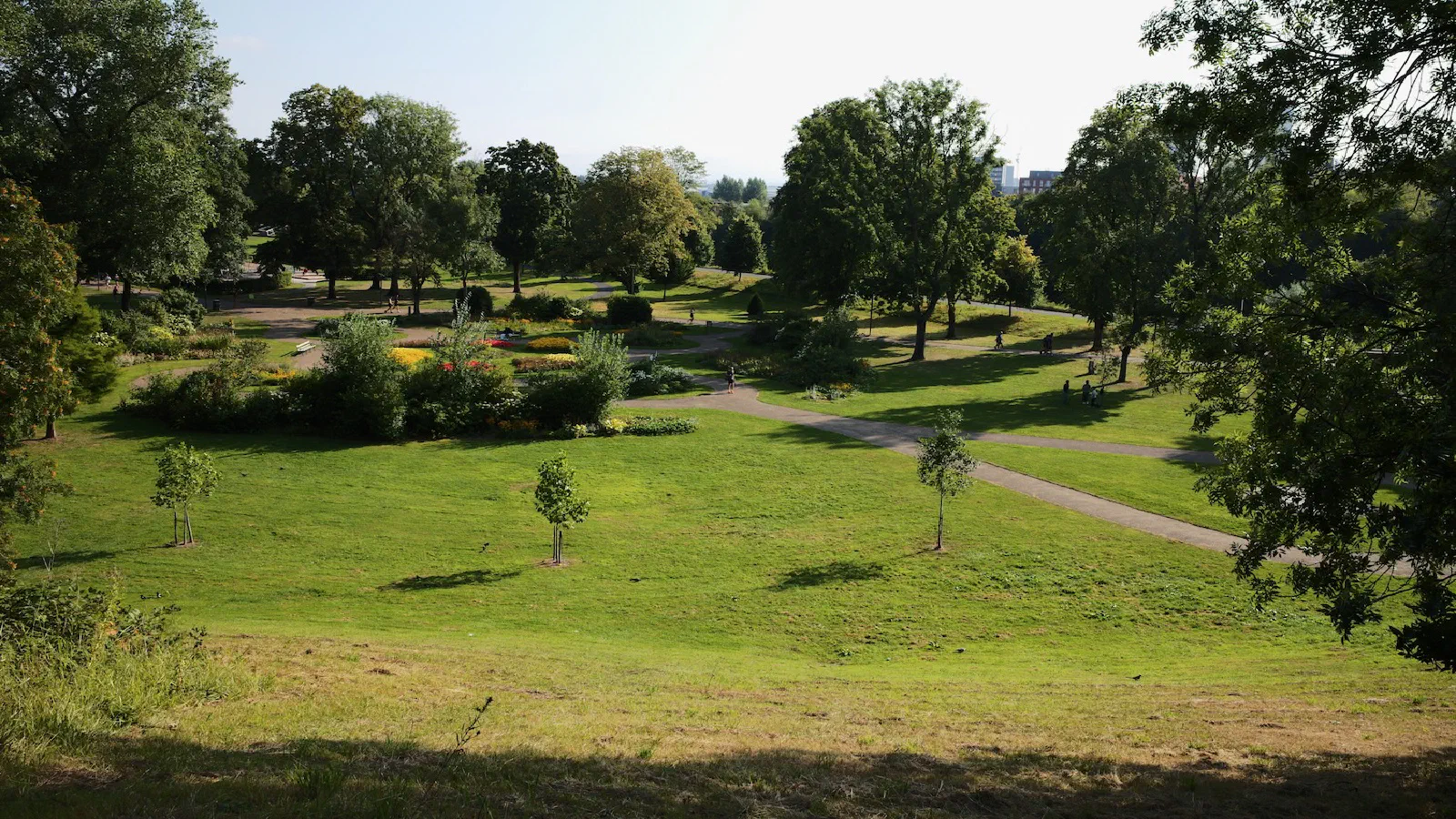
Best at golden hour
Peel Park Salford
Salford · ManchesterSome gear links on this page are affiliate links — if you buy through them we may earn a small commission at no extra cost to you. See our affiliate disclosure.
What is Peel Park?
Peel Park in Salford is one of the UK’s earliest public urban parks — officially opened on 22 August 1846, the same week as Philips Park across the city, and funded entirely by public subscription so that working people in the industrial city had somewhere green to go (Salford.gov.uk and Wikipedia). It was laid out by landscape gardener Joshua Major and named after Sir Robert Peel, whose statue once dominated the grounds.
The park sits in a bend of the River Irwell, tucked behind the Salford Museum and Art Gallery on The Crescent — itself a landmark, having opened in 1850 as home to the first free public lending library in England. The University of Salford’s campus wraps around the park, including the ornate red-brick Peel Building (1896), whose terracotta facade appears in the background of many compositions here (Wikipedia – Salford Museum).
There’s also a genuine art-history connection: L.S. Lowry studied at the Royal Technical College in the Peel Building and repeatedly drew and painted the views across Peel Park — so when you photograph the terrace and lawns from above, you’re standing roughly where some of his best-known Salford scenes were composed. Features worth seeking out include the restored Victorian floral bedding, the Flood Obelisk marking the 1866 Irwell flood, the statue of Joseph Brotherton (Salford’s first MP), and Irwell Sculpture Trail pieces such as Fabric of Nature and Monument to the Third Millennium.
Why Shoot Here?
- Layered history: A single loop of the park passes Victorian monuments, a Grade II listed museum, an 1890s terracotta university building and contemporary sculpture — plenty of material for a heritage-themed set.
- Formal structure: The tree-lined avenues and geometric bedding give you ready-made leading lines and symmetry, which most municipal parks lack. The layout still follows the Victorian plan.
- The Lowry angle: Recreating a view the artist drew from the college windows — students crossing the lawns below — is a satisfying project, and the Lowry gallery at Salford Quays holds the paintings to compare against.
- Riverside quiet: The Irwell path along the park’s edge is calm, tree-shaded and largely free of traffic noise, with herons and waterfowl putting in regular appearances.
- Genuinely uncrowded: Outside university term bustle, you’ll often have the formal avenues to yourself — a luxury compared with Manchester’s city-centre parks.
Getting There
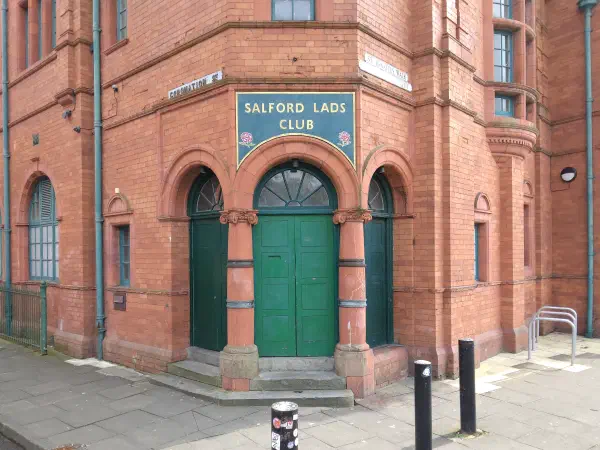
Salford Crescent rail station is a five-minute walk away: exit onto University Road West, head towards the campus and drop down behind the Salford Museum and Art Gallery. From Manchester city centre, it’s about a twenty-five-minute walk out along Chapel Street and The Crescent (the A6), passing Salford Lads Club territory in Ordsall if you detour south. There’s free street parking on The Crescent near the museum; the park entrance is directly behind the museum building, with step-free paths throughout.
Photography FAQ
Is Peel Park free to enter?
Yes — it’s a public park with free entry and open access all day. The adjacent Salford Museum and Art Gallery is also free, making the pair an easy half-day shoot in any weather.
Why is Peel Park historically important?
Opened on 22 August 1846 and paid for by public subscription, it’s one of the first parks in Britain created specifically for free public use, predating most famous Victorian parks. Its layout by Joshua Major became a model for urban green space in industrial cities.
Did L.S. Lowry paint Peel Park?
Yes. Lowry studied art at the Royal Technical College in the neighbouring Peel Building and produced numerous drawings and paintings of the park and the view across it. Several are held in Salford’s collection at The Lowry.
When is the best season to photograph Peel Park?
Autumn, by some margin — the mature trees along the formal avenues turn amber and copper, and low light rakes across the bedding. It earns a place on any list of Manchester autumn photography spots.
Is Peel Park safe to visit with camera gear?
It’s a well-used campus-adjacent park, busiest on weekdays in term time with students and staff passing through. As anywhere urban, normal precautions apply; mornings and daytimes feel relaxed, and the open layout means good sightlines.
Further Information
- Salford Council – Peel Park Heritage — historical background and founding context.
- Wikipedia – Peel Park, Salford — features, statues, design origins, and Lowry connections.
- Historic England – Peel Park & Joseph Brotherton Statue Listed — heritage listing and significance.
- Manchester Visitor Guide – Peel Park — visitor access and park highlights.
Best Times to Shoot
- Autumn golden hour is exceptional here — the mature trees lining the formal pathways turn vivid amber and copper, and low-angle sunlight rakes across the Victorian bedding layouts and up the Peel Building’s terracotta.
- Frosty winter mornings coat the lawns and monuments in white and empty the park almost completely; the Flood Obelisk and Brotherton statue photograph with a timeless, monochrome quality.
- Early spring brings blossom to the ornamental beds while the canopy is still open enough to see the Peel Building and museum through bare branches — the only season you get both at once.
- Weekday mornings offer a quiet park with only joggers and dog walkers, leaving the avenues and monuments unobstructed; term-time lunchtimes add students if you want figures in the frame.
Composition Ideas
- Avenue symmetry — Centre yourself on a tree-lined path with a 35–50 mm lens and place the Flood Obelisk or Brotherton statue at the vanishing point; in autumn the leaf canopy closes the top of the frame in colour.
- Sculpture against terracotta — Frame Irwell Sculpture Trail pieces with the red-brick Peel Building behind at 85 mm or longer to compress the gap, setting modern art directly against Victorian architecture.
- The Lowry viewpoint — From the raised ground near the museum terrace, shoot down across the lawns with people crossing the paths — a deliberate echo of Lowry’s elevated park scenes. Overcast light suits the homage.
- Bedding geometry — Get slightly elevated (a bench or the terrace steps) and use a short telephoto to flatten the planting beds into graphic blocks of colour; peak bedding is mid-summer.
- Museum reflections — After rain, the puddled paths in front of the Salford Museum facade allow low-angle reflection shots with a 24 mm or wider lens, camera nearly touching the ground.
How to shoot it
Lens
A 24–70mm covers most scenes; a 70–200mm isolates detail and a macro lens finds the small stuff.
Settings
f/5.6–f/8 for natural depth, low ISO, and a polariser to cut glare and deepen foliage and sky.
Composition
Use paths and tree lines as leading lines, add foreground interest, and shoot into low side-light for depth and texture.
Timing
Aim for golden hour — the hour after sunrise or before sunset — when low, warm light rakes across the scene. Today's exact window is in the panel on this page.
More in Salford
See the area →Nearby spots
Shooting the whole area? Read the Salford photography guide — every spot, the light that suits it, and a route to link them.