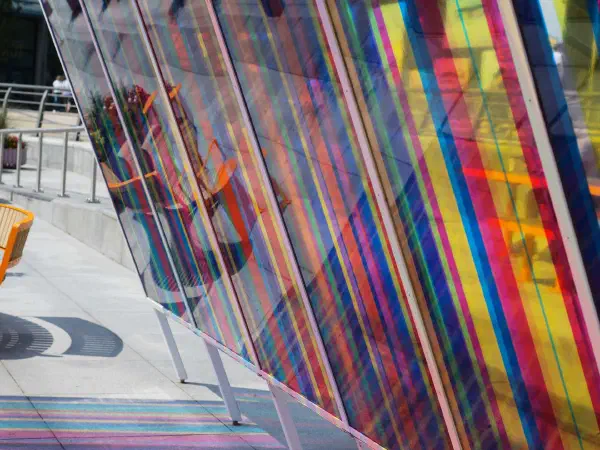
 Blue hour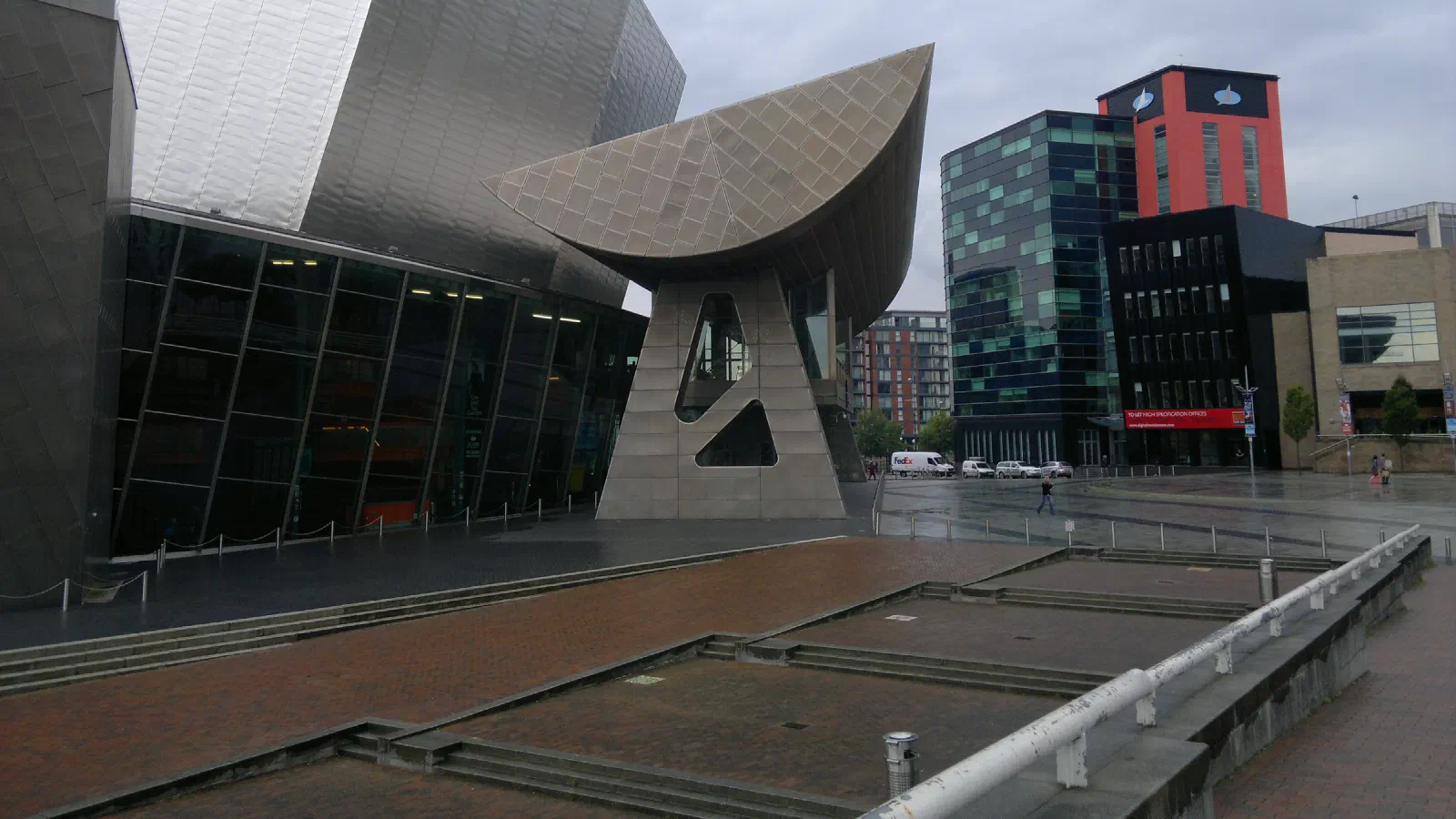
Best at blue hour
The Lowry
Salford · ManchesterSome gear links on this page are affiliate links — if you buy through them we may earn a small commission at no extra cost to you. See our affiliate disclosure.
What is The Lowry?
The Lowry is a striking contemporary arts centre at Salford Quays, named after the local artist L.S. Lowry. Opened in 2000, it was designed by architect Michael Wilford as the flagship of the regeneration of the former Salford docks (en.wikipedia.org).
The building is a collision of forms — sweeping curves, sharp prows and a drum-shaped tower — clad in steel, glass and aluminium that changes character with every shift in the light. Inside are two main theatres, the Lyric and the Quays, alongside gallery spaces holding the world’s largest public collection of L.S. Lowry’s work — more than 400 pieces, including 57 oil paintings. Gallery entry is free.
For photographers, the real subject is the way the building sits on the water. It occupies a promontory between canal basins on the Manchester Ship Canal, facing MediaCityUK across the water on one side and the angular Imperial War Museum North on the other, with footbridges linking all three. Few places in Greater Manchester pack this much modern architecture into a ten-minute walk — which is why it anchors the Salford Quays and MediaCityUK photography walk.
Why Shoot Here?
The Lowry offers photographers a wealth of creative possibilities:
- Architectural drama: Metallic surfaces, intersecting geometric volumes and the purple-and-orange colour accents create strong compositions from almost any angle — circle the whole building, as each face is different.
- Waterfront reflections: The canal basins on either side give mirror reflections in calm conditions; the dock water here is sheltered, so still mornings are common.
- Night-time appeal: The exterior lighting scheme washes the cladding in colour after dark, ideal for long exposures — a tripod like the Peak Design Travel Tripod earns its place in the bag for these waterfront shots, and the Manchester blue hour guide covers timing the twilight window.
- A complete set: Within a short walk you can also shoot MediaCityUK’s piazza, the Imperial War Museum North’s shattered-globe aluminium forms, and the lifting footbridge between them.
Getting There
Take the tram to MediaCityUK (Eccles/MediaCityUK line) — The Lowry is a 5-minute walk: cross the MediaCityUK footbridge over the canal and the building’s steel prow is straight ahead. Harbour City stop is a similar distance from the other side. Drivers can use the multi-storey Lowry car park next to the outlet mall, or MediaCityUK’s car parks (roughly £5–8 for the day). On foot from the Imperial War Museum North, cross the Millennium lifting footbridge over the Ship Canal — itself one of the best vantage points at the Quays.
Photography FAQ
Can you take photos inside The Lowry?
Generally yes in the galleries, but some works are under copyright restrictions, so photography of certain pieces may not be permitted — ask at the Galleries Desk for the current policy for each exhibition. The LOWRY 360 immersive experience allows strictly no photography or recording.
Is The Lowry free to enter?
Yes — the galleries, including the L.S. Lowry collection, are free to enter, with donations welcome. Theatre performances are ticketed, and the exterior and quaysides are accessible at any time.
Where is the best view of The Lowry?
From the far side of the Ship Canal near the Imperial War Museum North, where you can get the full building and its reflection in one frame. The Millennium lifting footbridge offers an elevated mid-canal angle that works especially well at blue hour.
Can you use a tripod at Salford Quays?
On the public quaysides around The Lowry, tripods are normally no problem. The MediaCityUK piazza across the water is privately managed, so be prepared for security to ask questions during longer setups there — staying on the waterfront walkways usually avoids any issue.
What tram stop is closest to The Lowry?
MediaCityUK, about five minutes’ walk via the footbridge. Harbour City is a good alternative if you want to approach along the north quayside and shoot the building front-on as you arrive.
Further Information
- Wikipedia — The Lowry — history, architecture and facilities
- The Lowry official website — theatre listings, gallery exhibitions and opening hours
- The Lowry — gallery photography FAQ — official policy on photographing the collection
- Visit Manchester — The Lowry — tourist information and nearby attractions
Best Times to Shoot
- Golden hour: Low warm light hits the metallic cladding and turns the canal surface orange-gold. The open western horizon over the docks means the Quays keep direct sun later than the city centre.
- Blue hour and night: The exterior lighting scheme is at its best against a deep blue sky, and the surrounding buildings — MediaCityUK’s studios, the illuminated footbridges — add layers of colour to wider frames.
- Calm, windless mornings: The sheltered dock basins go glassy more often than open water, giving mirror-sharp reflections. Check the forecast for wind under 10 mph before committing to a reflection shot.
- Weekend afternoons: Footfall along the quaysides adds human scale and activity; theatre matinee crowds bring movement to the plaza in front of the main entrance.
Composition Ideas
- Cross to the opposite side of the canal and shoot The Lowry with its full reflection, using a wide-angle lens (16–24 mm) low to the water’s edge to maximise the mirrored half of the frame.
- Use the pedestrian footbridges as leading lines — their cables and decks draw the eye straight to the building’s angular prow, especially shot from a central position on the walkway.
- Isolate sections of the cladding with a telephoto like the Sony 70-200mm f/4 G OSS for abstract studies of texture, rivet patterns and reflected colour; the drum tower and the canopy edges are the richest details.
- Include MediaCityUK or the Imperial War Museum North in the background to place The Lowry within its wider Salford Quays context — and if you have time afterwards, Old Trafford stadium is a 15-minute walk south for a different kind of landmark.
How to shoot it
Lens
A 16–35mm wide exaggerates scale and verticals; a 24–70mm keeps proportions natural. A tilt-shift tames converging lines.
Settings
f/8–f/11 for front-to-back sharpness, ISO 100, and meter for the highlights so detail in the stonework holds.
Composition
Hunt for symmetry and repetition, keep verticals straight, and use doorways or arches to frame the subject.
Timing
Blue hour — the ~20 minutes after sunset — is the sweet spot: the sky balances with the city's lights. Be set up before it starts; today's window is on this page.
More in Salford
See the area →Nearby spots
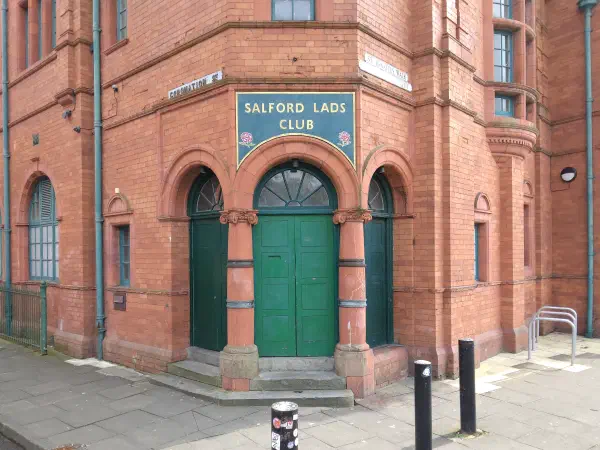
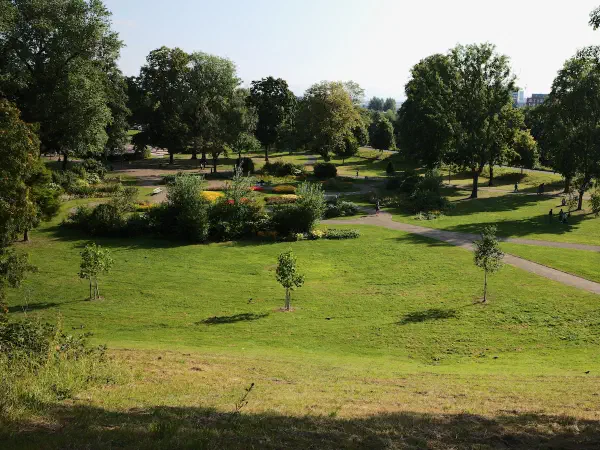
Shooting the whole area? Read the Salford photography guide — every spot, the light that suits it, and a route to link them.