 Night
Night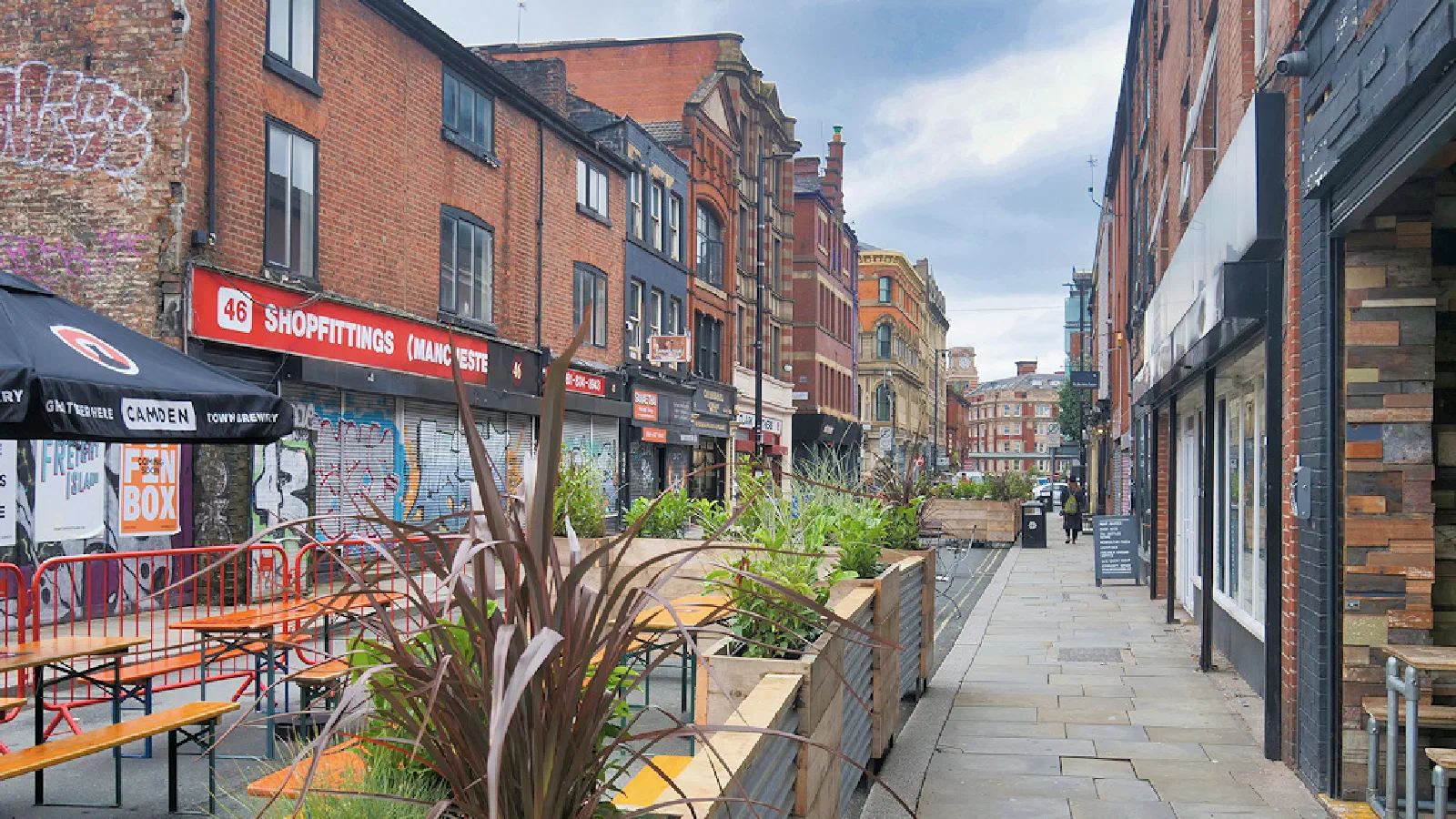
Best at any / overcast
Thomas Street
Northern Quarter · ManchesterWhat is Thomas Street?
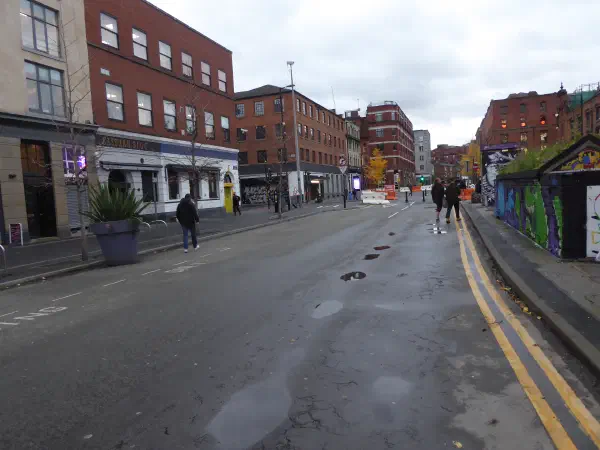
Thomas Street is another iconic Northern Quarter thoroughfare, known for its high concentration of independent bars, traditional pubs, and craft shops. It retains much of its industrial character, with many buildings showing their Victorian and Edwardian roots.
Why Shoot Here?
- Outdoor Seating: The street is famous for its vibrant outdoor seating culture, especially in the summer, providing great opportunities for capturing the social energy of the area.
- Architectural Details: Look up to see the various architectural styles and the remains of the street’s industrial past, including old warehouse features.
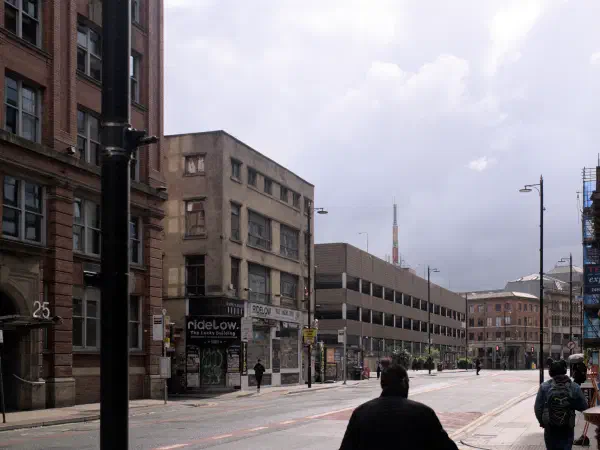
- Night Scene: In the evening, the street is bustling with people and the warm glow of bar lights, making it a prime spot for capturing Manchester’s famous nightlife.
- Eclectic Frontages: From traditional pub facades to modern cafe fronts, Thomas Street offers a diverse range of subjects for street and architectural photography.
Getting There
Shudehill Metrolink and the bus interchange are a two-minute walk, Market Street about five, and Manchester Piccadilly around ten via Dale Street. NCP Shudehill is the nearest car park at roughly £6–10 per day — on-street parking in the Northern Quarter is scarce and heavily enforced. Flat pavement throughout.
Thomas Street is a public street and free at all times, but it is usually pedestrianised in the evenings, which changes what you can do: from around 18:00 you can stand in the middle of the road and shoot straight down its length, which is impossible during the day. Tib Street runs parallel a minute away, Stevenson Square is two minutes south and Mackie Mayor five minutes north — the Northern Quarter street photography walk links them.
Photography FAQ
Can you take photos on Thomas Street?
Yes. It is a public street, so photographing the buildings, the shopfronts and people going about their day is legal in the UK and needs no permission. The outdoor seating belongs to the bars and pubs rather than the street, so if you are working close to the tables ask the staff first — they are generally relaxed about it. Photographing drinkers at those tables needs the usual courtesy: be visible, don’t shoot from concealment, and stop if anyone objects.
Can you use a tripod on Thomas Street?
There is no permit requirement on a public street. The practical limits are space and timing. The pavements are narrow and the street is busy from late afternoon onwards, so a tripod at 19:00 on a Friday will be in somebody’s way. Before 9am on a weekday you have the street to yourself and can set up on the centreline without obstructing anyone — and because the street is pedestrianised in the evenings, the road surface itself becomes usable once the crowds thin after closing.
When is Thomas Street quietest?
Weekday mornings before 9:00, before the Northern Quarter businesses open. No vehicles, no crowd, and the facades, pub signs and shopfronts are all visible unobstructed. In summer the early light from the east reaches the north-facing side of the street. This is the window for clean architectural documentation; for anything involving people, invert it and come on a Friday evening.
What is the best light on Thomas Street?
Overcast, for most subjects. The street is narrow and in direct sun the buildings on each side throw shadow across the other, leaving one facade blown and the other black — cloud spreads the light across both at once and lets you expose the full width. The exception is the final hour of daylight, when raking low sun hits the upper storeys and brings out brick colour and the relief of the warehouse detailing that flat light flattens.
What lens should I bring to Thomas Street?
A 35–50mm covers most of it: the length of the street as a leading line, the eclectic frontages, and general street work. Add an 85mm for candid shots of the outdoor seating from across the road at f/2.8–f/4, which separates people from the bar frontages behind. A 50–100mm aimed upward is the one most visitors miss — the upper floors keep loading-bay hooks, iron windows, bricked-over openings and occasional ghost signage for businesses long gone.
Best Times to Shoot
- Late afternoon golden hour — The buildings on Thomas Street are a mix of Victorian warehouses, early 20th-century commercial buildings, and contemporary conversion. The upper storeys — often the most characterful, with original signage, corbels, and warehouse loading doors — are hit by raking low-angle sun in the final 60 minutes of daylight, revealing surface texture and brick colour that flat midday light obscures.
- Friday and Saturday evenings (from 18:00) — Thomas Street is the social spine of the Northern Quarter’s bar and pub district. Friday evenings bring the week’s liveliest crowds: outdoor seating fills, pub windows glow, and the mix of people — office workers transitioning into weekend mode, regulars, visitors — creates excellent candid street photography conditions. The street is usually pedestrianised in the evenings from around this time.
- Early weekday mornings (before 9:00) — The street is completely quiet before the Northern Quarter businesses open. The building facades, pub signs, and shopfronts are all visible without vehicles or people, and the early morning light coming from the east hits the north-facing side of the street in summer. This is the window for clean architectural documentation.
- Overcast days — Thomas Street is relatively narrow and the buildings on both sides cast shadows across each other in direct sun, leaving one side bright and the other dark. Cloud cover spreads the available light across both facades simultaneously, making it far easier to expose the full width of the street including detail on both sides.
Composition Ideas
- Street length as leading line — Stand at either end of Thomas Street and shoot down its length with a 35–50 mm lens. The varied building heights, signage, and shopfronts on both sides converge toward the far end. Include the road surface and any parked bicycles or street furniture as foreground texture. The Northern Quarter’s eclectic mix of building styles makes this leading-line shot more interesting than a uniform Victorian terrace.
- Candid outdoor seating from across the road — On warm evenings, position yourself on the pavement opposite the busiest outdoor seating area and use an 85 mm lens at f/2.8–f/4. Focus on engaged conversation, hands holding drinks, or groups arriving. The bar frontages with their signs and window light provide a warm, Northern Quarter-specific backdrop.
- Upward warehouse detail — Many of Thomas Street’s upper floors retain Victorian warehouse features: loading bay hooks, iron windows, bricked-over openings, and occasional ghost signage for long-gone businesses. A 50–100 mm lens aimed upward from street level captures these details that most visitors walk past. Raking late-afternoon light makes the three-dimensional character of these features most visible.
- Pub doorway framing — The traditional pub entrances on Thomas Street — wooden doors, tiled surrounds, etched glass — function as natural frames. Stand outside a doorway and shoot inward toward the interior activity, or frame an exterior subject through the doorway arch from inside. A 35 mm lens at f/4–f/5.6 keeps both the frame and the subject in useful focus.
How to shoot it
Lens
A 35mm or 50mm prime is ideal — small, fast and unobtrusive for candid frames and shopfront detail.
Settings
Shutter priority at 1/250s or faster to freeze movement, with Auto ISO so you can keep shooting as the light shifts.
Composition
Work the light and shadow, look for layers and gesture, and let strong shopfront colour or signage carry the frame.
Timing
Bright overcast suits it best — soft, even light with no harsh shadows — so it works at almost any time of day.
More in Northern Quarter
See the area →Nearby spots
Shooting the whole area? Read the Northern Quarter photography guide — every spot, the light that suits it, and a route to link them.