 Any / overcast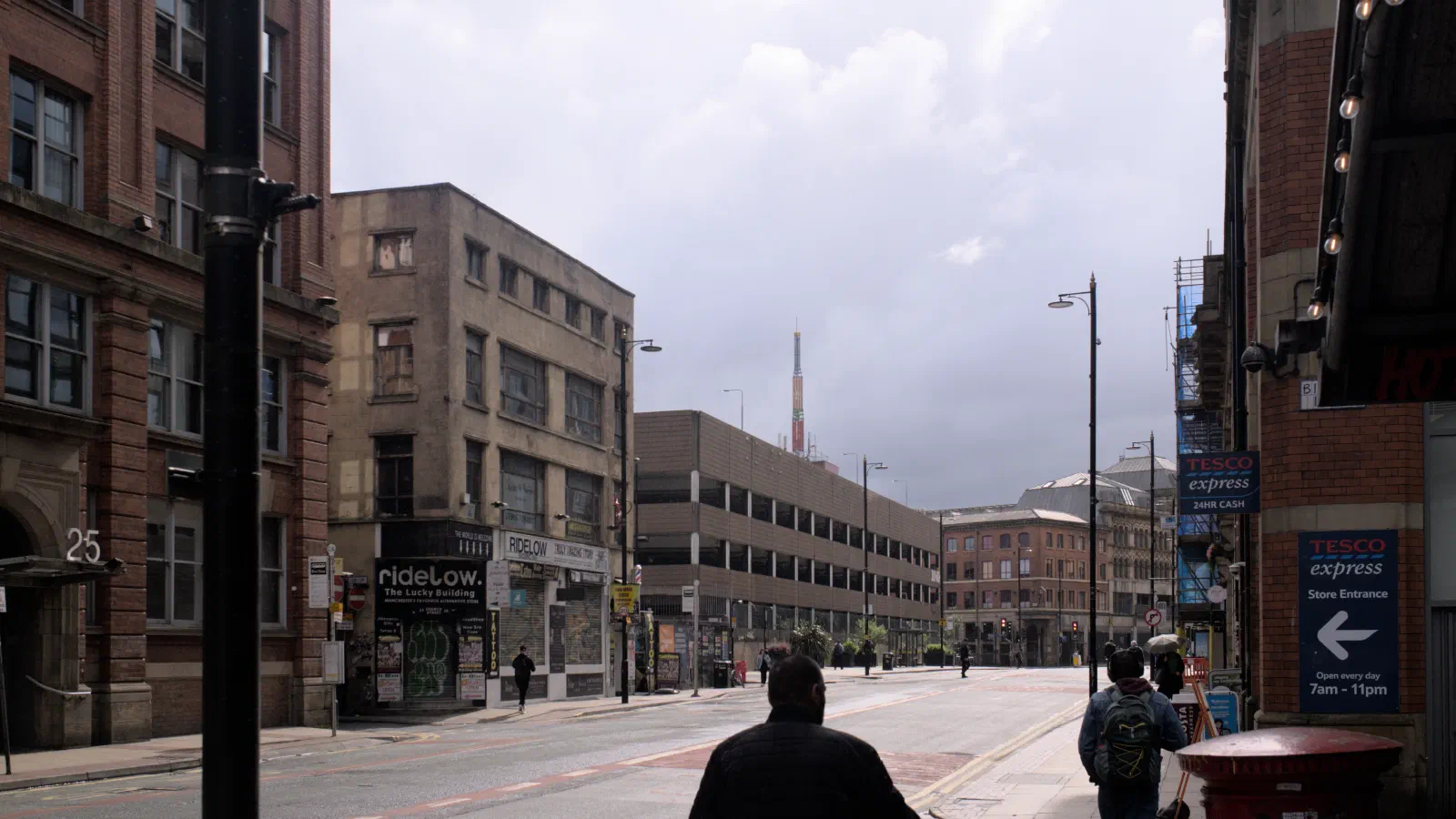
Best at night
Tib Street
Northern Quarter · ManchesterWhat is Tib Street?
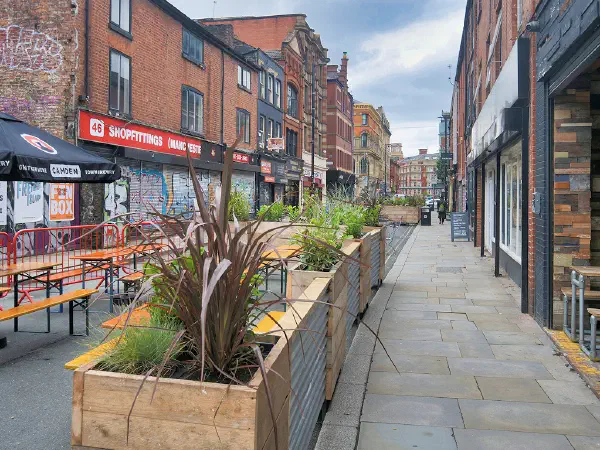
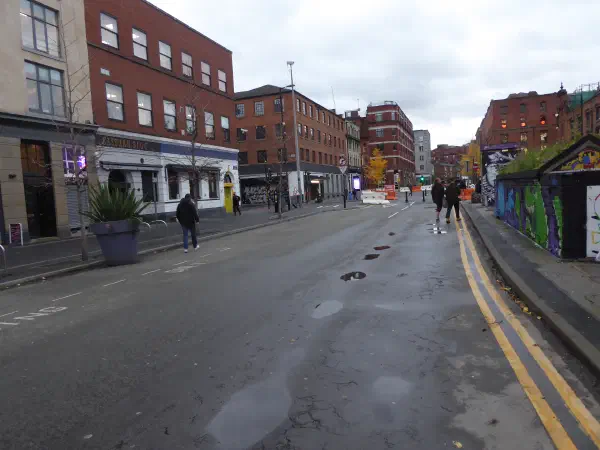
Tib Street is one of the Northern Quarter’s most famous and historic streets. Once known for its pet shops and later its indie boutiques, it’s now a vibrant mix of cafes, bars, and unique shops, all set against a backdrop of classic red-brick architecture.
Why Shoot Here?
- Street Art: Tib Street is home to numerous murals and street art pieces, including the famous “Tib Street Horn.”
- Classic NQ Vibes: The street perfectly captures the independent, creative spirit of the Northern Quarter with its eclectic shop fronts and historic buildings.
- Narrow Perspectives: The street’s relatively narrow width and slight curve offer great opportunities for street photography with deep perspective.
- Neon Signs: Several bars and shops on Tib Street have cool neon signs that come to life in the evening, adding color and mood to your shots.
Getting There
Shudehill and Market Street Metrolink stops are both about three minutes away, and Manchester Piccadilly is roughly ten minutes on foot. NCP Shudehill is the nearest car park at around £6–10 per day; on-street parking across the Northern Quarter is limited and closely enforced. The street is flat and the pavements are continuous, so a tripod is easy to carry between positions.
Tib Street is a public street with no access restrictions at any hour. Afflecks sits at the Church Street junction with the Tib Street Horn sculpture outside it, Thomas Street runs parallel a minute away and Stevenson Square is a couple of minutes south — the Northern Quarter street photography walk strings the four together.
Photography FAQ
Can you take photos on Tib Street?
Yes. It is public highway, so the buildings, the murals, the shopfronts and people in the street are all fair game without permission. The interiors are a different matter — Afflecks and the independent shops are private premises, so ask before photographing inside a stall or a shop. For candid street work, the usual courtesy applies: work openly, and if someone objects, stop.
Where is the Tib Street Horn?
Outside Afflecks at the Church Street junction. It is the street’s defining landmark and the easiest way to make an image unmistakably Tib Street rather than generic Northern Quarter red brick. Shoot it low — 60–80cm above the pavement — with a 16–24mm to exaggerate its scale against the Afflecks facade, and keep the Afflecks signage in the top of the frame.
What is the best time to photograph Tib Street?
Blue hour, if you only get one visit. The neon signs and illuminated shopfronts come on as daylight goes, and the deep blue sky in the gaps between buildings gives the neon a clean, high-contrast backdrop that full darkness does not. Golden hour is the alternative: the lower storeys sit in shade from the buildings opposite, but the upper floors and their iron windows and ghost signage glow. Saturday afternoons between 13:00 and 17:00 are the peak for candid work.
Is Tib Street worth shooting in the rain?
It is one of the few places where rain improves things. The paving and the older cobbled sections hold shallow puddles that reflect the neon and shop lighting directly. Drop to knee height afterwards and the reflections double the colour — it gives the street a wet, saturated character completely unlike its daytime self. Bring something to keep the front element dry.
What lens should I bring to Tib Street?
A 35–50mm for the street itself: it has a slight curve, so the far end is never quite visible from any one point and the view disappears rather than terminating at a clean vanishing point, which is more interesting than a straight run. An 85mm at f/2.8 after dark isolates a single neon sign against black brick. A 16–24mm is worth carrying for the Horn and for the narrow perspective looking up between the buildings.
Best Times to Shoot
- Blue hour and dusk — Tib Street’s neon signs and illuminated shopfronts switch on as daylight fades, and at blue hour the deep blue sky in the gaps between buildings provides a clean, high-contrast backdrop for the neon. The Tib Street Horn sculpture outside Afflecks is particularly visible at this time, catching the warm spill from nearby signs against a cooling sky.
- Late afternoon golden hour — The upper storeys of Tib Street’s red-brick buildings — including warehouse-conversion facades with original iron windows — catch warm directional light from the south-west in the final hour of daylight. The lower storeys are often in shade from the buildings opposite, but the upper floors glow and the ghost signage and architectural details become highly readable.
- Weekend afternoons (13:00–17:00) — Tib Street and the immediately surrounding Northern Quarter streets are at peak activity on Saturday afternoons. Shoppers visiting Afflecks and the independent boutiques, people heading to cafes, and the general foot traffic of Manchester’s most creative neighbourhood create the conditions for lively, authentic candid street photography.
- After rain — The paving on Tib Street and the older cobbled sections hold shallow puddles that reflect neon signs and shop lighting directly. Shooting low — knee height — after rain produces puddle reflections that double the neon colour and give the street a wet-Tokyo quality that is different from its daytime character.
Composition Ideas
- Curved street as leading line — Tib Street has a very slight curve that means the far end of the street is not quite visible from any single point. Stand toward one end and shoot down the street with a 35–50 mm lens; the curve creates a natural compositional tension because the street disappears rather than terminating at a clear vanishing point. Include the Afflecks building visible on the left or right as a landmark anchor.
- Tib Street Horn against Afflecks facade — The large public sculpture outside Afflecks at the Church Street junction is one of Tib Street’s defining features. Shoot from a low position — 60–80 cm above pavement — with a 16–24 mm lens to exaggerate the horn’s scale against the Afflecks red-brick facade behind. Include the Afflecks signage at the top of the frame to locate the image on this specific street.
- Neon sign isolation — Use an 85 mm lens at f/2.8 after dark to fill the frame with a single neon sign on one of the bars or cafes. Place the sign centrally and let the surrounding dark brickwork fall to black. The neon colours and the texture of the brick frame are the entire composition; this approach works well as part of a series of Tib Street night details.
- Symmetrical shopfront framing — Several shopfronts on Tib Street have symmetrical Victorian door surrounds with tiled or timber frames. Shoot these head-on at 35–50 mm with the entrance dead-centre; the doorway frame contains the interior scene or the street activity beyond. For busy shopfronts, wait for a moment when one person is entering or leaving to anchor the shot with human presence.
How to shoot it
Lens
A 35mm or 50mm prime is ideal — small, fast and unobtrusive for candid frames and shopfront detail.
Settings
Shutter priority at 1/250s or faster to freeze movement, with Auto ISO so you can keep shooting as the light shifts.
Composition
Work the light and shadow, look for layers and gesture, and let strong shopfront colour or signage carry the frame.
Timing
This one comes alive after dark, once signage and lighting take over. Wait for the sky to go fully dark for the cleanest, richest colour.
More in Northern Quarter
See the area →Nearby spots
Shooting the whole area? Read the Northern Quarter photography guide — every spot, the light that suits it, and a route to link them.