 Any / overcast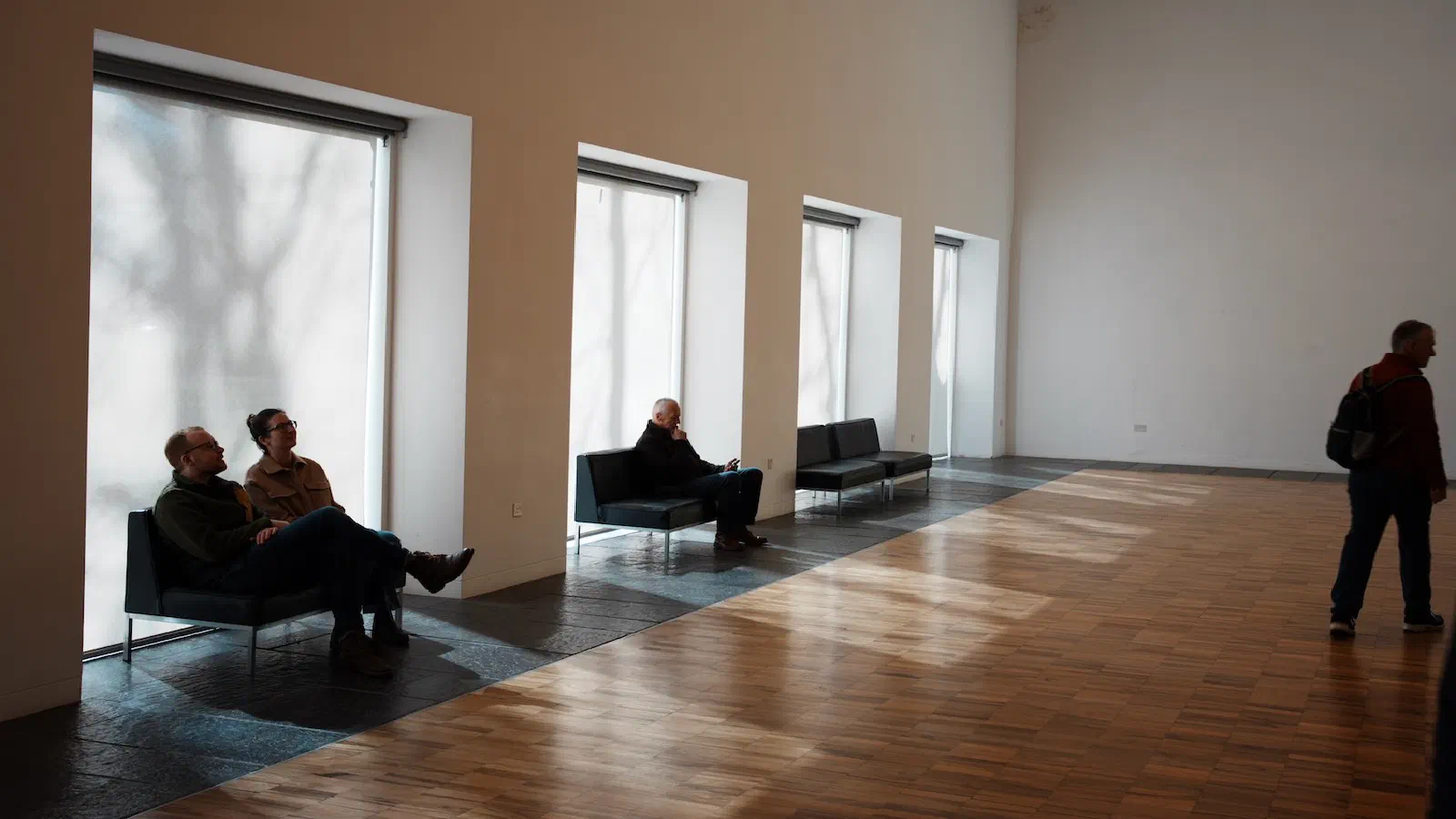
Best at any / overcast
Whitworth Art Gallery
South Manchester · ManchesterWhat is Whitworth Art Gallery?
The Whitworth Art Gallery, part of the University of Manchester, was founded in 1889 as the Whitworth Institute and Park in memory of industrialist Sir Joseph Whitworth. It opened to the public in 1890 and became part of the university in 1958 (Wikipedia – Whitworth Art Gallery).
The collection runs to more than 60,000 works — British watercolours, drawings, prints, textiles, wallpapers and sculpture, alongside modern and contemporary names including Picasso, Van Gogh, Hockney and Freud. Entry is free.
What makes the Whitworth a photography location rather than just a gallery visit is the £15 million redevelopment by architects MUMA, completed in 2015. It doubled the public space and, crucially, turned the building inside out: two glass-and-steel wings now reach from the Victorian red-brick building into Whitworth Park, with a glazed promenade gallery and a café that projects out among the tree canopy. The result is a building that frames the park like a lens — interior, architecture and landscape in a single view, changing with every season.
Why Shoot Here?
The Whitworth offers a fusion of cultural and architectural subjects:
- Old-meets-new architecture: The 2015 extension’s dark steel and glass sits directly against the 1890s red-brick facade — walk the perimeter and the contrast composes itself.
- Park-facing glass walls: Floor-to-ceiling glazing frames Whitworth Park’s trees, giving layered interior–exterior compositions you can’t get at any other Manchester gallery.
- Interior variety: Light-filled galleries, exposed brick, and the long glazed promenade provide several distinct looks within one building — useful for portrait sessions as well as architecture.
- Seasonal range: Spring blossom, summer canopy, autumn colour and winter frost all transform the view through the glass. The park is one of the better inner-city picks in the Manchester autumn photography guide.
Getting There
The Whitworth sits on Oxford Road at the southern edge of the university campus, directly opposite Manchester Royal Infirmary. Buses 15, 41, 42 and 43 run from Piccadilly Gardens along Oxford Road and stop outside; from Oxford Road rail station it’s a 15-minute walk south. On foot from the Manchester Museum on the main university campus, continue south along Oxford Road for about ten minutes — the gallery is on your left, set into Whitworth Park. Drivers should use pay-and-display on Oxford Road (roughly £2–4 per hour); spaces near the park are easiest outside hospital visiting hours.
Photography FAQ
Is the Whitworth free to enter?
Yes — entry is free, open to all. The gallery is open Tuesday to Sunday, 10am–5pm, with late opening on Thursdays; it’s closed on Mondays, including Bank Holiday Mondays.
Can you take photos inside the Whitworth?
Personal, non-flash photography is generally fine in most spaces, but some loaned or copyrighted works carry restrictions — check the signage in each gallery or ask staff. Tripods aren’t permitted inside, and organised or commercial shoots must be arranged with the gallery well in advance.
When is the Whitworth open late?
Thursdays, until 9pm. That’s the slot to plan around as a photographer: in winter you can shoot the glowing glass wings from the park in full darkness while the building is still open.
Is Whitworth Park open to photographers?
Yes — it’s a free public park surrounding the gallery, open access, with mature trees, lawns and paths. It’s the natural vantage point for exterior shots of the glass extension and excellent for autumn colour in its own right.
How long do you need at the Whitworth?
For photography, allow 1.5–2 hours: one circuit of the interiors and promenade, one of the park exterior. Add time on Thursdays if you’re waiting for dusk to shoot the building lit from within.
Further Information
- Wikipedia – Whitworth Art Gallery — history, collections and redevelopment
- Official website – The Whitworth — exhibitions, opening times and visitor information
- The Whitworth – plan your visit — practical visiting details and gallery map
Best Times to Shoot
- Late morning to early afternoon: Natural light floods through the floor-to-ceiling glazing, illuminating the promenade gallery and park views with soft, even light that’s kind to interiors.
- Autumn: The trees in Whitworth Park turn gold and red, and the glass walls effectively hang that colour as a living artwork behind every interior shot. Late October is usually peak.
- Thursday evenings and late openings: Warm interior lighting contrasts with the darkening park, giving the glass wings a glowing, lantern-like quality — shoot from the park paths to the south and east.
- Overcast days: Diffused light kills the reflections and glare on the glazing, making it far easier to shoot through the glass in either direction; colours in the galleries stay true.
Composition Ideas
- Shoot along the glazed promenade to frame Whitworth Park beyond, layering the interior architecture with the landscape — stand square to the glazing to keep the mullion lines parallel.
- Use the junction between the red-brick original building and the dark steel extension as a single dividing line in the frame: half 1890, half 2015.
- Photograph visitors interacting with installations for storytelling images that connect people, art and architecture; the gallery’s white walls make clean negative space.
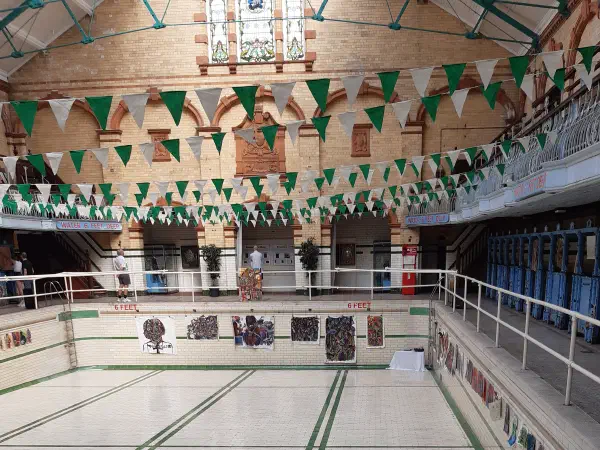
- From the park at dusk, capture the extension glowing against the trees, then balance interior and ambient exposure in the 20 minutes after sunset. If you want to continue the session, Victoria Baths is a 15-minute walk east, and Platt Fields Park is ten minutes further south along the curry mile.
How to shoot it
Lens
A 24–70mm covers most scenes; a 70–200mm isolates detail and a macro lens finds the small stuff.
Settings
f/5.6–f/8 for natural depth, low ISO, and a polariser to cut glare and deepen foliage and sky.
Composition
Use paths and tree lines as leading lines, add foreground interest, and shoot into low side-light for depth and texture.
Timing
Bright overcast suits it best — soft, even light with no harsh shadows — so it works at almost any time of day.
More in South Manchester
See the area →